CM Dhami Implements 33% Women's Quota in Uttarakhand Cooperatives
Synopsis
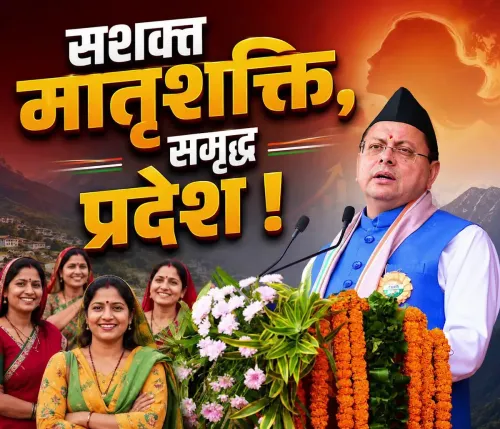
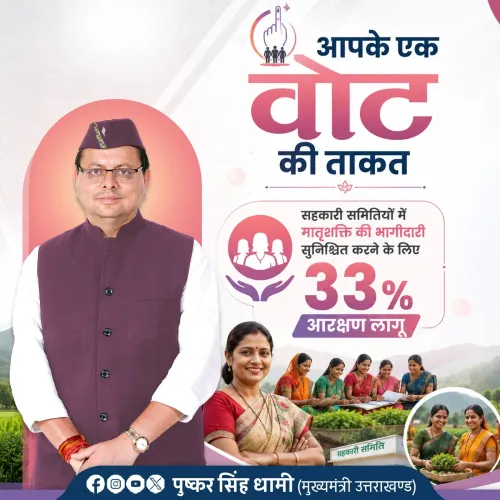
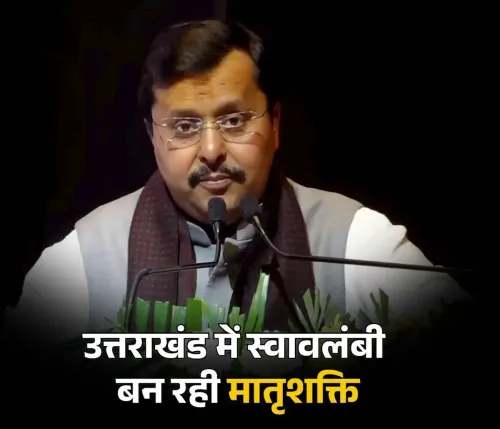
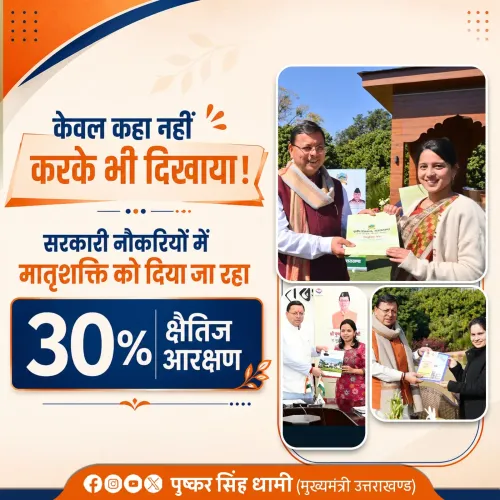
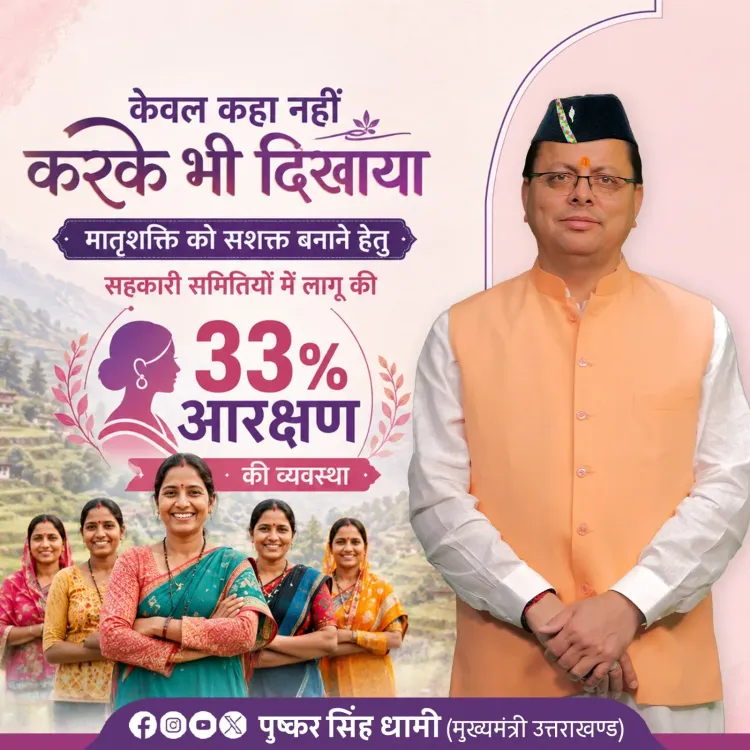
Uttarakhand Chief Minister Pushkar Singh Dhami has implemented 33 percent reservation for women in the state's cooperative societies, aiming to ensure female participation in rural decision-making and advance the government's self-reliant Uttarakhand agenda.
Key Takeaways
Uttarakhand has implemented 33 percent reservation for women in cooperative societies across the state.
The measure is designed to make women active participants in the decision-making processes of these rural economic institutions.
The policy extends the reservation principle established by the 73rd Constitutional Amendment of 1992 from Panchayati Raj bodies into the cooperative sector.
CM Pushkar Singh Dhami framed the move as central to building a 'self-reliant and empowered Uttarakhand.' Primary beneficiaries are rural women who will gain guaranteed seats on cooperative boards controlling credit, procurement, and resource allocation.
Detailed implementation rules, timelines, and monitoring mechanisms are yet to be made public through official notifications.
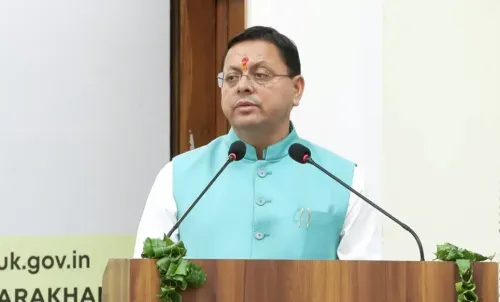
Uttarakhand Chief Minister Pushkar Singh Dhami announced on Tuesday, June 2, 2026, that his government has implemented a 33 percent reservation for women in cooperative societies across Uttarakhand, framing the measure as a step toward women's empowerment and an 'self-reliant Uttarakhand.'
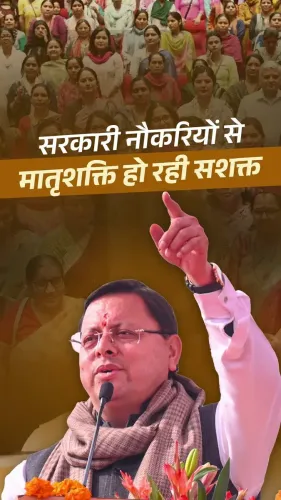
Posting in Hindi on X, CM Dhami wrote: 'मातृशक्ति के सशक्तिकरण के अपने संकल्प को हमारी सरकार ने धरातल पर उतारा है' ['Our government has translated its resolve for the empowerment of women into ground-level action']. He added that the reservation would make women 'partners in the decision-making process' and open 'new opportunities for leadership.'
Context
Cooperative societies are member-based rural economic institutions that operate across credit, agriculture, and marketing sectors in India. In Uttarakhand, these bodies play a significant role in rural livelihoods, making representation within them a meaningful lever for women's economic inclusion. The Chief Minister's post signals that the state government has moved beyond intent to formal implementation of the quota.
Policy Backdrop
The move draws its philosophical lineage from the 73rd Constitutional Amendment of 1992, which mandated 33 percent reservation for women in Panchayati Raj institutions — India's foundational legislation for gender representation in local governance. Extending a similar threshold to cooperative societies represents a logical progression of that framework into economic institutions. Across India, states have progressively applied gender reservation principles to cooperatives and self-help group structures as part of broader rural development strategies.
The Dhami government has positioned this decision within its larger 'self-reliant and empowered Uttarakhand' agenda. By anchoring the cooperative quota to the language of 'aatmanirbhar' ['self-reliant'] development, the administration aligns the measure with the nationally resonant vocabulary of economic self-sufficiency that has shaped policy discourse in recent years.
Stakeholders and Impact
The primary beneficiaries are rural women across Uttarakhand, who will now hold guaranteed seats in cooperative decision-making bodies — boards that control credit disbursement, procurement pricing, and resource allocation in villages. For cooperative members more broadly, increased female participation is expected to diversify the priorities these institutions pursue, with research from comparable programmes in other states suggesting greater attention to household credit needs and agricultural inputs when women hold decision-making roles.
Women's rights groups and rural development practitioners have long argued that representation in economic institutions, not just political ones, is essential for substantive empowerment. The Uttarakhand measure directly addresses that gap within the cooperative sector.
What's Next
Observers will watch for official government notifications detailing the implementation rules — including timelines for elections or appointments to fill the reserved seats, eligibility criteria, and monitoring mechanisms. Evaluation of whether the quota translates into active leadership roles, rather than nominal representation, will be the longer-term test of the policy's impact. Any subsequent state government reports on women's leadership outcomes in Uttarakhand cooperatives will be closely tracked by policy analysts and rural development bodies.
Point of View
' the BJP-led administration ties a social equity intervention to its economic development brand, making it harder to contest on political grounds. The real test will be implementation quality: whether reserved seats translate into genuine leadership or remain symbolic. If the state follows through with robust monitoring, Uttarakhand could set a replicable template for other hill states with similar cooperative-dependent rural economies.
NationPress
25 Sept 2026
Frequently Asked Questions
What is the 33% reservation for women in Uttarakhand cooperatives?
The Uttarakhand government has mandated that 33 percent of seats in cooperative society decision-making bodies be reserved for women, ensuring their formal participation in rural economic governance.
Which cooperative societies does the Uttarakhand women's quota apply to?
The reservation applies to cooperative societies in Uttarakhand broadly, though detailed eligibility and implementation rules are expected to be specified in official government notifications.
How does this policy relate to the 73rd Constitutional Amendment?
The 73rd Constitutional Amendment of 1992 first established 33 percent reservation for women in Panchayati Raj institutions. Uttarakhand's cooperative quota extends that principle into rural economic institutions outside the constitutional local-body framework.
What impact will the cooperative quota have on rural women in Uttarakhand?
Rural women will gain guaranteed seats on cooperative boards that control credit disbursement, agricultural procurement, and resource allocation — giving them direct influence over decisions that affect village economies.
Has any other Indian state implemented women's reservation in cooperative societies?
Several Indian states have taken steps to extend gender reservation principles to cooperatives and self-help group structures as part of rural development strategies, and Uttarakhand's move follows that broader national pattern.