CM Dhami Ensures 33% Quota for Women in Uttarakhand Cooperatives
Synopsis
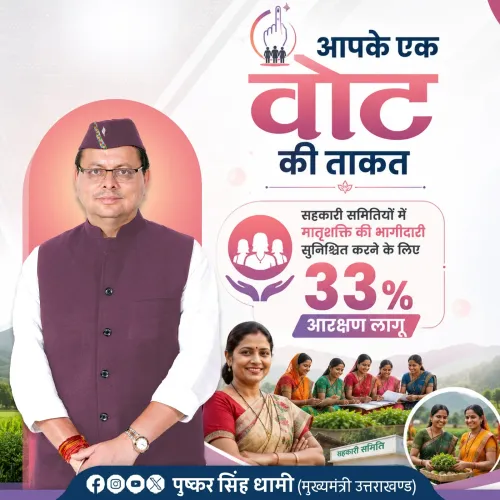
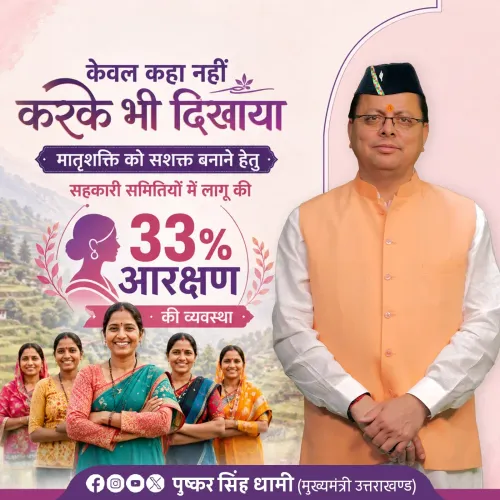
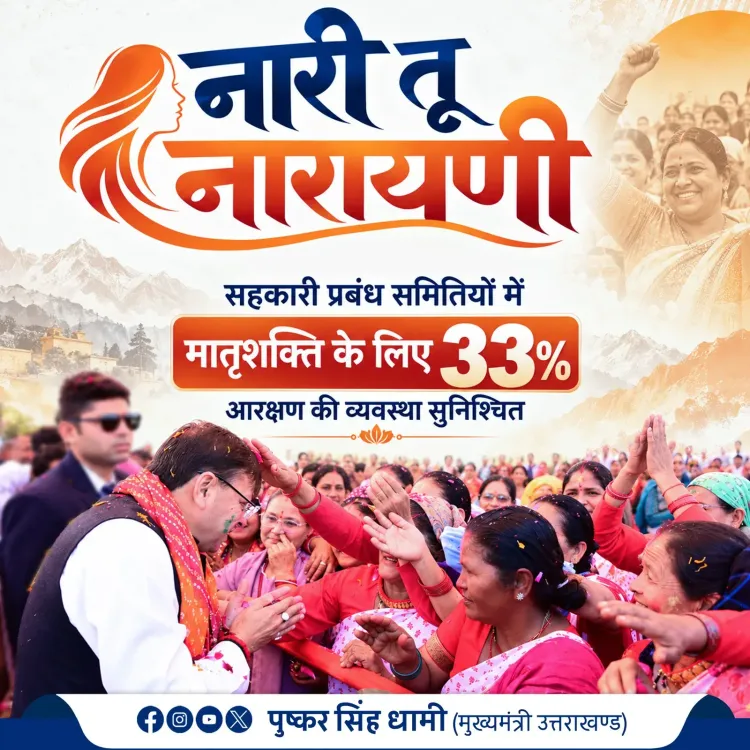
Uttarakhand Chief Minister Pushkar Singh Dhami has announced a 33% reservation for women in cooperative management committees, aiming to secure seats for female leadership and decision-making in the state's grassroots economic institutions.
Key Takeaways
33% reservation for women is being ensured in cooperative management committees ( sahakari prabandh samitis ) across Uttarakhand.
CM Pushkar Singh Dhami framed the move as providing women 'new opportunities in leadership, decision-making, and self-reliance.' The policy fits a national pattern of extending gender quota logic from panchayats — established under the 73rd Constitutional Amendment, 1992 — to other local institutions including cooperatives.
Cooperatives in Uttarakhand are critical to rural women's economic lives, spanning dairy, agriculture, and credit access sectors.
Implementation will be tested in upcoming cooperative committee elections across the state.
Uttarakhand Chief Minister Pushkar Singh Dhami has announced that his government is actively working to strengthen women's participation in the cooperative sector — and has put a concrete number on that commitment: a 33% reservation for women in cooperative management committees (sahakari prabandh samitis) across the state.
The 33% Guarantee: What It Actually Means
In his October 21, 2026 post, CM Dhami framed the quota in direct terms: it is designed to give women 'netritva, nirnay aur aatmanirbharta ke naye avsar' — 'new opportunities in leadership, decision-making, and self-reliance.' The reservation applies to the management bodies that govern cooperative societies, the grassroots economic institutions that touch everything from dairy supply chains to credit access in rural Uttarakhand.
Cooperative management committees are where real operational calls get made — loan disbursements, procurement pricing, membership rules. Securing a mandatory one-in-three seat for women at that table is not ceremonial; it places rural women inside the room where economic decisions land.
India's Long History of Turning Quotas Into Leverage
The move sits within a well-established constitutional and policy tradition. The 73rd Constitutional Amendment of 1992 mandated reservations for women in panchayati raj institutions, demonstrating that structural guarantees — not aspirational targets — are what shift participation numbers in India's rural governance architecture. Several states have since extended similar logic to cooperatives and urban local bodies.
BJP-led state governments have increasingly applied this playbook — framing gender inclusion less as social welfare and more as economic productivity. In Uttarakhand, where the rural economy depends heavily on women's labour in agriculture, dairy, and self-help group ecosystems, the cooperative sector is a natural pressure point for this kind of structural reform.
Dhami's 'Matrishakti' Frame and What Comes Next
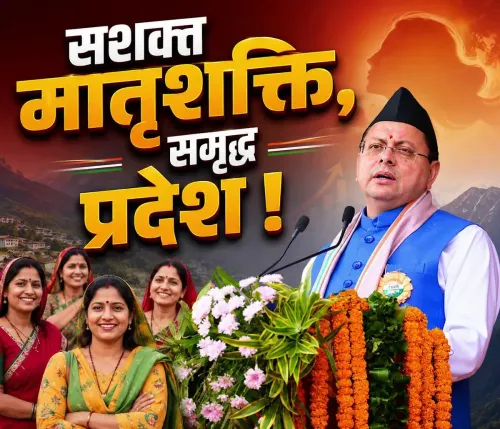
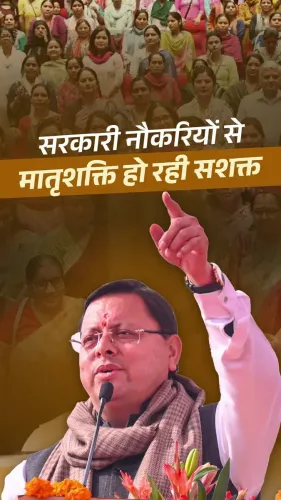
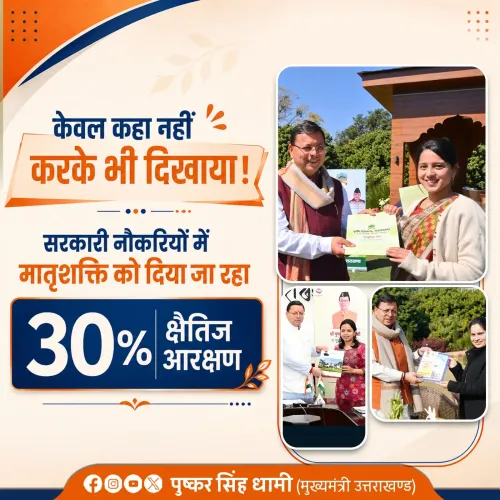
Dhami used the term 'matrishakti' — a political and cultural formulation that evokes feminine power rooted in community — throughout the post, signalling that the cooperative quota is part of a broader state narrative around dignified, mainstream economic participation for women, not just targeted welfare.
The immediate test will come in upcoming cooperative committee elections across the state, where the 33% reservation must be operationalised at the ground level. Whether this translates into genuine leadership roles or nominal seat-filling will depend on implementation quality, oversight mechanisms, and whether women nominees are self-selected or institutionally supported.
For now, Dhami has drawn a clear policy line — and the next chapter will be written in Uttarakhand's cooperative election cycle.
Point of View
Financial support, and protection against proxy representation. Uttarakhand's cooperative election cycle will be the acid test for whether this is structural reform or symbolic positioning.
NationPress
21 Oct 2026
Frequently Asked Questions
What is the 33% reservation for women in Uttarakhand cooperatives?
Uttarakhand CM Pushkar Singh Dhami has announced that 33% of seats in cooperative management committees will be reserved for women, giving them a mandatory role in the leadership and decision-making of cooperative societies across the state.
Which cooperatives does the Uttarakhand women reservation apply to?
The reservation applies to cooperative management committees — the governing bodies of cooperative societies — which oversee functions like credit, dairy, agriculture, and procurement across Uttarakhand.
How does this compare to India's panchayat reservation for women?
India's 73rd Constitutional Amendment of 1992 mandated reservations for women in panchayati raj institutions. The Uttarakhand cooperative quota follows the same logic of using structural guarantees to increase women's participation in grassroots governance.
Why is Pushkar Singh Dhami promoting women's role in cooperatives?
Dhami has stated the government's firm resolve to bring women into the 'mainstream of development' with equal opportunities and dignified participation, using cooperatives as a vehicle for economic empowerment and self-reliance.
When will the 33% women's reservation in Uttarakhand cooperatives take effect?
The reservation is described as already being ensured by the state government. The practical impact will be visible in the next round of cooperative committee elections in Uttarakhand, though a specific implementation timeline has not been officially confirmed.