CM Sukhu Announces ₹52 Lakh DBT Aid for 1,500 Fishermen
Synopsis
CM Sukhvinder Singh Sukhu announced ₹52 lakh in DBT payments for around 1,500 fishermen families in Himachal Pradesh, providing ₹3,500 each during the two-month seasonal fishing ban, with DC and SDM grievance channels for those who miss out.
Key Takeaways
₹52 lakh announced for transfer via DBT to fishermen families in Himachal Pradesh on August 12, 2026 .
Each of the approximately 1,500 eligible fisherman families will receive ₹3,500 .
The aid covers the roughly two-month period when fishing activity is not possible due to the seasonal ban.
Families who do not receive the payment can file a complaint with the District Collector (DC) or Sub-Divisional Magistrate (SDM) .
CM Sukhu described the initiative as 'व्यवस्था परिवर्तन' — systemic change — driven by listening to village and fishing communities.
The DBT model bypasses intermediaries, routing funds directly to beneficiaries' bank accounts.
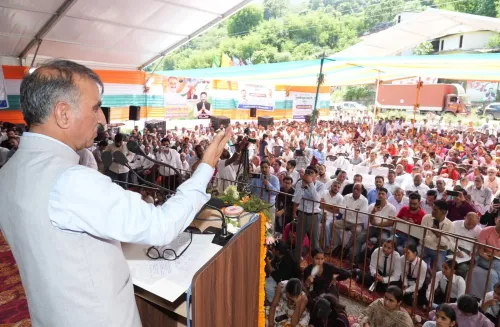
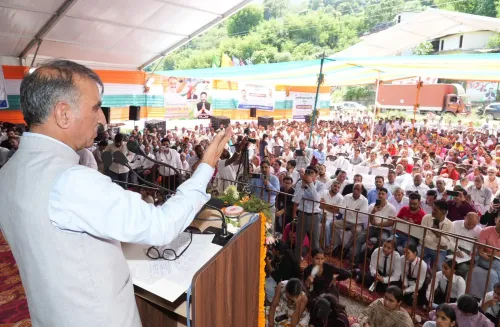
When the fishing nets go down for two months every year, so does the income of nearly 1,500 fishermen families in Himachal Pradesh. On Wednesday, August 12, 2026, Himachal Pradesh Chief Minister Sukhvinder Singh Sukhu announced that the state government will transfer ₹52 lakh directly into the bank accounts of these families — ₹3,500 per eligible household — through the Direct Benefit Transfer (DBT) mechanism, bridging the lean season when fishing is not possible.
Posting in Hindi on X, CM Sukhu framed the announcement in personal terms: 'मैं एक आम परिवार से निकलकर मुख्यमंत्री बना हूं' ('I have risen from an ordinary family to become Chief Minister, and I understand the hardships of common people'). He called this approach 'व्यवस्था परिवर्तन' — systemic change — where policy is shaped by listening to villages and fishing communities, not by bureaucratic habit.
The Seasonal Gap These Families Face
Across Indian states, inland and coastal fishing communities face a mandatory off-season — typically lasting 45 to 60 days — designed to conserve fish stocks and allow breeding cycles to complete. During this window, fishing activity halts entirely, and daily-wage fishermen have no substitute income. The DBT model, which routes funds directly to beneficiaries' bank accounts without intermediaries, has become the standard delivery mechanism for such support at both central and state levels.
Himachal Pradesh, though a landlocked hill state, has significant inland fisheries along its rivers and reservoirs. The roughly 1,500 fisherman families in the affected region depend on this seasonal livelihood, making the two-month ban a period of acute financial stress.
Built-In Accountability: DC and SDM as Grievance Officers
What stands out in Sukhu's announcement is the explicit grievance mechanism. Any eligible family that does not receive the ₹3,500 payment is directed to approach the District Collector (DC) or Sub-Divisional Magistrate (SDM) with a complaint. The Chief Minister stated that the government will ensure no eligible family is left out.
Naming specific administrative officers as accountability points — rather than a generic helpline — gives the commitment a harder edge. It places responsibility squarely on the district administration and creates a traceable escalation path for beneficiaries.
Sukhu, who assumed office in December 2022 as an Indian National Congress leader, has consistently positioned his government's welfare agenda around direct-transfer schemes targeting economically vulnerable households. This disbursement fits that pattern — visible, measurable, and politically legible to the communities it serves.
The test, as always with DBT announcements, is in the execution: whether the money lands in the right accounts, on time, and whether the grievance channel actually resolves the cases that slip through. That is the question district offices in Himachal Pradesh will now have to answer.
Point of View
High-visibility, and directly verifiable by beneficiaries. By naming DC and SDM officers as grievance points, Sukhu adds an accountability layer that is unusual in routine DBT announcements — and that layer will define whether this is genuine systemic change or a well-framed press moment. For the Congress government in Shimla, consistent delivery on such micro-welfare commitments is central to its pitch that it governs differently from its predecessor. The broader pattern of Indian states using DBT to support fishing communities during mandatory off-seasons is well established; what matters here is last-mile execution in a hill state with dispersed, hard-to-reach beneficiary populations.
NationPress
12 Aug 2026
Frequently Asked Questions
How much money will fishermen families get from Himachal Pradesh government?
Each eligible fisherman family will receive ₹3,500 , with a total of ₹52 lakh being transferred via DBT to approximately 1,500 families .
Why is the Himachal Pradesh government giving money to fishermen?
The aid covers the roughly two-month seasonal fishing ban during which fishermen cannot work, leaving families without income. The state government is providing direct financial support to bridge this gap.
What is DBT and how will fishermen receive the money?
Direct Benefit Transfer (DBT) is a government mechanism that sends money directly into beneficiaries' bank accounts without intermediaries, reducing leakage and delays.
What should a fisherman family do if they do not receive the ₹3,500 payment?
CM Sukhu stated that families who do not receive the payment can file a complaint with the District Collector (DC) or the Sub-Divisional Magistrate (SDM) of their area.
Who is Sukhvinder Singh Sukhu and when did he become Himachal Pradesh CM?
Sukhvinder Singh Sukhu is the Chief Minister of Himachal Pradesh and an Indian National Congress leader who assumed office in December 2022 .