CM Sukhu Backs Pangi as HP's First Natural Farming Sub-Division
Synopsis
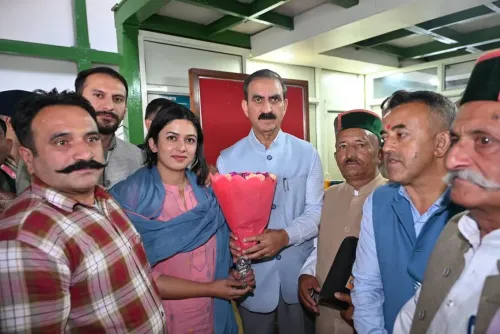
Chief Minister Sukhvinder Singh Sukhu met a Pangi valley delegation on 23 July 2026, pledging to treat their development demands sensitively and reaffirming that Pangi has been designated Himachal Pradesh's first natural farming sub-division to empower tribal farmers.
Key Takeaways
A delegation from Pangi valley, led by APMC Chamba president Lalit Thakur , met CM Sukhu on 23 July 2026 to present public-interest demands.
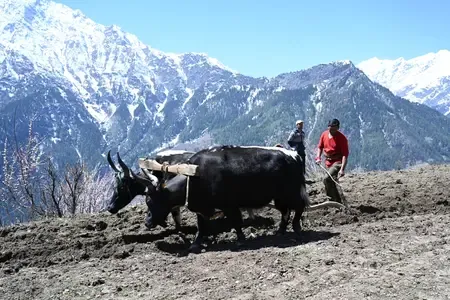
Pangi has been designated Himachal Pradesh's first natural farming sub-division , aimed at making farmers self-reliant through chemical-free agriculture.
The government stated that all suggestions and demands from the delegation would be considered 'with full sensitivity.' The initiative aligns with Himachal Pradesh 's broader push for Subhash Palekar-style natural farming, promoted in the state since at least 2016 .
The stated goal is for Pangi to become an 'inspiring model of progress, prosperity, and sustainable agriculture' for other remote valleys.
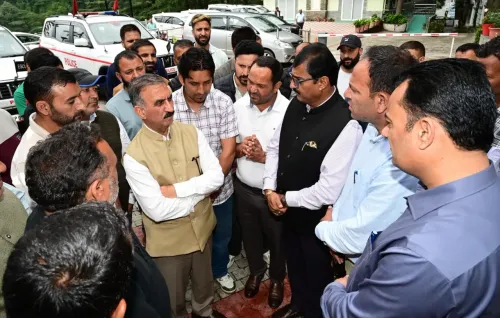
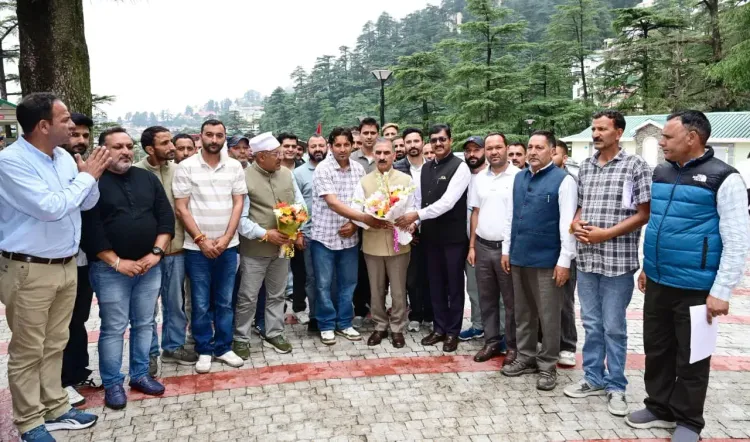
Himachal Pradesh Chief Minister Sukhvinder Singh Sukhu on Thursday, 23 July 2026, met a delegation from the remote Pangi valley led by APMC Chamba president Lalit Thakur, reaffirming his government's commitment to developing Pangi as the state's first dedicated natural farming sub-division.
Context
The delegation called on CM Sukhu to present public-interest demands and development priorities specific to the Pangi valley, a high-altitude tribal area in Chamba district. In his post, Sukhu wrote: 'पांगी के किसानों को आत्मनिर्भर, समृद्ध और प्राकृतिक खेती के माध्यम से सशक्त बनाने की दिशा में इसे प्रदेश का पहला प्राकृतिक खेती उपमंडल बनाया गया है' — meaning, 'In the direction of making Pangi farmers self-reliant, prosperous, and empowered through natural farming, it has been designated the state's first natural farming sub-division.' He added that the suggestions and demands placed by the delegation would be considered 'with full sensitivity.'
Lalit Thakur, as president of the Agricultural Produce Market Committee (APMC) Chamba, represents the institutional body responsible for farmer produce marketing and mandi operations across Chamba district, giving the delegation both administrative and community weight.
Policy Backdrop
Himachal Pradesh has promoted Subhash Palekar-style natural farming since at least 2016, with state schemes aimed at reducing chemical inputs and supporting small and marginal farmers across hilly terrain. The designation of Pangi as a natural farming sub-division fits within this longer policy lineage, extending the model specifically to a tribal, high-altitude pocket where conventional input supply chains are difficult to sustain.
The western Himalayas face pronounced climate vulnerabilities — erratic snowfall, soil erosion, and shifting growing seasons — making the shift to low-external-input agriculture particularly relevant for communities in valleys like Pangi. The government's stated goal is for Pangi to emerge as an 'inspiring model of progress, prosperity, and sustainable agriculture,' as CM Sukhu put it.
Stakeholders and Impact
The primary beneficiaries are Pangi's farming households, who rely on high-altitude horticulture and subsistence agriculture with limited market access. A formal natural farming sub-division status, if backed by training programmes, certification, and market linkages, could open premium organic markets for their produce and reduce dependence on expensive chemical inputs that are costly to transport to remote valleys.
Tribal agricultural communities in Chamba district more broadly stand to benefit if the Pangi model is eventually replicated, as the state government has indicated an intent to pilot such frameworks in tribal pockets before wider rollout. The APMC Chamba's involvement signals that marketing infrastructure will be central to the initiative, not just farm-level practice change.
What's Next
Concrete implementation details — including farmer training schedules, natural farming certification pathways, and specific market linkages — are yet to be formally announced. The government's assurance that delegation demands will be considered 'with full sensitivity' suggests follow-up administrative action is expected in the near term.
Observers will watch whether the Pangi natural farming sub-division translates into budgetary allocations and on-ground extension support, which will determine whether the model becomes a replicable template for other remote tribal valleys in Himachal Pradesh.
Point of View
Combining symbolic recognition with a concrete policy designation. Labelling Pangi a 'first natural farming sub-division' gives the government a replicable template it can roll out to other hard-to-reach valleys, building a narrative of inclusive hill development ahead of future electoral cycles. The APMC's central role signals that market access — historically the weakest link for Pangi farmers — is being folded into the natural farming pitch rather than treated separately. Whether the designation is backed by adequate extension staff and certification infrastructure will be the real test of intent.
NationPress
21 Oct 2026
Frequently Asked Questions
What is the Pangi natural farming sub-division in Himachal Pradesh?
Pangi, a remote tribal valley in Chamba district, has been designated Himachal Pradesh's first natural farming sub-division, aimed at empowering local farmers through chemical-free, self-reliant agriculture.
Who led the Pangi delegation that met CM Sukhu?
The delegation was led by Lalit Thakur, president of the Agricultural Produce Market Committee (APMC) Chamba, who presented public-interest demands and development priorities to Chief Minister Sukhvinder Singh Sukhu.
What did CM Sukhu promise the Pangi delegation?
CM Sukhu assured the delegation that all their suggestions and demands would be considered with full sensitivity, and reiterated that Pangi's development is a top priority for his government.
What is natural farming and why is it important for Pangi?
Natural farming, associated with the Subhash Palekar method, avoids synthetic chemicals and external inputs. For Pangi's high-altitude tribal farmers, it reduces reliance on costly inputs that are difficult to transport to the remote valley, while opening premium organic markets.
How long has Himachal Pradesh promoted natural farming?
Himachal Pradesh has promoted natural farming through state schemes since at least 2016, focusing on reducing chemical inputs and supporting small farmers in hilly and tribal areas.