CM Sukhu brings anti-drug Walkathon to Mandi on Nov 13
Synopsis
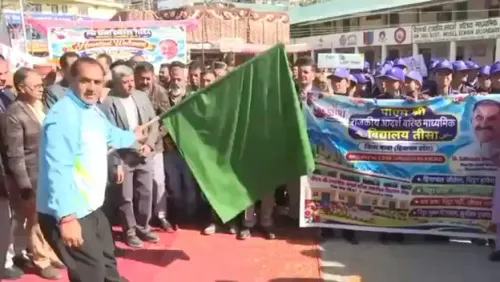
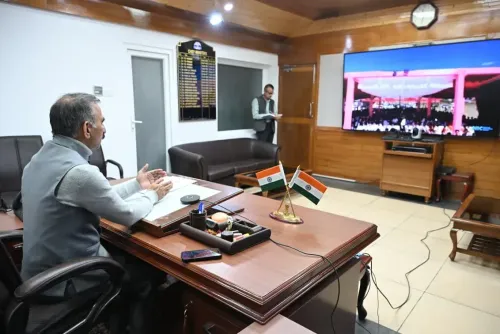
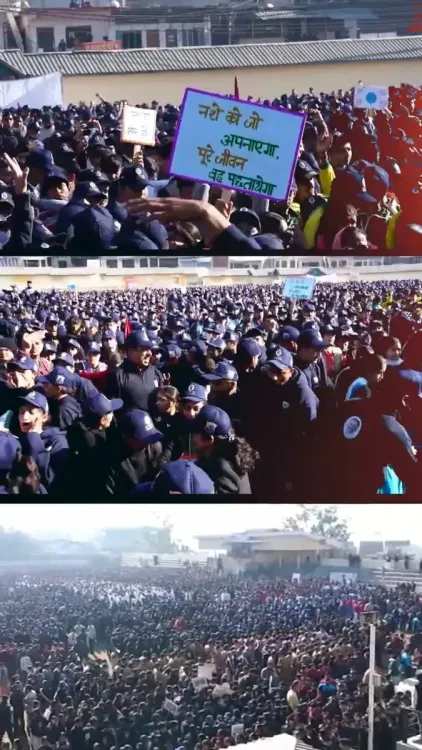
Himachal Pradesh CM Sukhvinder Singh Sukhu has announced that Mandi will host the next Walkathon in his district-by-district anti-drug jan-abhiyan on 13 November at Paddal Ground, following similar marches in Shimla, Bilaspur, Dharamshala, Hamirpur, and Una.
Key Takeaways
Mandi district is the sixth stop in Himachal Pradesh's rolling anti-drug Walkathon series.
The event is set for 13 November at Paddal Ground, Mandi .
Previous Walkathons were held in Shimla, Bilaspur, Dharamshala, Hamirpur , and Una .
The campaign specifically targets chitta (synthetic drug) abuse through community mobilisation.
CM Sukhvinder Singh Sukhu is driving the initiative as a jan-abhiyan — a people's movement — rather than a purely enforcement-led response.
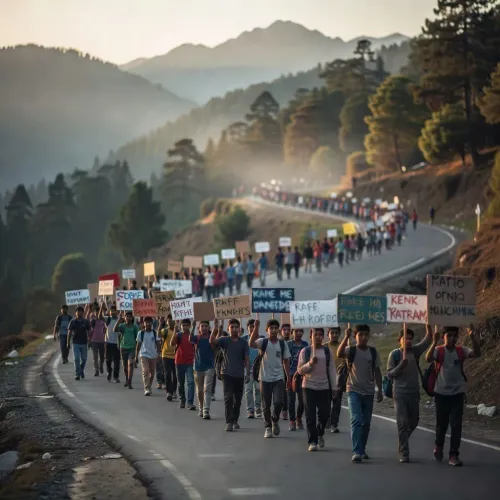
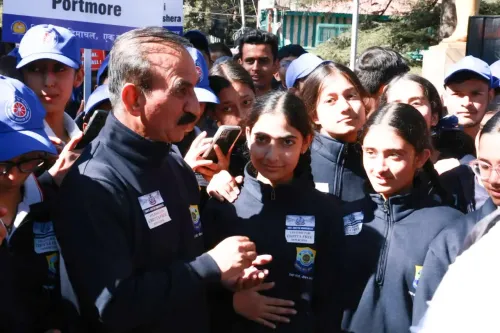
Five districts down, and Himachal Pradesh Chief Minister Sukhvinder Singh Sukhu is not stopping. He has announced that Mandi district will join the state's rolling anti-drug jan-abhiyan, with a Walkathon scheduled for 13 November at Paddal Ground, Mandi — the latest front in a campaign that has already marched through five of the state's major towns.
Five districts already mobilised, Mandi is next
The district-by-district sequencing has so far covered Shimla, Bilaspur, Dharamshala, Hamirpur, and Una. Each Walkathon is designed as a mass public march — a visible, community-led statement against drug abuse, particularly the synthetic substance locally known as chitta (white heroin). Sukhu's post frames the Mandi edition as 'jan-jan ki lalkar' — a challenge from every single person — signalling that the campaign draws its force from participation, not just optics.
Paddal Ground, Mandi's large open ground beside the Uhl river, is capable of hosting large public gatherings, making it a deliberate choice for an event that depends on turnout to make its point.
Community mobilisation as the state's chosen weapon
The Sukhu government's approach is notable for what it prioritises: visible grassroots momentum over headline enforcement drives. By rolling the campaign district by district, the administration builds anticipation and local ownership — residents in Mandi have watched five other districts hold their events before their own. That sequencing is itself a mobilisation tool.
Chitta has become a persistent crisis in Himachal Pradesh's younger demographic, with the state's border geography and tourism economy creating vulnerabilities that standard policing alone has struggled to address. A jan-abhiyan model, where community members march publicly and visibly, is meant to shift the social norm around drug tolerance at the neighbourhood level.
What the November 13 turnout will signal
Mandi is one of Himachal Pradesh's larger and more politically significant districts, sitting at the geographic heart of the state. The turnout on 13 November will be a meaningful indicator of whether the campaign retains energy as it moves through its sixth stop — or whether the district-by-district format risks fatigue. If Paddal Ground fills, the state will have demonstrated that the formula scales. What comes next — whether more districts are added, or the campaign pivots toward enforcement and rehabilitation phases — is the question every participant at the march will, in effect, be helping to answer.
Point of View
The Sukhu government is building a cumulative narrative of momentum — each new district adds to a visible record of public resolve. The choice of Mandi, a politically and geographically central district, raises the stakes for the sixth edition. This model of sequenced community mobilisation reflects a broader shift in Indian state governance toward 'visible participation' as a policy instrument, particularly on issues where enforcement alone has failed to deliver results. Whether the campaign translates into measurable reductions in drug incidents, or remains primarily a political-awareness exercise, will define its legacy beyond the election cycle.
NationPress
11 Nov 2026
Frequently Asked Questions
What is the anti-drug Walkathon in Himachal Pradesh?
It is a district-level public awareness march organised by the Himachal Pradesh government under Chief Minister Sukhvinder Singh Sukhu to build grassroots opposition to drug abuse, especially the synthetic substance known as chitta. The campaign is called a jan-abhiyan, or people's movement.
When and where is the Mandi Walkathon?
The Walkathon in Mandi is scheduled for 13 November 2026 at Paddal Ground, Mandi.
Which districts have already held the Walkathon?
Five districts have already hosted the event: Shimla, Bilaspur, Dharamshala, Hamirpur, and Una. Mandi is the sixth district to join the campaign.
What is chitta and why is it a concern in Himachal Pradesh?
Chitta is a local term for a synthetic drug, primarily white heroin, that has become a serious problem among youth in Himachal Pradesh. The state's geography and tourism economy have made it vulnerable to drug trafficking, prompting the government's public mobilisation campaign.
What is CM Sukhu's approach to fighting drug abuse in HP?
CM Sukhvinder Singh Sukhu has opted for visible community mobilisation through Walkathons across districts, aiming to shift social norms around drug tolerance at the neighbourhood level alongside conventional enforcement measures.