CM Sukhu Claims Historic Win in 15-Year BBMB Dispute
Synopsis
Himachal Pradesh CM Sukhvinder Singh Sukhu declares a historic win in the 15-year BBMB dispute and a parallel breakthrough on the Kishau Dam project, projecting around ₹3,000 crore in combined annual revenue and 12,000 million units of electricity over 20 years.
Key Takeaways
BBMB breakthrough: CM Sukhu says a 15-year-old dispute with the Bhakra Beas Management Board has been resolved in Himachal's favour.
Power bonanza: Himachal is projected to receive approximately 12,000 million units of electricity over the next 20 years from the BBMB settlement.
Revenue range: BBMB benefits estimated at ₹500 crore at current rates, rising to ₹20,000 crore over 20 years if tariffs increase.
Kishau Dam income: The Kishau Dam project is expected to generate roughly ₹1,500 crore annually at no additional cost to the state.
Combined annual gain: Total projected benefit from both wins is approximately ₹3,000 crore per year for Himachal Pradesh.
BBMB background: The board, constituted in 1976 , manages power and water allocation among Punjab, Haryana, Rajasthan, and Himachal Pradesh.
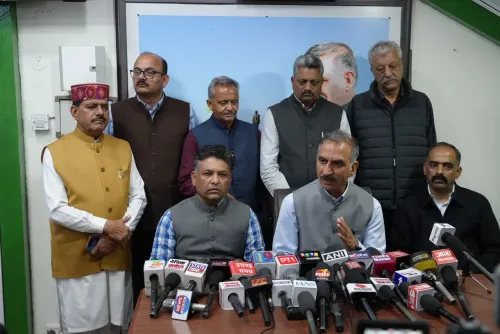
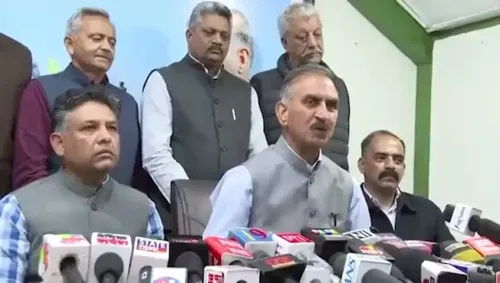
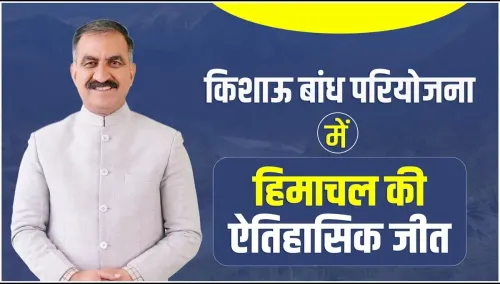
Two landmark energy victories in quick succession — that is the claim Himachal Pradesh Chief Minister Sukhvinder Singh Sukhu made on Monday, 9 November 2026, announcing what he called a historic breakthrough in a 15-year-old dispute with the Bhakra Beas Management Board (BBMB), coming hot on the heels of a parallel win on the Kishau Dam project.
What Sukhu is claiming — and what the numbers look like
The Chief Minister's post lays out a sweeping financial picture. On the BBMB front, Himachal is projected to receive roughly 12,000 million units of electricity over the next 20 years. Translated into revenue, that works out to approximately ₹500 crore at current tariff rates — and potentially as high as ₹20,000 crore if power prices rise over the two-decade horizon, as they historically do.
Separately, the Kishau Dam project is estimated to generate approximately ₹1,500 crore annually for the state exchequer — with no recurring expenditure on Himachal's part. Stack both streams together and Sukhu puts the combined annual benefit at around ₹3,000 crore per year for the state.
The BBMB dispute: 15 years in the making
The Bhakra Beas Management Board was constituted in 1976 under the Punjab Reorganisation Act framework to administer the Bhakra Nangal and Beas river projects, allocating power and water shares among Punjab, Haryana, Rajasthan, and Himachal Pradesh. For decades, Himachal — the upstream state whose rivers and valleys host much of this infrastructure — has argued it was not receiving a fair share of the economic benefits generated from projects within its territory.
That grievance crystallised into a formal dispute that, according to Sukhu, has been unresolved for 15 years. Hill states pursuing upstream rights through legal and administrative channels is a well-established pattern across India's inter-state river basin politics. What makes Himachal's case distinctive is the combination of significant submergence costs, ecological burden, and hydroelectric potential concentrated in a single small state with limited revenue alternatives.
Kishau Dam: a project decades in the pipeline
The Kishau Dam is a proposed multipurpose hydropower and storage project on the Yamuna, shared between Himachal Pradesh and Uttarakhand. It has been in planning and dispute for years over cost-sharing, displacement, and inter-state benefit allocation. Sukhu's announcement signals that his government has secured terms favourable enough to project ₹1,500 crore in annual revenue — a figure that, if realised, would constitute a material contribution to Himachal's budget.
The watch item now is implementation: whether tripartite agreements on Kishau's construction timeline will be formalised and what the precise terms of the BBMB award look like on paper. Sukhu closed his post with a direct pledge — 'himar ka vaada hai ki Himachal ke hiton ki raksha ke liye rajya sarkar har paristhiti mein pratibaddh rahegi' ('it is our promise that the state government will remain committed to protecting Himachal's interests in every circumstance').
For a mountain state that runs on hydroelectric potential, locking in those rights is not just politics — it is fiscal survival.
Point of View
000 crore annual income, if realised, would represent a significant boost to a state exchequer that has historically been under fiscal stress. Implementation details — particularly the BBMB award terms and the Kishau tripartite construction timeline with Uttarakhand — will determine whether the claims survive the transition from announcement to balance sheet.
NationPress
9 Nov 2026
Frequently Asked Questions
What is the BBMB and why was Himachal Pradesh in dispute with it?
The Bhakra Beas Management Board (BBMB) was constituted in 1976 to manage the Bhakra Nangal and Beas river projects and allocate power and water among Punjab, Haryana, Rajasthan, and Himachal Pradesh. Himachal has long argued it was not receiving a fair share of benefits from projects located within its territory, leading to a dispute that CM Sukhu says lasted 15 years.
How much revenue will Himachal Pradesh earn from the BBMB resolution?
CM Sukhu projects approximately ₹500 crore at current electricity rates, with the figure potentially rising to ₹20,000 crore over the next 20 years if power tariffs increase. The state is also expected to receive around 12,000 million units of electricity over that period.
What is the Kishau Dam project and what does Himachal Pradesh stand to gain?
Kishau Dam is a proposed multipurpose hydropower and storage project on the Yamuna river, shared between Himachal Pradesh and Uttarakhand. CM Sukhu announced the state could earn approximately ₹1,500 crore annually from the project without incurring additional expenditure.
What is the total projected annual benefit for Himachal Pradesh from both wins?
CM Sukhu stated that the combined effect of the BBMB resolution and the Kishau Dam project would bring the state approximately ₹3,000 crore in revenue every year.
What happens next with these two projects?
Key items to watch include the formal implementation of the BBMB award, the specific terms of that settlement, and any fresh tripartite agreements on the Kishau Dam construction timeline between Himachal Pradesh and Uttarakhand.