CM Sukhu Engages Medical Students on AI in Healthcare
Synopsis
Chief Minister Sukhvinder Singh Sukhu met medical students at Dr. Radhakrishnan Medical College, Jolsappar on October 27, discussing AI adoption, healthcare challenges, and improving treatment access across Himachal Pradesh.
Key Takeaways
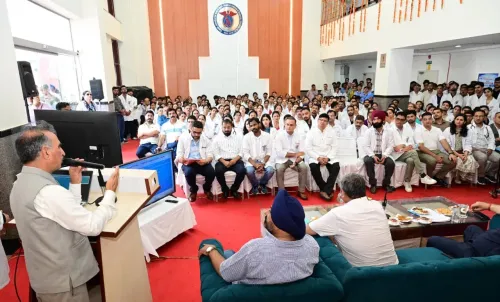
CM Sukhvinder Singh Sukhu held a direct dialogue with students at Dr.
Radhakrishnan Medical College and Hospital, Jolsappar on October 27, 2026 .
The conversation covered healthcare delivery challenges, the growing use of AI in medicine, and reaching better treatment to ordinary citizens.
Sukhu expressed 'complete confidence' that modern technology, youthful thinking, and a spirit of service will strengthen the state's health system.
Himachal Pradesh has historically used institutional engagement as a tool to address healthcare gaps caused by difficult hilly terrain.
The session reflects a broader trend of Indian states consulting frontline and future health workers before designing technology-driven health policy.
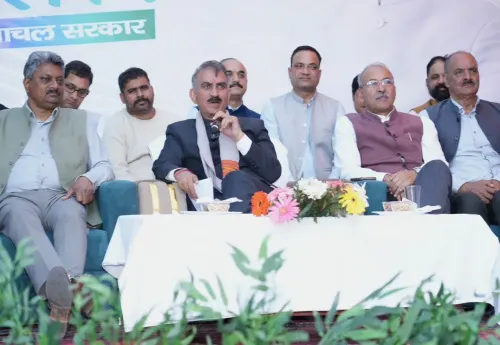
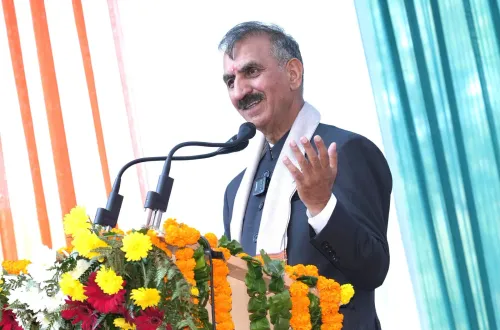
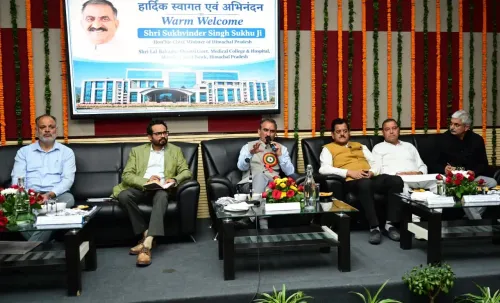
Himachal Pradesh Chief Minister Sukhvinder Singh Sukhu walked into a room full of medical students at Dr. Radhakrishnan Medical College and Hospital, Jolsappar, on Tuesday, October 27, 2026 — and instead of delivering a speech, he asked questions. The exchange centred on the sharpest challenges reshaping Indian healthcare: the growing role of artificial intelligence, persistent gaps in treatment access, and how the next generation of doctors plans to close them.
In a post on X, CM Sukhu described the session as a dialogue on 'the challenges of health services, the increasing use of AI, and reaching better treatment to ordinary people' — aam logon tak behtar upchar pahunchana (bringing better care to common citizens). He called hearing the students' ideas and suggestions 'gratifying', adding his 'complete confidence' that a combination of modern technology, youthful thinking, and a spirit of service will push the state's health system forward.
Why Jolsappar, Why Now
Dr. Radhakrishnan Medical College and Hospital at Jolsappar is part of Himachal Pradesh's expanding medical-education footprint, a deliberate state effort to seed trained healthcare professionals closer to the hills rather than concentrating them in plains cities. For a state where remote terrain has historically meant delayed care, putting a teaching hospital in the district is itself a policy statement.
Himachal Pradesh governments across administrations have leaned on institutional engagement — direct outreach to colleges, community health workers, and frontline staff — as a workaround for infrastructure gaps that take years and large budgets to fix. A chief minister sitting down with MBBS students is, in that context, less ceremonial and more diagnostic: what do people on the ground actually see?
AI and the Apprentice Doctor
The mention of AI is the detail that sharpens the picture. Indian states have been cautiously exploring technology integration in public health — from AI-assisted diagnostic tools in district hospitals to telemedicine platforms bridging the last mile. Himachal's hilly geography, with villages separated by hours of mountain road, makes remote diagnostics not a luxury but a necessity.
Medical students are the cohort best positioned to absorb and deploy these tools — they graduate into a system that will look nothing like the textbooks printed five years ago. Consulting them before policy is designed, rather than after systems are already built, is a small but meaningful shift in approach.
CM Sukhu's framing — technology plus youth thinking plus sevabhav (spirit of service) — signals a state trying to modernise its health delivery without losing its public-sector ethos. The students of Jolsappar may well be its first test case.
Point of View
But watchers will look for concrete follow-through in budget allocations or formal policy announcements. Consulting future doctors before building systems is sound, but the real test is whether the students' inputs surface in any forthcoming state health mission revision or digital health roadmap. For Sukhu personally, visible grassroots engagement ahead of any electoral cycle reinforces his image as an accessible, ground-level leader rather than a distant administrator.
NationPress
27 Oct 2026
Frequently Asked Questions
What did CM Sukhu discuss with students at Jolsappar?
CM Sukhvinder Singh Sukhu discussed the challenges of health service delivery, the increasing use of AI in medicine, and strategies for improving access to quality treatment for ordinary citizens of Himachal Pradesh.
Where is Dr. Radhakrishnan Medical College and Hospital located?
Dr. Radhakrishnan Medical College and Hospital is located at Jolsappar in Himachal Pradesh, and is part of the state's effort to expand medical education infrastructure in the region.
Is Himachal Pradesh using AI in its hospitals?
CM Sukhu's dialogue with medical students highlighted AI as a growing area of focus in the state's health planning, though specific AI-driven hospital programmes have not yet been formally announced.
Why is rural healthcare a challenge in Himachal Pradesh?
Himachal Pradesh's mountainous terrain means many villages are separated from hospitals by hours of difficult road, making technology-assisted and remote healthcare solutions especially relevant for the state.
What is Sukhvinder Singh Sukhu's role in Himachal Pradesh?
Sukhvinder Singh Sukhu is the Chief Minister of Himachal Pradesh, in office since 2022, representing the Indian National Congress. He has focused on governance, development, and public service delivery across the state.