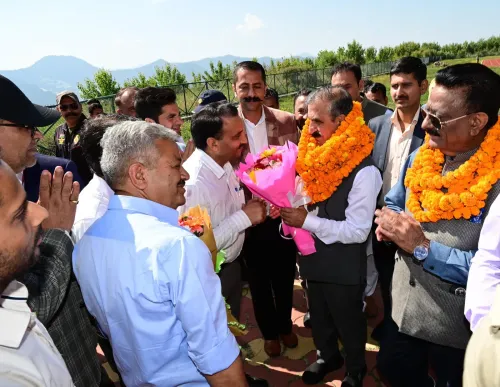
CM Sukhu Congratulates HP's Dr. Prem Lal Gautam on Padma Shri
Synopsis
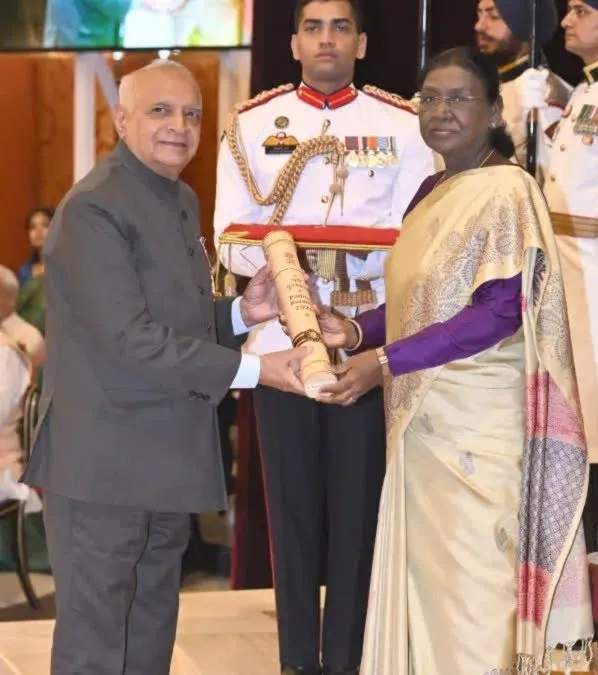
Himachal Pradesh Chief Minister Sukhvinder Singh Sukhu congratulated Dr. Prem Lal Gautam of Bilaspur on receiving the Padma Shri from President Draupadi Murmu for his pivotal role in shaping India's biodiversity and farmers' rights legislation.
Key Takeaways
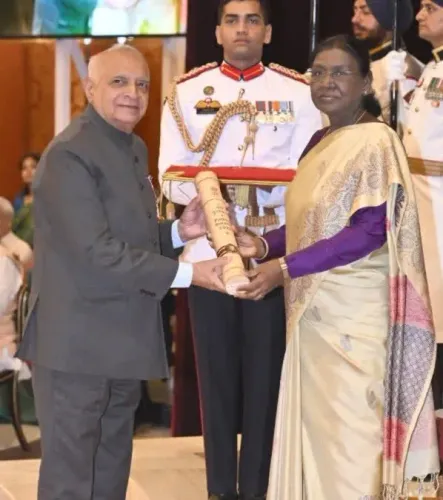
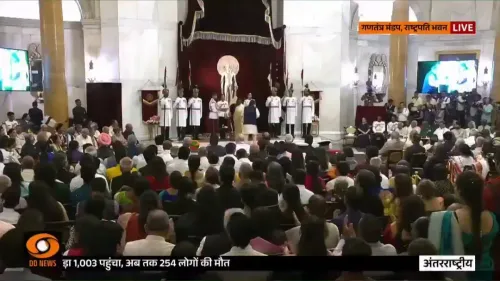
Prem Lal Gautam , an agricultural scientist from Bilaspur district, Himachal Pradesh , was conferred the Padma Shri by President Draupadi Murmu .
The award recognises his contributions to science and engineering , specifically in agriculture, biodiversity conservation, and farmers' rights.
Gautam played a key role in framing the Protection of Plant Varieties and Farmers' Rights Act, 2001 and the Biological Diversity Act, 2002 .
Chief Minister Sukhvinder Singh Sukhu posted congratulations on X on 24 June 2026 , calling the honour a source of pride for all of Himachal Pradesh.
Both landmark laws Dr.
Gautam helped shape continue to govern India's frameworks for protecting agrarian biodiversity and traditional farmer knowledge.
Himachal Pradesh Chief Minister Sukhvinder Singh Sukhu on Wednesday, 24 June 2026, congratulated Dr. Prem Lal Gautam, a distinguished agricultural scientist from Bilaspur district, on being conferred the Padma Shri by President Draupadi Murmu for his exceptional contributions to science and engineering.
Posting on X, Chief Minister Sukhu wrote: 'बिलासपुर जिले के निवासी एवं प्रख्यात कृषि वैज्ञानिक डॉ. प्रेम लाल गौतम जी को... पद्म श्री पुरस्कार से अलंकृत किए जाने पर हार्दिक बधाई एवं शुभकामनाएँ।' ['Heartfelt congratulations and best wishes to Dr. Prem Lal Gautam, eminent agricultural scientist and resident of Bilaspur district, on being honoured with the Padma Shri award.'] He added that this achievement is 'a matter of pride and inspiration for all of Himachal Pradesh.'
Context
Dr. Prem Lal Gautam is a Bilaspur-born agricultural scientist recognised nationally for his work on crop genetic resources, biodiversity conservation, and the legal empowerment of farmers. His career has spanned both field-level agricultural science and high-level policy drafting, placing him at the intersection of ecology and law. The Padma Shri is India's fourth-highest civilian honour, awarded annually by the President of India for distinguished service in any field.
Chief Minister Sukhu specifically highlighted Dr. Gautam's contributions to agriculture, biodiversity conservation, and the strengthening of farmers' rights — three pillars that have shaped India's agrarian policy landscape over the past two decades. The recognition underscores Himachal Pradesh's role in producing scientists who have influenced national legislation.
Policy Backdrop
Dr. Gautam played a significant role in the formulation and implementation of two landmark Indian statutes. The Protection of Plant Varieties and Farmers' Rights Act, 2001 established India's first formal framework balancing the intellectual property rights of plant breeders with the traditional rights of farmers to save, use, and exchange seeds — a globally watched model at the time of its passage.
He also contributed to the Biological Diversity Act, 2002, enacted following India's ratification of the Convention on Biological Diversity. The Act created institutional mechanisms — including the National Biodiversity Authority and state-level biodiversity boards — to regulate access to biological resources and ensure equitable benefit-sharing with local communities. Together, these two laws form the bedrock of India's legal architecture for protecting agricultural heritage and traditional knowledge.
Stakeholders and Impact
The direct beneficiaries of the legislative frameworks Dr. Gautam helped shape are India's farming communities, particularly smallholder and tribal farmers who depend on traditional seed varieties and local biodiversity. By codifying farmers' rights in law, the PPV&FR Act gave millions of cultivators legal standing to protect indigenous crop varieties from commercial appropriation.
For Himachal Pradesh specifically, the recognition carries symbolic weight. The state's hilly terrain hosts significant agro-biodiversity, and the Padma Shri conferred on one of its own scientists reinforces the state's contribution to national environmental and agricultural policy. Central and state governments have periodically spotlighted Padma awardees from smaller states to acknowledge regional contributions to national policymaking in agriculture and the environment.
What's Next
The award is likely to prompt state-level felicitation events honouring Dr. Gautam, and his work may be referenced in upcoming Himachal Pradesh budget or agriculture policy discussions as the state seeks to align with national biodiversity and farmers' rights frameworks. Observers will also watch whether the recognition spurs renewed legislative or administrative attention to the implementation of the Biological Diversity Act and PPV&FR Act at the state level. Chief Minister Sukhu closed his post with 'Jai Hind, Jai Himachal' — a signal that the government intends to project the honour as a collective achievement for the state.
Point of View
Sukhu implicitly frames these landmark laws — both passed during Congress-led central governments — as part of a continuous policy legacy. The recognition of a Bilaspur scientist also carries regional messaging, signalling that smaller hill districts are not peripheral to national policymaking. For the broader agricultural policy discourse, the spotlight on Dr. Gautam may revive attention to the uneven implementation of farmers' rights provisions that remain underutilised nearly two decades after their enactment.
NationPress
23 Sept 2026
Frequently Asked Questions
Who is Dr. Prem Lal Gautam and why did he receive the Padma Shri?
Dr. Prem Lal Gautam is an agricultural scientist from Bilaspur district, Himachal Pradesh, honoured with the Padma Shri by President Draupadi Murmu for his distinguished contributions to science and engineering, particularly in biodiversity conservation and the formulation of landmark farmers' rights legislation.
What is the Padma Shri award?
The Padma Shri is India's fourth-highest civilian honour, conferred annually by the President of India to recognise distinguished service or exceptional achievement in any field, including science, arts, public affairs, and social work.
What laws did Dr. Prem Lal Gautam help create?
Dr. Gautam contributed to the Protection of Plant Varieties and Farmers' Rights Act, 2001, and the Biological Diversity Act, 2002 — two foundational Indian laws that protect traditional seed varieties, regulate access to biological resources, and enshrine legal rights for farmers.
Why did CM Sukhu congratulate Dr. Prem Lal Gautam?
Himachal Pradesh Chief Minister Sukhvinder Singh Sukhu posted on X to congratulate Dr. Gautam on receiving the Padma Shri, calling the achievement a matter of pride and inspiration for all of Himachal Pradesh.
What is the Biological Diversity Act, 2002?
The Biological Diversity Act, 2002 is an Indian law enacted after India ratified the Convention on Biological Diversity. It established the National Biodiversity Authority and state biodiversity boards to regulate access to biological resources and ensure fair benefit-sharing with local communities.