CM Sukhu: HP Staff Get OPS, Punjab Employees Still Await
Synopsis
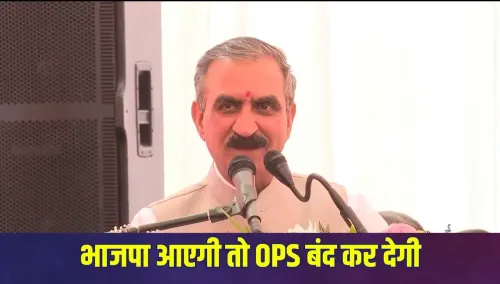
Himachal Pradesh CM Sukhvinder Singh Sukhu on 19 July 2026 contrasted his state's implemented Old Pension Scheme with Punjab's continued NPS status, claiming monthly pensions for HP employees have risen from roughly ₹3,000 to ₹30,000 since OPS was restored.
Key Takeaways
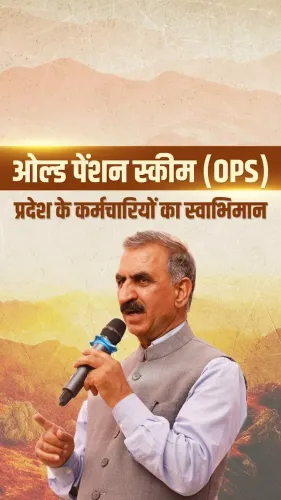
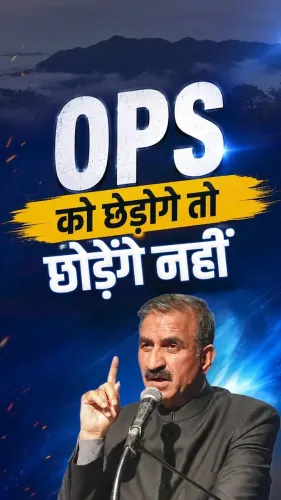
CM Sukhu stated on 19 July 2026 that Himachal Pradesh has successfully implemented the Old Pension Scheme (OPS) for state employees.
He drew a direct contrast with Punjab , asserting its employees and officers are still not receiving OPS benefits.
According to Sukhu, monthly pensions for eligible HP employees have risen from approximately ₹3,000 to approximately ₹30,000 after OPS implementation.
The Himachal Pradesh government formally notified OPS restoration in early 2023 , following a Congress election pledge.
The Old Pension Scheme guarantees roughly 50 percent of last drawn salary , unlike the market-linked New Pension System introduced centrally from 1 January 2004 .
The post adds political pressure on Punjab 's Congress government to expedite its own OPS rollout.
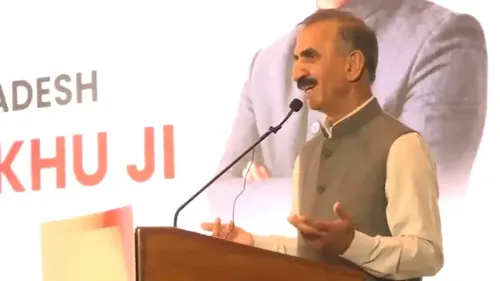
Himachal Pradesh Chief Minister Sukhvinder Singh Sukhu on Sunday, 19 July 2026 highlighted the contrast between his state and neighbouring Punjab, asserting that Himachal Pradesh employees are already benefiting from the restored Old Pension Scheme (OPS) while Punjab government workers continue to wait for the same benefit.
Context
In his post on X, CM Sukhu stated — 'पंजाब के कर्मचारियों और अधिकारियों को आज भी OPS का लाभ नहीं मिल रहा है, जबकि हिमाचल प्रदेश में कर्मचारियों और अधिकारियों को OPS मिल रही है' — meaning: 'Employees and officers of Punjab are still not getting the benefit of OPS, whereas employees and officers in Himachal Pradesh are receiving OPS.' He further claimed that pension amounts for affected employees had risen from approximately ₹3,000 per month to approximately ₹30,000 per month following the scheme's implementation in the state.
The post comes amid sustained political debate across several states over whether to retain the central government's New Pension System (NPS), introduced from 1 January 2004, or revert to the older defined-benefit model. The Congress government in Himachal Pradesh formally notified the restoration of OPS for state employees in early 2023, making it one of the early movers among states that had pledged the rollback during election campaigns.
Policy Backdrop
The Old Pension Scheme guarantees a defined benefit — broadly 50 percent of the last drawn salary — to retiring government employees, funded entirely from the state exchequer. The New Pension System, which replaced it for new central recruits from 2004, is a market-linked contributory scheme where both the employee and the employer contribute to an individual corpus, with no guaranteed payout at retirement.
Several Congress-governed and other opposition-ruled states moved to restore OPS after 2022, responding to years of employee agitation and pre-election pledges. Critics of the OPS revival, including fiscal economists and the central government, have flagged the long-term pension liability it creates for state finances. Proponents argue it provides income security to retiring public servants who would otherwise be exposed to market volatility.
Stakeholders and Impact
The primary beneficiaries in Himachal Pradesh are state government employees and officers who joined service after 2004 and were enrolled under NPS. Under OPS, their retirement income is now a guaranteed function of their last salary rather than market returns. CM Sukhu's cited figures — a rise from roughly ₹3,000 to roughly ₹30,000 in monthly pension — illustrate the scale of the change for individual retirees, though these figures are drawn from the Chief Minister's own statement and have not been independently verified.
For Punjab, which also has a Congress government, the comparison carries implicit political weight. The post signals that Himachal Pradesh has delivered on a key welfare promise ahead of its neighbour, a contrast likely to reverberate among Punjab state employees and their unions.
What's Next
Attention will now turn to whether Punjab accelerates its own OPS notification, and how state budget documents in both states reflect the evolving pension liability. Any parallel announcements from Punjab or other neighbouring states on pension revision will be closely watched by employee unions and fiscal analysts alike. The inter-state contrast drawn by CM Sukhu is also likely to feature in Congress's broader national narrative around employee welfare ahead of future electoral cycles.
Point of View
Sukhu amplifies pressure on a peer Congress government, turning a welfare delivery claim into a political benchmark. The cited pension jump from ₹3,000 to ₹30,000 — if borne out — is a potent retail political message for employee constituencies across the region. More broadly, the post fits into Congress's national strategy of using OPS as a differentiator against the BJP-led central government's continued defence of NPS on fiscal grounds.
NationPress
20 Jul 2026
Frequently Asked Questions
Has Himachal Pradesh implemented the Old Pension Scheme?
Yes. The Himachal Pradesh government formally notified the restoration of the Old Pension Scheme for state employees in early 2023 , after the Congress government came to power in December 2022.
What is the difference between OPS and NPS for government employees?
The Old Pension Scheme (OPS) is a defined-benefit plan guaranteeing roughly 50 percent of last drawn salary at retirement, funded entirely by the government. The New Pension System (NPS) , introduced from 1 January 2004 , is a contributory, market-linked scheme with no guaranteed payout.
Why has Punjab not implemented OPS yet?
CM Sukhu 's post indicates Punjab employees are still not receiving OPS benefits as of July 2026. The specific reasons for the delay in Punjab 's implementation have not been detailed in this statement.
How much has the pension increased for Himachal Pradesh employees under OPS?
According to CM Sukhu , eligible employees who previously received approximately ₹3,000 per month are now receiving approximately ₹30,000 per month after OPS was restored. These figures are from the Chief Minister's own statement.
Which states have restored the Old Pension Scheme in India?
Himachal Pradesh is among several Congress-governed and opposition-ruled states that moved to restore OPS after 2022 , following sustained employee demands and pre-election pledges. The central government continues to operate under the New Pension System .