CM Sukhu Inaugurates 3T MRI, Cancer Centre at Nerchowk
Synopsis
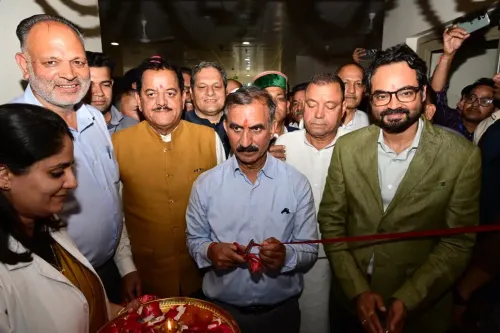
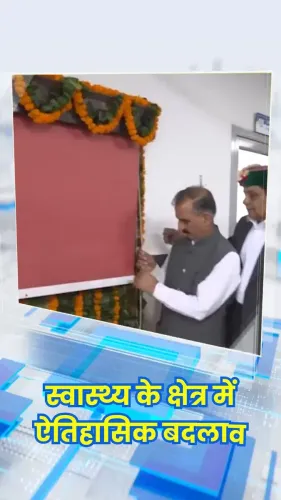
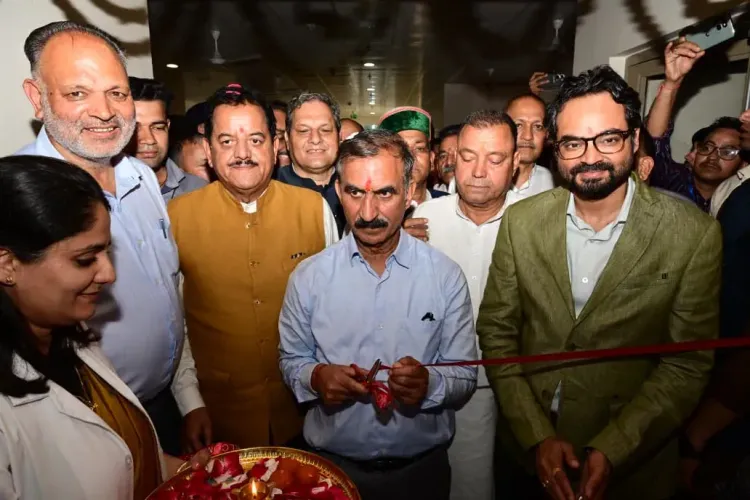
Chief Minister Sukhvinder Singh Sukhu inaugurated a 3 Tesla MRI machine and a Tertiary Care Cancer Centre at Nerchowk Medical College in Mandi, and laid the foundation stone for a PET scan machine, significantly expanding advanced diagnostic and oncology access for Himachal Pradesh residents.
Key Takeaways
CM Sukhu inaugurated a 3 Tesla MRI machine at Nerchowk Medical College, Mandi on September 26, 2026 .
A Tertiary Care Cancer Centre was also inaugurated at the same facility, offering advanced oncology diagnosis and treatment.
The foundation stone for a PET scan machine was laid, with full installation still ahead.
The additions are intended to end the need for patients from Mandi and surrounding districts to travel to metros like Delhi or Chandigarh for serious illness diagnostics.
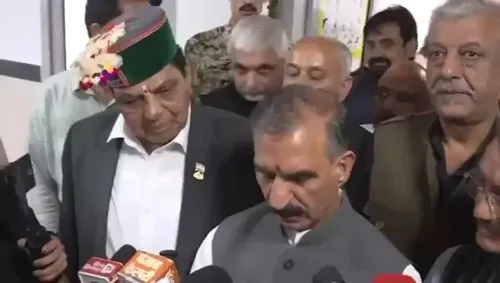
CM Sukhu held a discussion with faculty members on strengthening medical education alongside the new infrastructure.
The move aligns with the national policy trajectory set by Ayushman Bharat PMJAY (2018) to decentralise tertiary care including cancer services.
For patients in the hills of Himachal Pradesh who once faced an exhausting journey to Delhi or Chandigarh for a cancer scan or an advanced MRI, something changed on Saturday, September 26, 2026. Himachal Pradesh Chief Minister Sukhvinder Singh Sukhu inaugurated a 3 Tesla MRI machine and a Tertiary Care Cancer Centre at Nerchowk Medical College in Mandi district, and laid the foundation stone for a PET scan machine — bringing three landmark diagnostic capabilities to the state in a single visit.
Posting on X, the Chief Minister said the new facilities would give local residents access to 'गंभीर बीमारियों की जांच और उपचार' ('diagnosis and treatment of serious diseases') within the state itself, and that 'इलाज के लिए दूर के शहरों तक जाने की परेशानी भी कम होगी' — the burden of travelling to distant cities for treatment would now ease. He also noted a 'meaningful discussion' with faculty members on strengthening medical education and health services.
What a 3T MRI and PET Scanner Mean for Mandi
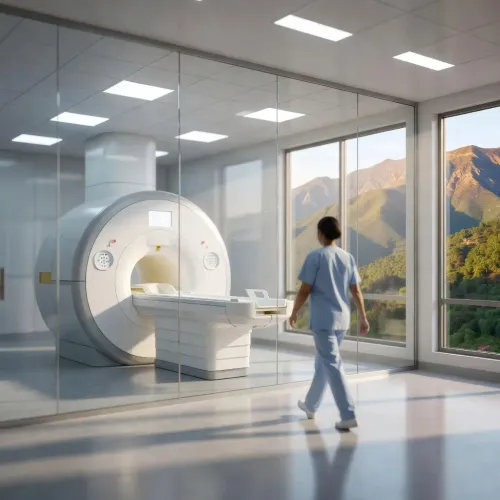
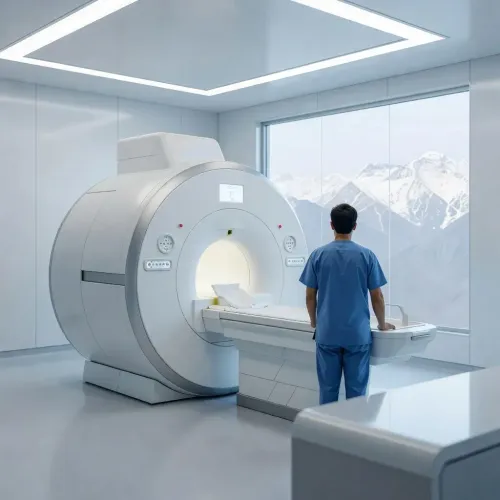
The 3 Tesla MRI is among the most powerful clinical imaging systems available — delivering sharper neurological, cardiac, and oncological scans than the more common 1.5T units found in district hospitals. Paired with a forthcoming PET (Positron Emission Tomography) scanner, Nerchowk will gain the ability to map metabolic activity in tumours — a capability previously restricted to a handful of private and government hospitals in metros. The combination is particularly significant for cancer staging, where a delayed diagnosis often means the difference between curative and palliative care.
The Tertiary Care Cancer Centre adds the clinical infrastructure to act on those scans — a supervised environment for chemotherapy, radiotherapy planning, and specialist oncology care that patients in Mandi, Kullu, and neighbouring districts would otherwise access only after a multi-hour road journey through mountain terrain.
Nerchowk and the Push to Decentralise Specialised Care
Nerchowk Medical College, formally the Dr Rajendra Prasad Government Medical College, sits along the Uhl river in Mandi — one of Himachal Pradesh's most populated districts and a natural referral hub for the mid-hills. Equipping it with high-end imaging is part of a broader national pattern: since the mid-2010s, Indian states have steadily moved 3T MRI and PET-CT machines into district-level teaching hospitals, reducing the pressure on metro referral chains and giving medical students hands-on exposure to technology that was once exclusive to private tertiary centres.
At the national level, the Ayushman Bharat Pradhan Mantri Jan Arogya Yojana, launched in 2018, set a policy foundation for expanding tertiary-care access — including cancer treatment — to non-metro populations. State investments like today's installations are the on-ground expression of that ambition. The faculty discussion CM Sukhu held after the inaugurations signals an awareness that hardware alone does not build a functioning cancer centre; trained specialists, operating budgets, and integration with central scheme funding will determine whether the machines run at capacity or gather dust.
What Comes Next for Himachal's Health Infrastructure
The PET scan machine's foundation stone means the scanner is still months away from being operational — procurement, installation, and calibration for a cyclotron-fed PET unit is a significant undertaking. Watchers of Himachal's health budget will track whether the state follows today's announcement with faculty hiring in oncology and radiology at Nerchowk, and whether similar upgrades are planned for Tanda Medical College in Kangra or the IGMC in Shimla.
For now, the 3T MRI is live, the Cancer Centre is open, and a mountain state has moved meaningfully closer to keeping its sickest patients home.
Point of View
Who leads a Congress government in a hill state with tight fiscal margins, commissioning a 3T MRI and a Cancer Centre in a single event signals a deliberate emphasis on visible, tangible health delivery over abstract policy. The harder test comes next: sustaining specialist staffing and integrating the centre with central funding mechanisms so the machines operate at capacity rather than as inauguration props. If Himachal follows through on faculty hiring and links the Cancer Centre to Ayushman Bharat coverage, it could become a model that other small hill states — Uttarakhand, Meghalaya — look to replicate.
NationPress
26 Sept 2026
Frequently Asked Questions
What was inaugurated at Nerchowk Medical College by CM Sukhu?
CM Sukhvinder Singh Sukhu inaugurated a 3 Tesla MRI machine and a Tertiary Care Cancer Centre at Nerchowk Medical College in Mandi district on September 26, 2026, and also laid the foundation stone for a PET scan machine.
Where is Nerchowk Medical College located?
Nerchowk Medical College, formally known as Dr Rajendra Prasad Government Medical College, is located in Mandi district, Himachal Pradesh, along the Uhl river valley.
What is a 3 Tesla MRI and why does it matter for patients?
A 3 Tesla MRI is a high-powered magnetic resonance imaging system that produces sharper, more detailed scans than standard 1.5T machines — especially valuable for neurological and oncological diagnosis. Having one at a district medical college means patients no longer need to travel to a metro city for advanced imaging.
What is a Tertiary Care Cancer Centre?
A Tertiary Care Cancer Centre is a specialised facility equipped for advanced cancer diagnosis, staging, and treatment — including chemotherapy and radiotherapy planning — services that were previously unavailable at district-level hospitals in Himachal Pradesh.
Is the PET scan machine at Nerchowk operational yet?
No. CM Sukhu laid the foundation stone for the PET scan machine on September 26, 2026, meaning the machine is yet to be procured and installed; the foundation stone marks the commitment to the project rather than its completion.