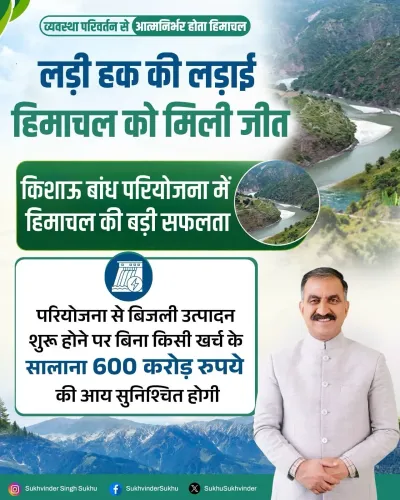
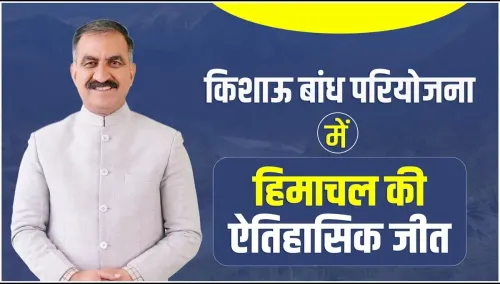
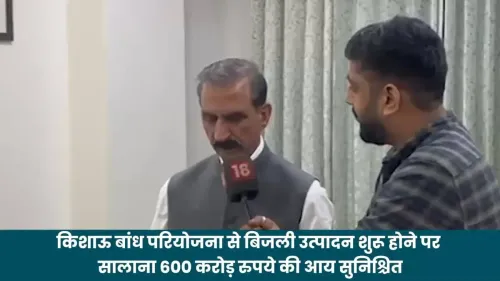
CM Sukhu: Kishau Dam deal struck on HP's terms, state gets 211 MW free
Synopsis
CM Sukhvinder Singh Sukhu says the decades-old Kishau Dam deadlock is broken on Himachal's terms — zero state investment, 211 MW free power, and projected annual revenue of ₹1,500 crore — while targeting BJP for failing to act during its own tenure.
Key Takeaways
CM Sukhu announced the Kishau Dam project agreement has been settled in Himachal Pradesh's favour after over five decades of stalled talks.
Himachal Pradesh will receive 211 MW of electricity without contributing any capital to the project.
The dam is projected to generate approximately ₹1,500 crore annually for the state once operational.
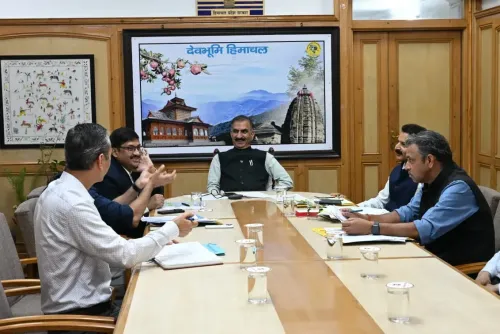
Sukhu's government held three rounds of meetings in Delhi to negotiate the deal, maintaining a firm no-investment stance throughout.
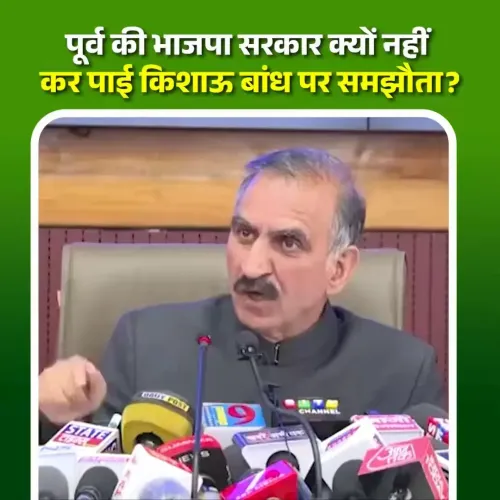
The CM directly challenged former BJP CM Jairam Thakur , asking why his government did not sign the agreement during five years in office.
The Kishau Dam sits on the Yamuna river and involves a long-standing inter-state arrangement between Himachal Pradesh and Uttarakhand.
After decades of stalled negotiations, Himachal Pradesh Chief Minister Sukhvinder Singh Sukhu declared on Friday, 23 October 2026 that the long-contested Kishau Dam project has finally been settled — and entirely on the state's terms, with Himachal Pradesh contributing zero rupees to the project while securing 211 megawatts of electricity and an estimated annual revenue of ₹1,500 crore once the dam is operational.
Five decades, three Delhi meetings, one hard line
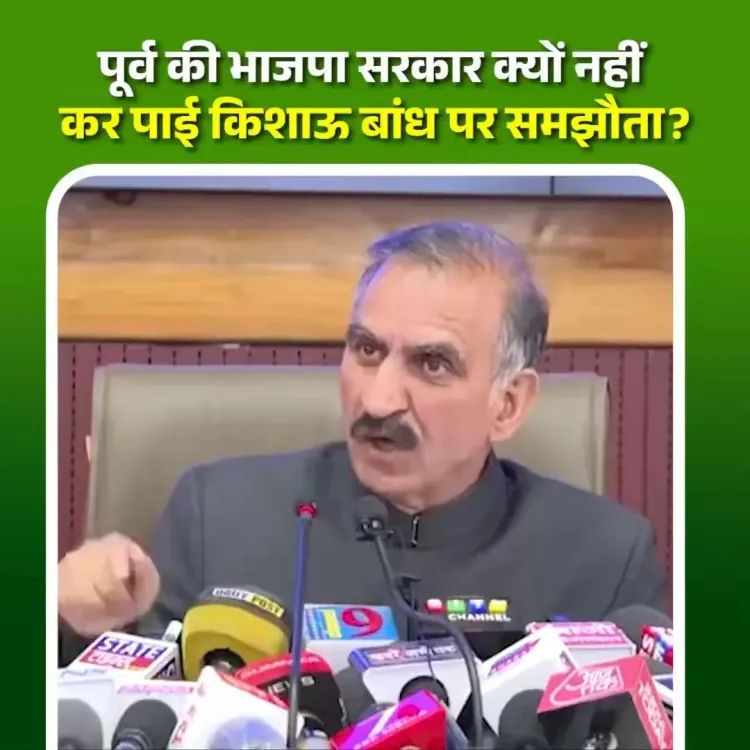
Posting in Hindi on X, CM Sukhu turned the announcement into a pointed political rebuttal. 'If it was stuck for so many years, why didn't Jairam ji sign the agreement?' he asked, referring to former BJP Chief Minister Jairam Thakur, who governed the state from 2017 to 2022. The barb was direct: BJP leaders are now claiming credit for progress on a project their own government left unsigned during a full five-year term.
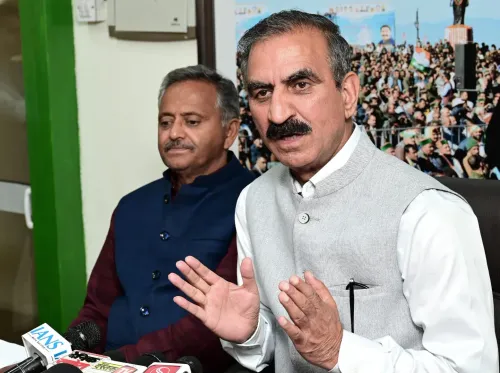
Sukhu said his government held three rounds of talks in Delhi specifically on the Kishau project. The non-negotiable position going in, he stated, was that Himachal Pradesh would not invest a single rupee. 'हमारा स्टैंड साफ रखा कि हिमाचल के हितों से कोई समझौता नहीं होगा' — 'our stand was clear: no compromise on Himachal's interests.'
What the Kishau Dam means for Himachal Pradesh
The Kishau Dam is a proposed multipurpose project on the Yamuna river, straddling the border between Himachal Pradesh and Uttarakhand. Discussions over cost-sharing, power allocation, and water rights between the two states have dragged on since at least the 1990s — making it one of the more stubborn inter-state hydro disputes in the Himalayan belt.
Under the terms Sukhu described, Himachal Pradesh will receive 211 MW of power at no capital cost to the state exchequer. Post-commissioning, the project is expected to generate roughly ₹1,500 crore per year in state income. For a hill state with constrained finances and enormous untapped hydroelectric potential, that is a consequential number.
The familiar pattern of Himalayan hydro politics
Sukhu's announcement fits a well-worn script in northern Indian state politics: incoming governments frequently point to the inaction of their predecessors on inter-state river projects, then seek to close deals as proof of governance credentials. What makes this instance sharper is the specificity — three named meetings, a zero-investment condition, a concrete megawatt figure, a revenue estimate — giving the claim more political texture than the usual rhetorical broadside.
BJP MPs and leaders in the state, Sukhu argued, are more focused on chanting 'Modi ji, Modi ji' than on actually advancing Himachal's interests at the negotiating table. It is a charge designed to embarrass both the state opposition and the party's parliamentary representatives ahead of any formal agreement signing.
The real test now is execution: when the agreement is formally inked, what the central funding commitments look like, and whether the project's long implementation timeline can finally be compressed into something resembling a deadline.
Point of View
If it holds in the formal agreement, would be a genuinely significant precedent for how Himachal Pradesh structures future hydro-sharing deals with neighbouring states. However, the broader pattern in Himalayan hydro politics — where announcements precede implementation by years — means the real measure of this achievement lies in the signing timeline and central funding guarantees, not the press statement. The Congress government is clearly positioning Kishau as a flagship infrastructure credential ahead of the state's next political cycle.
NationPress
23 Oct 2026
Frequently Asked Questions
What is the Kishau Dam project?
The Kishau Dam is a proposed multipurpose hydroelectric project on the Yamuna river, shared between Himachal Pradesh and Uttarakhand. It has been under discussion since at least the 1990s and is among the longest-pending inter-state water infrastructure projects in northern India.
How much power will Himachal Pradesh get from the Kishau Dam?
According to CM Sukhu, Himachal Pradesh will receive 211 megawatts of electricity from the Kishau Dam project at no cost to the state government.
How much revenue will the Kishau Dam generate for Himachal Pradesh?
CM Sukhu stated that once the project is commissioned, it will generate approximately ₹1,500 crore per year for the state.
Why is CM Sukhu criticising Jairam Thakur over Kishau Dam?
Sukhu argues that former BJP Chief Minister Jairam Thakur, who governed Himachal Pradesh from 2017 to 2022, did not finalise any agreement on the Kishau Dam despite it being pending for decades, while BJP leaders are now claiming credit for progress under the current Congress government.
Will Himachal Pradesh spend any money on the Kishau Dam?
No. CM Sukhu says his government's non-negotiable position in three rounds of Delhi talks was that Himachal Pradesh would not invest a single rupee in the project, and the final agreement was reached on that basis.