CM Sukhu launches 3-Tesla MRI at Chamiana Hospital
Synopsis
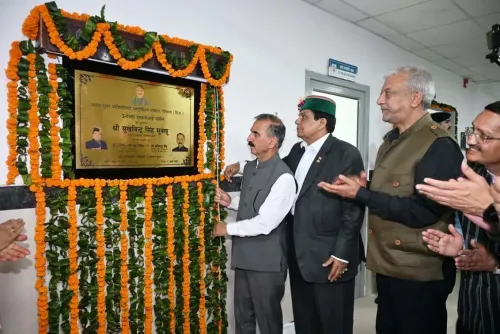
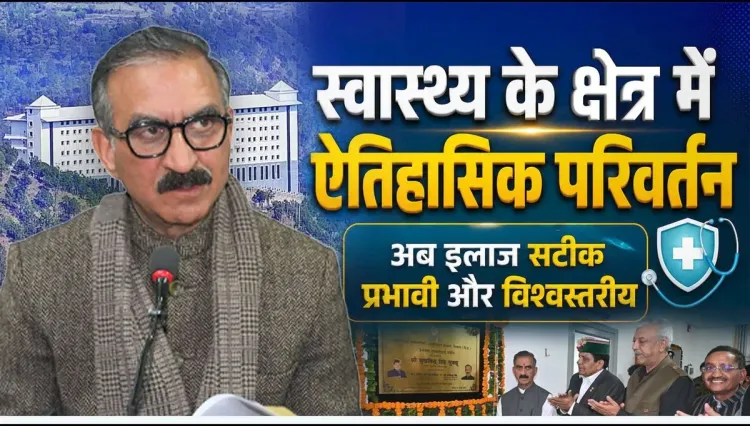
Himachal Pradesh CM Sukhvinder Singh Sukhu has commissioned a ₹23 crore Three-Tesla MRI machine at Super Speciality Hospital Chamiana, eliminating the need for residents to travel outside the state for advanced diagnostics, while also announcing rapid expansion of robotic surgery across state medical colleges.
Key Takeaways
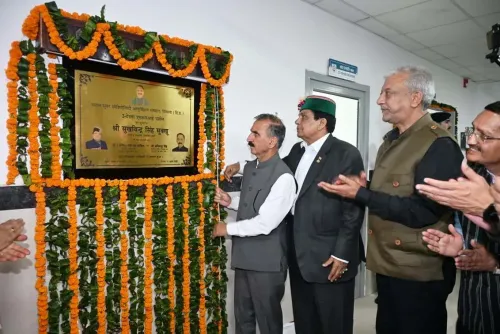
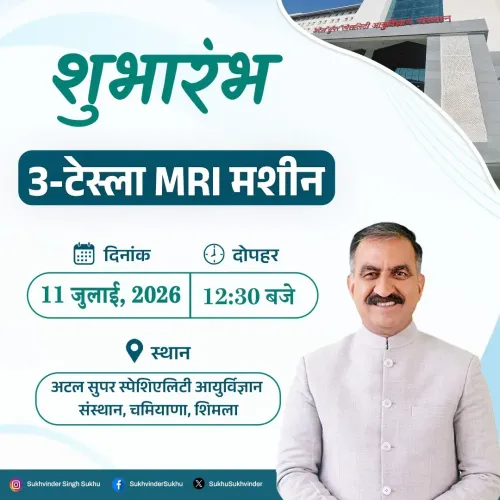
CM Sukhu inaugurated a Three-Tesla MRI machine at Super Speciality Hospital, Chamiana , costing approximately ₹23 crore .
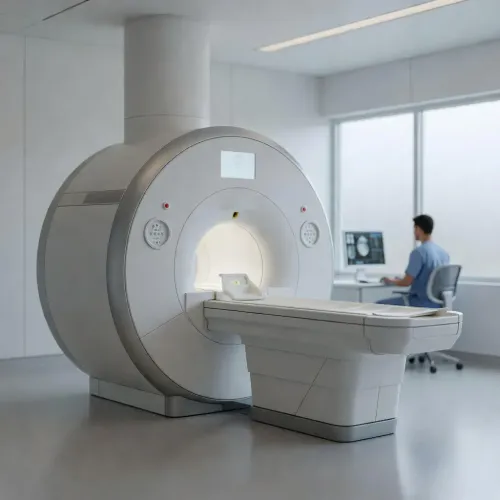
The machine is among the most powerful clinical MRI systems available, offering sharper diagnostic imaging than standard units in Indian public hospitals.
Himachal Pradesh residents will no longer need to travel outside the state for world-class MRI diagnostics, reducing financial and physical burden on patients.
Robotic surgery technology is being rapidly expanded across the state's medical colleges to make procedures more precise and accessible.
The initiative is part of CM Sukhu's broader governance agenda of healthcare transformation since taking office in December 2022 .
State health budget allocations for 2026-27 and robotic surgery rollout timelines across medical colleges will be key indicators to watch.
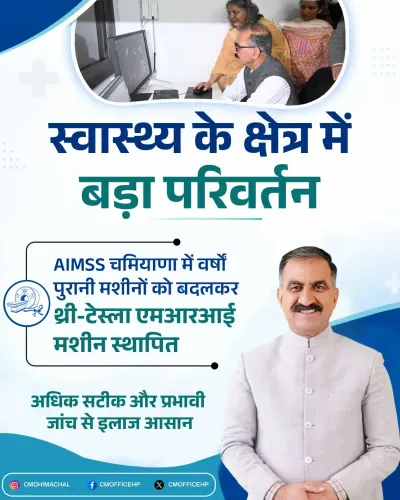
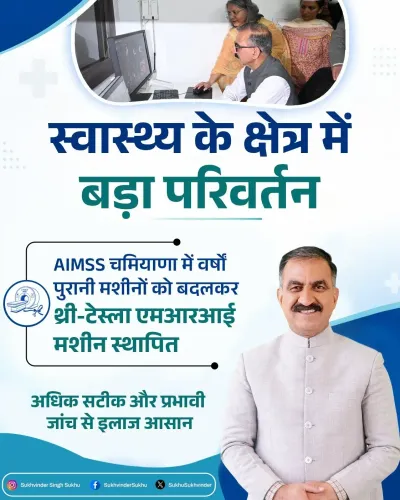
Himachal Pradesh Chief Minister Sukhvinder Singh Sukhu on Sunday, 12 July 2026, announced the commissioning of a state-of-the-art Three-Tesla MRI machine at the Super Speciality Hospital, Chamiana, at an investment of approximately ₹23 crore, marking what he described as a new era in the state's public healthcare delivery.
Context
Posting in Hindi on X, CM Sukhu said the sight of people travelling miles through difficult mountain roads for basic medical treatment was 'ek behad dukhad ehsaas' — 'a deeply painful reality.' He framed the MRI launch as the tangible outcome of a committed effort to transform health services in the hill state.
The Chief Minister stated that residents of Himachal Pradesh will no longer need to travel outside the state for world-class MRI diagnostics. The Three-Tesla machine is among the most powerful clinical MRI systems available, capable of producing significantly sharper images than the more common 1.5-Tesla units widely used in Indian public hospitals.
Policy Backdrop
Himachal Pradesh's rugged terrain has historically been one of the most formidable barriers to tertiary healthcare access in India. Patients from interior districts often had to travel to Chandigarh, Delhi, or Shimla for advanced diagnostics, adding financial and physical burden to already vulnerable families.
The upgrade at Chamiana fits into a broader national pattern of post-pandemic investment in public hospital infrastructure, with several Indian states moving to reduce out-of-state referrals by installing high-end imaging and surgical technology at government facilities. The Ayushman Bharat Pradhan Mantri Jan Arogya Yojana, launched in 2018, provided a policy framework encouraging states to expand tertiary care capacity, particularly in geographically underserved regions.
CM Sukhu's government, in office since December 2022, has positioned healthcare transformation as a core plank of its governance agenda. The ₹23 crore MRI investment at Chamiana is presented as a flagship deliverable under that commitment.
Stakeholders and Impact
The primary beneficiaries are residents of remote hill districts who currently bear the cost and hardship of long-distance medical travel. Access to a Three-Tesla MRI at a government facility could significantly reduce out-of-pocket expenditure for neurological, orthopaedic, and oncological diagnostics — conditions that demand high-resolution imaging.
Beyond diagnostics, CM Sukhu also announced the rapid expansion of robotic surgery technology across the state's medical colleges, describing it as making medical services 'more accessible, precise and high-quality.' Robotic-assisted surgery, already adopted by several other Indian states in their public medical college hospitals, reduces operative complications and recovery time, particularly for complex procedures.
Medical students and resident doctors at Himachal Pradesh's medical colleges stand to gain exposure to cutting-edge surgical platforms, potentially improving the state's capacity to retain trained specialists who might otherwise seek postings in better-equipped urban centres.
What's Next
Attention will now turn to the state's health technology budget allocations for 2026-27 and the specific rollout timelines for robotic surgery units across individual medical colleges. The pace of operationalising these systems — including staffing them with trained technicians and radiologists — will determine whether the infrastructure investment translates into measurable improvement in patient outcomes.
As CM Sukhu put it, this transformation is 'scripting a new chapter of a healthy and self-reliant Himachal' — a vision whose proof will lie in the state's public health indicators over the coming years.
Frequently Asked Questions
What is the Three-Tesla MRI machine launched in Himachal Pradesh?
A Three-Tesla MRI machine is a high-powered magnetic resonance imaging system that produces significantly sharper diagnostic images than the more common 1.5-Tesla units. CM Sukhu commissioned one at Super Speciality Hospital, Chamiana, at a cost of approximately ₹23 crore.
Where is the Super Speciality Hospital Chamiana located?
Super Speciality Hospital Chamiana is a government healthcare facility in Himachal Pradesh, near the state capital Shimla, and is now home to the newly commissioned Three-Tesla MRI machine.
Why did Himachal Pradesh need an advanced MRI machine?
Residents of Himachal Pradesh's remote hill districts had to travel long distances — often to Chandigarh or Delhi — for advanced MRI diagnostics, adding financial and physical hardship. The new machine at Chamiana is intended to provide world-class imaging within the state.
What is robotic surgery and is it coming to Himachal Pradesh?
Robotic surgery uses computer-assisted robotic arms to perform complex procedures with greater precision and smaller incisions, reducing complications and recovery time. CM Sukhu announced that robotic surgery technology is being rapidly expanded across Himachal Pradesh's medical colleges.
What has CM Sukhu done for healthcare in Himachal Pradesh?
Since taking office in December 2022, CM Sukhvinder Singh Sukhu has positioned healthcare transformation as a central governance priority. Key announcements include the ₹23 crore Three-Tesla MRI at Chamiana and the expansion of robotic surgery in state medical colleges.