CM Sukhu launches 3 Tesla MRI at Chamiana institute
Synopsis
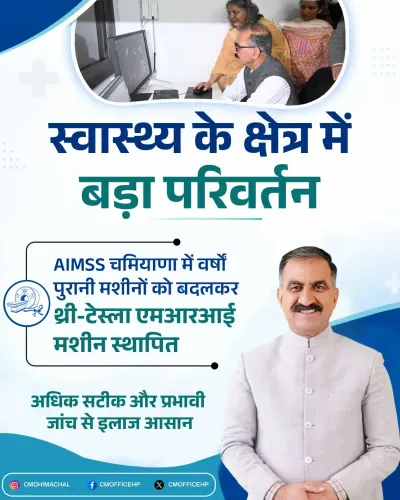
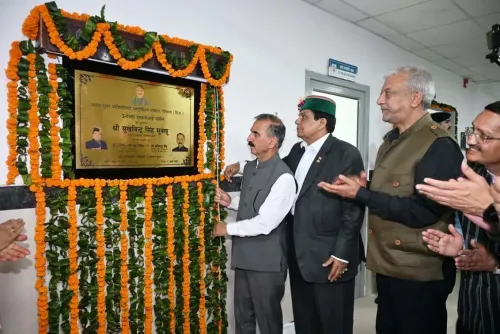
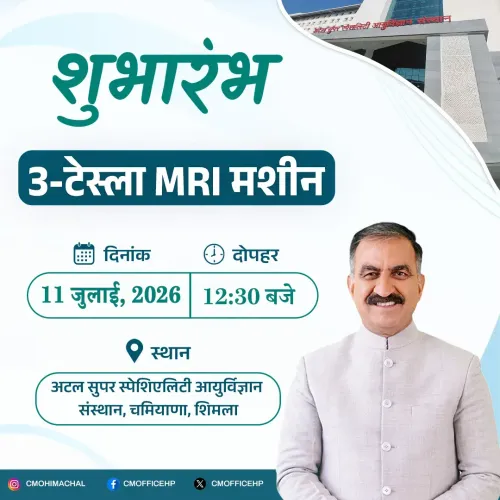
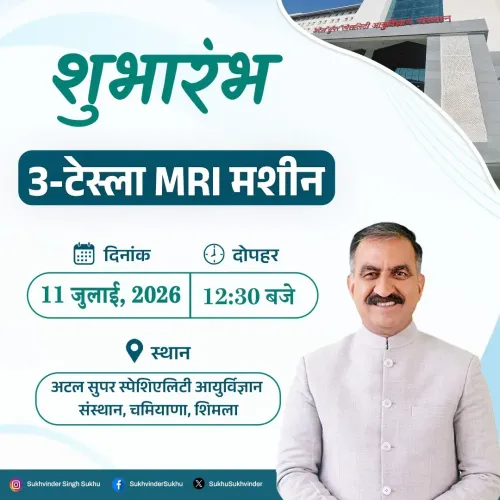
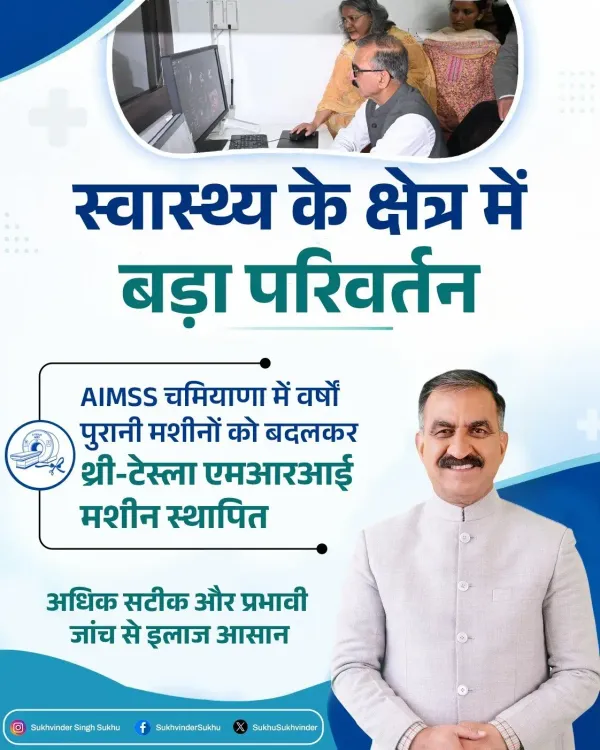
Himachal Pradesh Chief Minister Sukhvinder Singh Sukhu inaugurated a Three Tesla MRI machine at the Super Specialty Ayurvigyan Sansthan in Chamiana on 11 July 2026, enabling in-house advanced diagnostics and ending patient referrals to other hospitals for MRI scans.
Key Takeaways
Chief Minister Sukhvinder Singh Sukhu launched a Three Tesla MRI machine at Super Specialty Ayurvigyan Sansthan, Chamiana on 11 July 2026 .
Patients at the institute will no longer need referrals to other hospitals for MRI investigations.
The upgrade is expected to reduce diagnostic delays, accelerate treatment, and lower out-of-pocket costs for patients.
The launch aligns with the broader National Health Mission framework of expanding diagnostic infrastructure in public hospitals.
Himachal Pradesh's mountainous geography makes in-house diagnostic availability especially significant, reducing travel burden for patients.
The move may signal further diagnostic equipment investments across other Himachal Pradesh districts in the 2026-27 budget cycle.
Himachal Pradesh Chief Minister Sukhvinder Singh Sukhu on Saturday, 11 July 2026, announced the inauguration of an advanced Three Tesla MRI machine at the Super Specialty Ayurvigyan Sansthan, Chamiana, marking a significant upgrade to the state's public healthcare infrastructure. The move is aimed at ending the practice of referring patients to other hospitals for MRI scans, saving both time and money for those seeking diagnosis and treatment.
Context
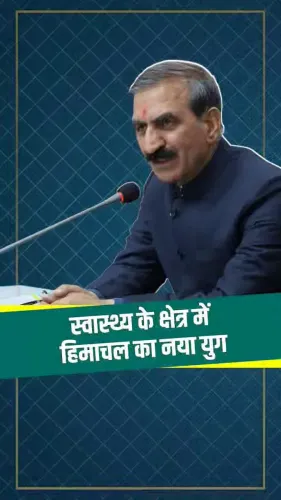
Posting in Hindi on 11 July 2026, CM Sukhu stated: 'स्वास्थ्य व्यवस्था की पहचान बेहतर स्वास्थ्य सुविधाओं से होती है' ['A health system is defined by the quality of its healthcare facilities']. He added that patients would no longer need to visit other hospitals for MRI investigations, and that timely diagnosis would accelerate treatment while conserving both time and money. The Chief Minister framed the launch as part of his government's broader commitment to making quality healthcare accessible without unnecessary hardship.
The Super Specialty Ayurvigyan Sansthan at Chamiana, located near Shimla, is a state-run institution focused on advanced Ayurvedic medical education and patient care. The addition of a Three Tesla MRI — a high-field diagnostic scanner capable of producing detailed anatomical images — represents a notable convergence of modern diagnostic technology with a traditionally Ayurvedic-focused institution.
Policy Backdrop
Himachal Pradesh has progressively expanded diagnostic capabilities in government hospitals under the National Health Mission (NHM) framework, which has supported equipment upgrades in secondary and tertiary public health centres since the mid-2010s. Across India, state governments have incrementally installed high-field MRI scanners in public facilities to reduce diagnostic delays and cut out-of-pocket expenditure for patients who would otherwise turn to private centres.
The pattern reflects a national push to bring specialist-grade diagnostics into government hospitals, particularly in hill states where geography makes referrals to distant facilities costly and time-consuming. For residents of Himachal Pradesh, where mountainous terrain can make inter-hospital travel arduous, in-house MRI availability at a major state institution carries practical significance beyond mere equipment addition.
Stakeholders and Impact
Patients requiring neurological, musculoskeletal, or soft-tissue imaging stand to benefit most directly. Previously, those attending the Chamiana institute who needed MRI scans would have faced referrals to other facilities, incurring travel costs and diagnostic delays that could affect treatment timelines. Staff at the institute — including doctors and technicians — will now be able to order and interpret scans in-house, potentially improving clinical workflow.
The broader public in the Shimla region and surrounding areas also gains a new access point for advanced imaging within the public health system, reducing dependence on private diagnostic centres where MRI costs can run into several thousand rupees per scan.
What's Next
The commissioning of the Three Tesla MRI at Chamiana is likely to prompt scrutiny of whether similar diagnostic upgrades are planned for other districts of Himachal Pradesh during the 2026-27 state budget and assembly sessions. Observers will watch for tender notices or budget line items covering MRI or CT installations at other government hospitals across the state, as the Chamiana launch could set a precedent for further equipment-led healthcare investment under the Sukhu government.
Point of View
Communicable deliverables ahead of any electoral cycle. By framing the upgrade around patient convenience and cost savings rather than capital expenditure, the Chief Minister positions the Congress government as responsive to everyday healthcare burdens. The choice of an Ayurvedic super-specialty institution for a cutting-edge allopathic diagnostic tool also signals an integrative approach, potentially broadening the facility's appeal. If sustained across districts, this equipment-first strategy could meaningfully shift Himachal Pradesh's public health narrative.
NationPress
11 Jul 2026
Frequently Asked Questions
What is the Three Tesla MRI machine launched in Himachal Pradesh?
A Three Tesla MRI machine is a high-field magnetic resonance imaging scanner that produces detailed anatomical images. It was inaugurated by Chief Minister Sukhu at the Super Specialty Ayurvigyan Sansthan in Chamiana, near Shimla, on 11 July 2026.
Where is the Super Specialty Ayurvigyan Sansthan Chamiana located?
The Super Specialty Ayurvigyan Sansthan is located in Chamiana, near Shimla, Himachal Pradesh. It is a state government institution focused on advanced Ayurvedic medical education and patient care.
How will the new MRI machine benefit patients in Himachal Pradesh?
Patients at the Chamiana institute will no longer need to travel to other hospitals for MRI scans. In-house availability of the scanner is expected to reduce diagnostic delays, speed up treatment, and save both time and money for patients.
What did CM Sukhu say about the MRI machine launch?
CM Sukhu stated that a health system is defined by the quality of its facilities, and that the new MRI machine would mean patients no longer face unnecessary hardship seeking diagnosis. He said timely investigations would accelerate treatment and conserve both time and money.
Is the Chamiana MRI upgrade part of a central government scheme?
The upgrade aligns with the National Health Mission framework under which Indian states have expanded diagnostic services in public hospitals since the mid-2010s, though the specific funding source for this installation has not been officially confirmed.