CM Sukhu launches village CBSE schools at Rs 2,000, targets BJP land deal
Synopsis
Himachal Pradesh CM Sukhvinder Singh Sukhu announces CBSE-affiliated government schools in villages at just Rs 2,000 per year, attacking the previous BJP government for rural school closures and alleging a Rs 10,000-crore land parcel in Baddi-Nalagarh was sold for Rs 1 crore under a 'customised package.'
Key Takeaways
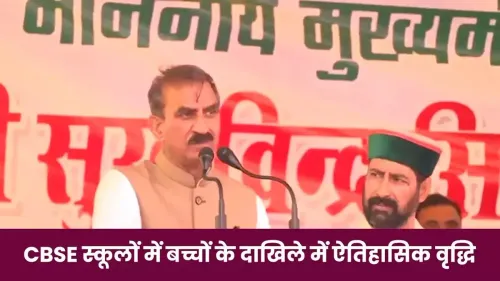
CM Sukhu has launched government CBSE-affiliated schools in rural Himachal Pradesh, charging students just Rs 2,000 per year versus roughly Rs 1 lakh at private CBSE schools.
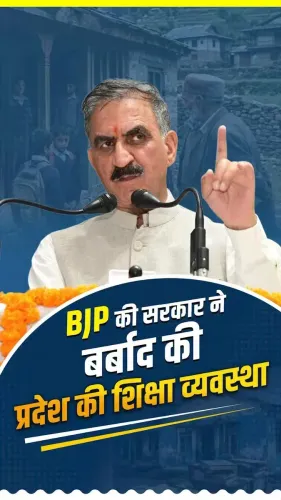
Sukhu attributed the need for the initiative to school closures carried out during former CM Jairam Thakur's BJP tenure from 2017 to 2022 .
The CM alleged that 5,000 bighas of land in Baddi-Nalagarh , valued at Rs 10,000 crore , was transferred for Rs 1 crore under a 'customised package' during the BJP government.
Baddi-Nalagarh in Solan district is Himachal Pradesh's primary industrial corridor, making the alleged valuation gap politically and financially significant.
The land-deal allegation has not been independently verified and no official inquiry has been announced as of this report.
The twin announcements reflect a Congress strategy of combining rural welfare delivery with sharp opposition accountability attacks.
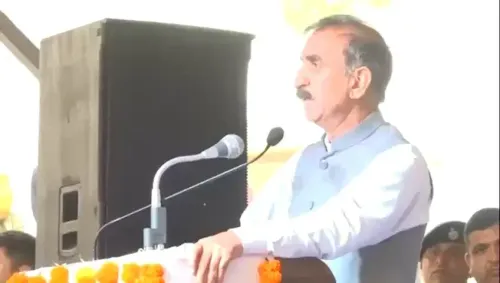
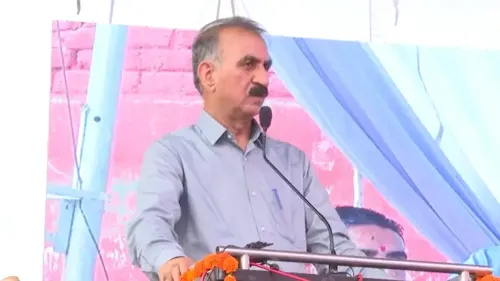
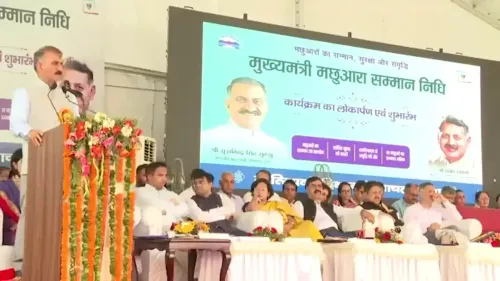
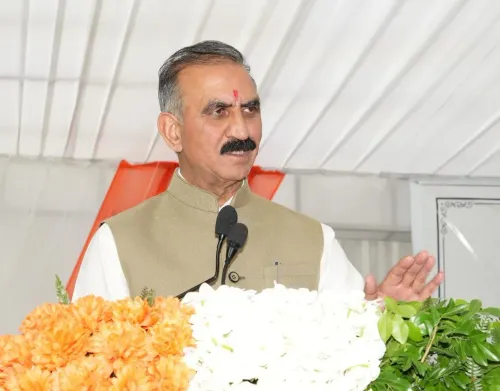
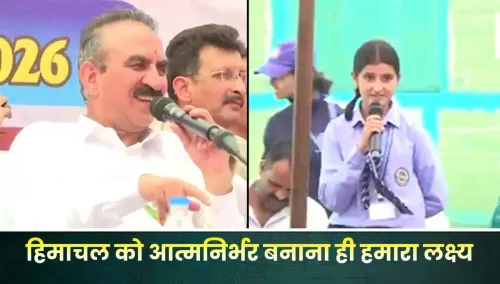
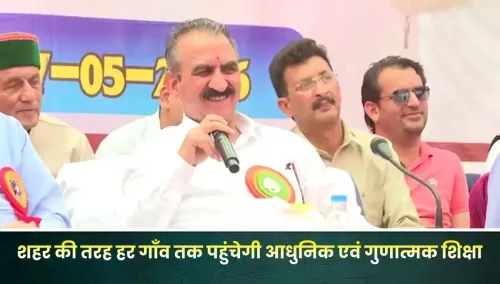
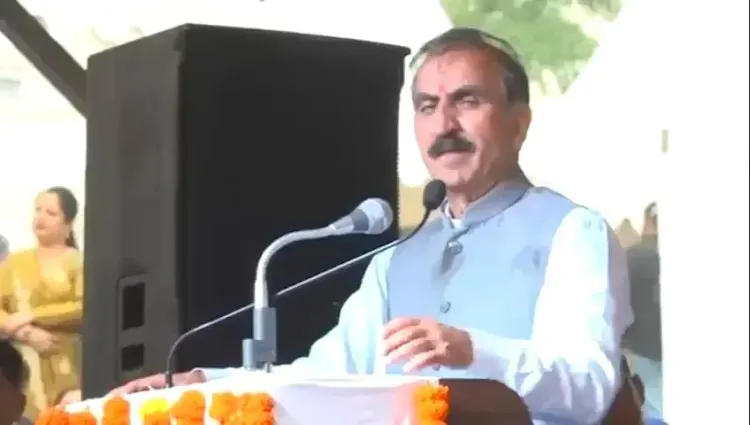
Two thousand rupees versus one lakh — that is the gap Himachal Pradesh Chief Minister Sukhvinder Singh Sukhu says his government is closing for rural children shut out of quality education. Speaking on Friday, 25 September 2026, Sukhu announced the rollout of government-run CBSE-affiliated schools in villages across Himachal Pradesh, charging families just Rs 2,000 per year against the roughly Rs 1 lakh annual cost at private CBSE institutions.
The Rs 2,000 classroom — and what it replaces
Sukhu traced the origin of the initiative directly to a gap left by his predecessor. He stated that during the tenure of former Chief Minister Jairam Thakur of the Bharatiya Janata Party — who led Himachal Pradesh from 2017 to 2022 — schools in rural areas were shut down under a rationalization drive. The Congress government's response, he said, was not to reopen the old institutions but to replace them with something better: CBSE-standard schools staffed with qualified teachers, accessible at a fraction of private-school costs.
The contrast Sukhu draws is deliberate and sharp. Private CBSE schools are largely concentrated in urban centres, placing them financially and geographically beyond most village families. A government CBSE school at Rs 2,000 — equivalent to roughly the cost of two textbooks — repositions the state as the equaliser between Shimla's urban middle class and a farming family in a remote panchayat.
The Baddi-Nalagarh land allegation — Rs 10,000 crore sold for Rs 1 crore
The education announcement was not the only charge Sukhu levelled. He pivoted sharply to an industrial land deal, asking citizens — and BJP legislators specifically — to explain why 5,000 bighas of land in Baddi-Nalagarh, valued at Rs 10,000 crore, was allegedly transferred for just Rs 1 crore under the cover of a 'customised package' during the previous administration.
Baddi-Nalagarh, in Solan district, is Himachal Pradesh's most significant industrial corridor, home to hundreds of pharmaceutical and manufacturing units. Land in this belt commands premium valuations precisely because of the infrastructure and regulatory environment built up over decades. Sukhu's allegation — if substantiated — would imply a write-down of more than 99 percent of market value on a state-owned asset. The claim has not been independently verified, and no official inquiry has been announced as of this writing.
The charge fits a recurring pattern in HP politics: industrial 'customised packages,' which allow the state to offer bespoke incentives to large investors, have periodically drawn scrutiny over whether concessions crossed the line from competitive inducement to asset giveaway.
Congress's twin-track pitch for 2026
Taken together, the two announcements — one a welfare delivery, one an opposition indictment — sketch the Congress government's political strategy clearly. Sukhu is simultaneously building a record of rural-inclusive governance and constructing a counter-narrative against the BJP ahead of any electoral reckoning. The education initiative gives him something tangible to point to in villages; the Baddi-Nalagarh allegation gives the opposition something to answer.
Whether BJP legislators respond to the land-deal challenge, and whether independent scrutiny follows, will determine whether this remains a political talking point or becomes a full accountability moment. For the village children enrolling in those new CBSE classrooms, the politics may matter far less than whether the teachers actually show up.
Point of View
000 CBSE school gives the Congress government a concrete, measurable deliverable it can take to rural voters, while the Baddi-Nalagarh land allegation forces the BJP onto the defensive on governance credibility. The education initiative builds on a familiar Congress equity frame — access to quality schooling regardless of geography or income — and draws a direct causal line between BJP-era school closures and the Congress solution. The land-deal charge, however, is the sharper political weapon: if even partially substantiated, it reframes the BJP's industrial policy not as investor-friendly efficiency but as asset stripping. Together, they signal that the Congress intends to fight on both welfare-delivery and anti-corruption ground simultaneously.
NationPress
26 Sept 2026
Frequently Asked Questions
What is the fee for the new government CBSE schools in Himachal Pradesh villages?
CM Sukhu has announced that students in the new government CBSE-affiliated rural schools will pay just Rs 2,000 per year, compared to approximately Rs 1 lakh at private CBSE schools.
Why did Sukhu start CBSE schools in villages?
Sukhu stated that rural schools were shut down during the previous BJP government under Jairam Thakur (2017-2022), leaving village children without quality education; the new CBSE schools are the Congress government's response to that gap.
What is the Baddi-Nalagarh land deal allegation made by CM Sukhu?
Sukhu alleged that 5,000 bighas of land in Baddi-Nalagarh — worth Rs 10,000 crore — was allotted for just Rs 1 crore under a 'customised package' during the BJP's tenure; the claim has not been independently verified.
Where is Baddi-Nalagarh and why is it significant?
Baddi-Nalagarh is a major industrial corridor in Solan district of Himachal Pradesh, hosting hundreds of pharmaceutical and manufacturing units, making land valuations there among the highest in the state.
What were BJP's school rationalization measures in Himachal Pradesh?
Between 2017 and 2022, the BJP state government carried out school rationalization that included closures or mergers of some rural institutions; the exact number of schools affected has not been officially confirmed.