CM Sukhu Pays Tribute to Rani Durgavati on Her Jayanti
Synopsis
On her birth anniversary, Himachal Pradesh CM Sukhvinder Singh Sukhu honoured Maharani Durgavati, the 16th-century warrior queen of the Gondwana kingdom, saluting her courage, self-respect, and devotion to the nation as an enduring source of inspiration for women's empowerment.
Key Takeaways
CM Sukhvinder Singh Sukhu paid tribute to Maharani Durgavati on her birth anniversary on October 5, 2026 .
Durgavati was a 16th-century queen who ruled the Gondwana kingdom spanning present-day Madhya Pradesh, Chhattisgarh, and adjoining regions.
She led her forces in battle against the Mughal commander Asaf Khan in 1564 near Jabalpur , dying rather than surrendering.
Sukhu described her as a symbol of 'women's honour and empowerment' whose legacy 'will always remain a source of inspiration.' Rani Durgavati Vishwavidyalaya in Jabalpur and a commemorative postal stamp are among the national honours in her memory.
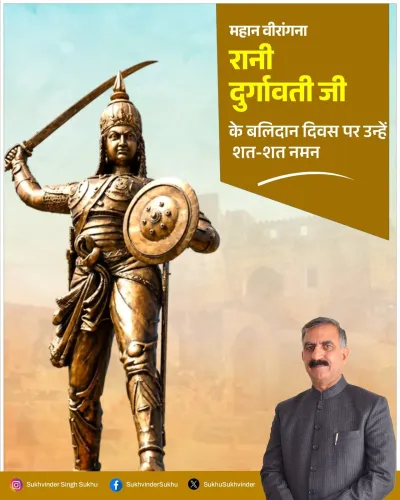
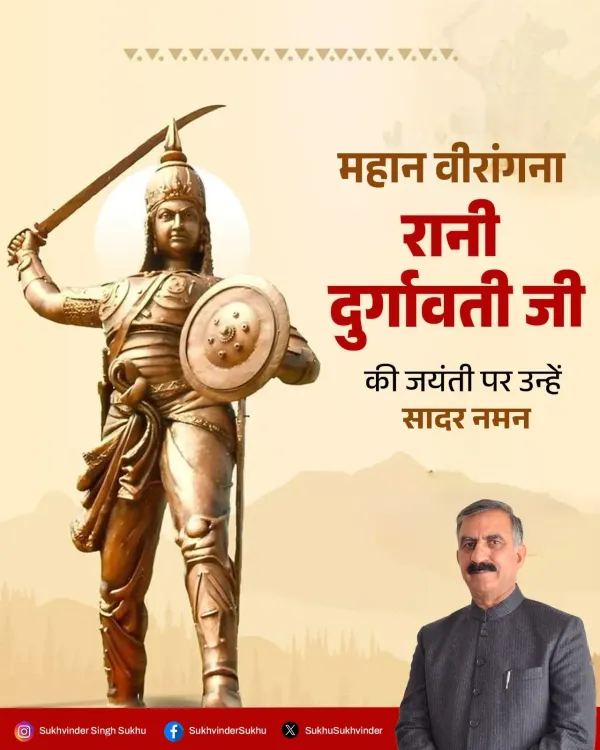
A warrior queen who chose death over surrender — Himachal Pradesh Chief Minister Sukhvinder Singh Sukhu on Monday, October 5, 2026, paid solemn homage to Maharani Durgavati, the fearless ruler of the Gondwana kingdom, on her birth anniversary.
Posting on X in Hindi, CM Sukhu wrote: 'महिला सम्मान व सशक्तिकरण की प्रतीक, गोंडवाना साम्राज्य की वीरांगना महारानी दुर्गावती जी की जयंती पर उन्हें सादर नमन।' — 'A respectful salute to Maharani Durgavati, the symbol of women's honour and empowerment and the brave warrior of the Gondwana empire, on her birth anniversary.' He added that her story of 'courage, self-respect, and devotion to the nation will always remain a source of inspiration.'
Who Was Maharani Durgavati?
Maharani Durgavati was a 16th-century queen who ruled the Gondwana kingdom — covering present-day Madhya Pradesh, Chhattisgarh, and parts of Jharkhand and Odisha — with remarkable military and administrative ability. Born in 1524 into the Chandel Rajput dynasty, she became queen of the Gond kingdom after her marriage to Raja Dalpat Shah. After his death, she governed as regent for her young son, and by all historical accounts, governed with exceptional competence.
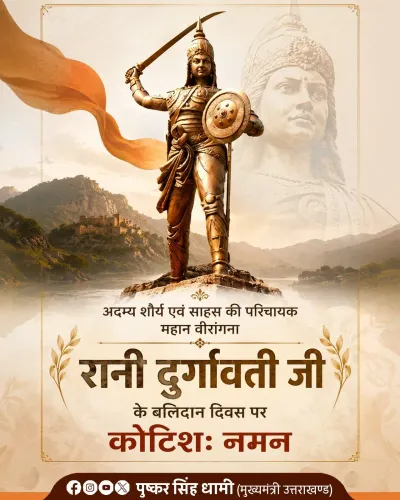
She is best remembered for her armed resistance against the Mughal Empire. In 1564, when Mughal commander Asaf Khan launched a military campaign to annex her kingdom, Durgavati led her forces personally into battle at Narrai, near present-day Jabalpur. Outnumbered and wounded, she refused to retreat or surrender — choosing, by historical accounts, to take her own life rather than be captured. She died on June 24, 1564, a date commemorated annually as Balidan Diwas (Martyrdom Day) in her memory.
A Legacy That Crosses Party Lines
Durgavati's legacy holds deep resonance across India's political spectrum. Her name has been invoked repeatedly by leaders of multiple parties as a symbol of feminine valour and regional pride — particularly in Madhya Pradesh, where the Rani Durgavati Vishwavidyalaya in Jabalpur was named in her honour. The Government of India has also issued a commemorative postal stamp in her name.
For CM Sukhu, the tribute signals the Congress party's consistent effort to celebrate historical figures who represent resistance, dignity, and women's empowerment — values the party regularly highlights in its political messaging.
A queen who governed a kingdom, commanded an army, and refused subjugation even at the cost of her life — Maharani Durgavati's jayanti is not just a date on a calendar, it is a reminder that the most enduring legacies are built not on convenience, but on conviction.
Point of View
Adivasi, and OBC identity intensifies nationally. Durgavati, a Gond queen, carries resonance in central Indian states where tribal electoral mobilisation is increasingly contested. The tribute, while ceremonial, reflects how historical memory is actively deployed as a soft political resource. Leaders across the spectrum pay homage to Durgavati, making her a rare figure of cross-party consensus — but the timing and framing of such tributes often reveals as much about present-day politics as past valour.
NationPress
5 Oct 2026
Frequently Asked Questions
Who was Maharani Durgavati?
Maharani Durgavati was a 16th-century queen who ruled the Gondwana kingdom in central India. Born in 1524, she led her forces against the Mughal Empire in 1564 and chose death over capture, becoming a celebrated symbol of courage and women's empowerment.
When is Maharani Durgavati's jayanti celebrated?
Maharani Durgavati's birth anniversary (jayanti) is celebrated on October 5 each year. Her martyrdom day (Balidan Diwas) falls on June 24, marking the date in 1564 when she died in battle near Jabalpur.
Why did CM Sukhu pay tribute to Rani Durgavati?
Himachal Pradesh Chief Minister Sukhvinder Singh Sukhu paid tribute on her birth anniversary, calling her a symbol of women's honour, self-respect, and national devotion whose legacy remains an enduring source of inspiration.
Where was the Gondwana kingdom located?
The Gondwana kingdom ruled by Maharani Durgavati covered present-day Madhya Pradesh, Chhattisgarh, and parts of Jharkhand and Odisha. The battle in which she died took place near modern-day Jabalpur in Madhya Pradesh.
What institutions are named after Rani Durgavati?
Rani Durgavati Vishwavidyalaya, a prominent university in Jabalpur, Madhya Pradesh, is named in her honour. The Government of India has also issued a commemorative postal stamp recognising her legacy.