CM Sukhu Pays Tribute to Rani Lakshmibai on Her Jayanti
Synopsis
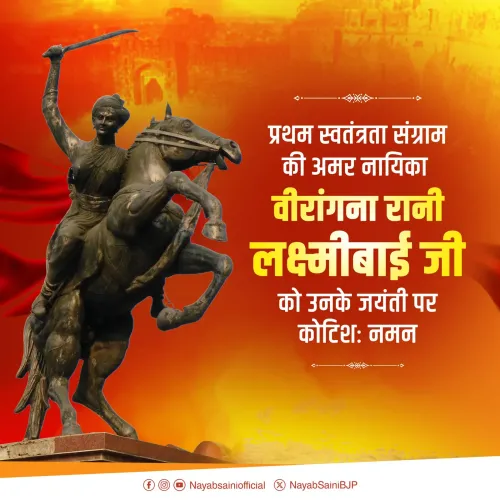
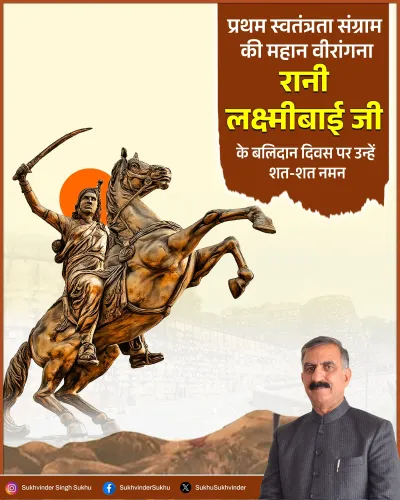
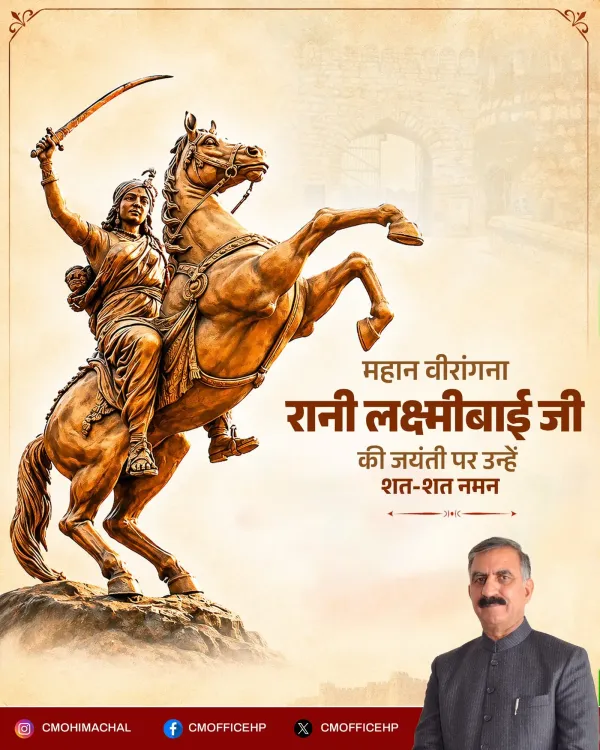
On her birth anniversary, Himachal Pradesh Chief Minister Sukhvinder Singh Sukhu honoured Rani Lakshmibai as an unmatched symbol of women's power and sacrifice, calling her courage an eternal inspiration for national service and duty.
Key Takeaways
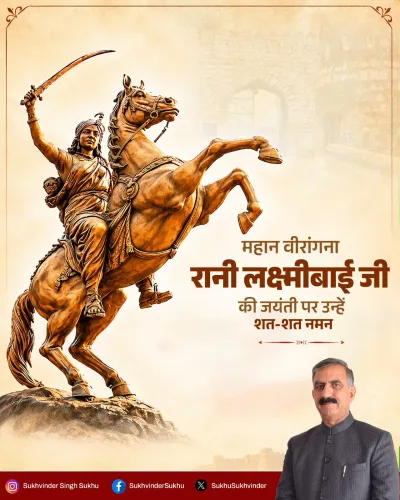
Himachal Pradesh CM Thakur Sukhvinder Singh Sukhu issued a tribute to Rani Lakshmibai on her jayanti, 19 November 2026 .
The message, posted in Hindi from the Chief Minister's Office's official X account, described her as an unparalleled example of Nari Shakti — women's power.
Sukhu called her courage, sacrifice, and valour in defending the motherland an eternal inspiration for national service and dedication to duty.
Rani Lakshmibai of Jhansi was a key leader of the 1857 revolt against British colonial rule, widely revered as a symbol of resistance.
Tributes to Rani Lakshmibai on 19 November form a recurring national practice among Indian political leaders across party lines.
A warrior queen who refused to surrender her kingdom — and her life — to colonial rule turns 169 years since her birth on 19 November 2026, and Himachal Pradesh Chief Minister Thakur Sukhvinder Singh Sukhu has offered a formal tribute through the Chief Minister's Office of Himachal Pradesh's official account on X.
In a message posted in Hindi, CM Sukhu saluted Rani Lakshmibai as 'nari shakti ki apratim misal' — 'an unparalleled embodiment of women's power' — and described her courage, sacrifice, and valour in defending the motherland as an eternal inspiration for national service and dedication to duty.
The Queen of Jhansi and the 1857 Legacy
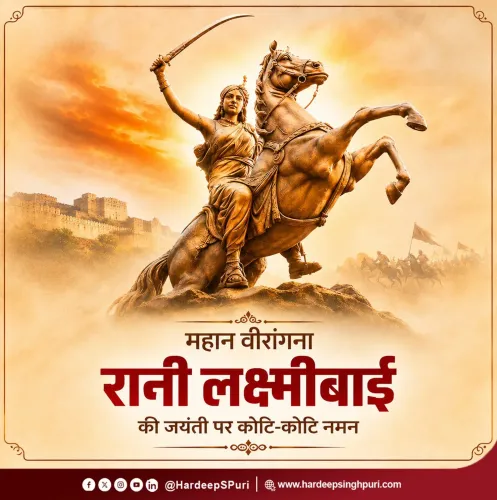
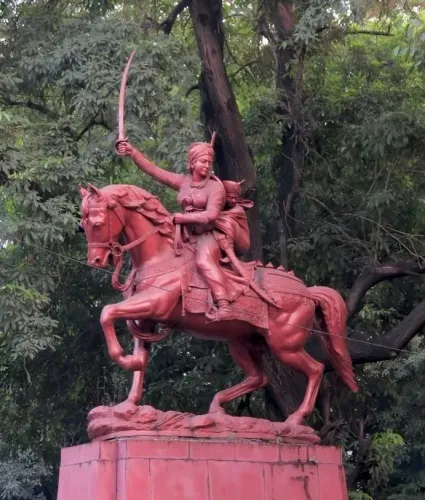
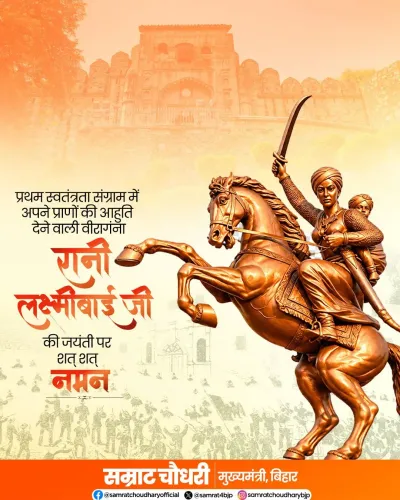
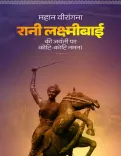
Rani Lakshmibai of Jhansi remains one of the most enduring icons of India's resistance to British colonial rule. Her decision to take up arms during the revolt of 1857 — refusing the British annexation of her kingdom under the Doctrine of Lapse — transformed her into a symbol of defiance that has echoed across generations. She fell in battle near Gwalior, widely mourned as a martyr who chose the sword over submission.
Her legacy has carried particular resonance in the modern era under the banner of 'Nari Shakti' — women's power — a phrase that now anchors everything from government welfare schemes to political rhetoric celebrating female leadership. For state governments, her jayanti is a moment to publicly align with that tradition.
A Recurring National Ritual of Remembrance
Tributes to Rani Lakshmibai on 19 November have become a fixed feature of India's political calendar. Leaders across party lines and from every state routinely issue statements on this date, affirming themes of patriotism, sacrifice, and women's strength. The gesture carries no direct policy announcement — but it functions as a reaffirmation of shared historical memory, signalling continuity with the values the revolt figures represent.
For CM Sukhu, who has led the Congress government in Himachal Pradesh since December 2022, the tribute also places the state squarely within that national conversation — invoking the queen's story as a living call to duty, not merely a commemorative footnote.
One hundred and sixty-nine years on, the Rani of Jhansi is still being asked to inspire a nation. That, perhaps, is her most remarkable legacy of all.
Point of View
One that allows leaders of every ideological stripe to claim lineage from the country's anti-colonial founding trauma. For the Congress-led government in Himachal Pradesh, invoking her legacy through the lens of Nari Shakti also aligns with a broader national narrative that frames women's empowerment as a continuation of historical resistance. CM Sukhu's statement carries no policy weight on its own, but it reinforces a consistent pattern: the 1857 revolt figures, and Rani Lakshmibai above all, remain live political and cultural currency rather than museum pieces. How that symbolic capital translates into substantive women-centric governance remains the more pressing question.
NationPress
19 Nov 2026
Frequently Asked Questions
When is Rani Lakshmibai's jayanti celebrated?
Rani Lakshmibai's birth anniversary, her jayanti, is celebrated every year on 19 November . Indian political leaders and state governments across the country routinely mark the occasion with public tributes.
Who was Rani Lakshmibai?
Rani Lakshmibai was the Queen of Jhansi and one of the leading figures of the 1857 revolt against British colonial rule. She is widely regarded as a symbol of Indian resistance, women's courage, and patriotic sacrifice.
What did Himachal Pradesh CM Sukhu say on Rani Lakshmibai's jayanti?
CM Thakur Sukhvinder Singh Sukhu paid tribute to Rani Lakshmibai on 19 November 2026 , calling her an unparalleled symbol of Nari Shakti and saying her courage and sacrifice would forever inspire national service and dedication to duty.
Who is the current Chief Minister of Himachal Pradesh?
Thakur Sukhvinder Singh Sukhu is the Chief Minister of Himachal Pradesh. He has led the Congress government in the state since December 2022 .
What is the significance of Nari Shakti in the context of Rani Lakshmibai?
Nari Shakti , meaning women's power, is frequently invoked in connection with Rani Lakshmibai because her armed resistance against British annexation is seen as a foundational example of female leadership and courage in Indian history.