Jaishankar meets Taro Aso, eyes deeper India-Japan strategic ties
Synopsis
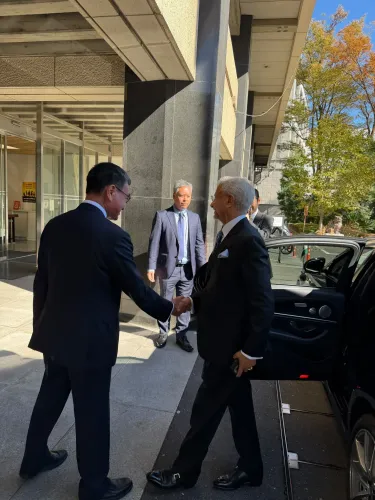
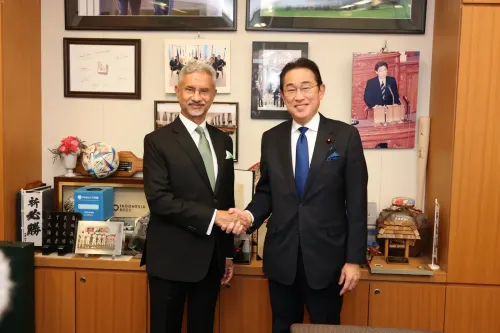
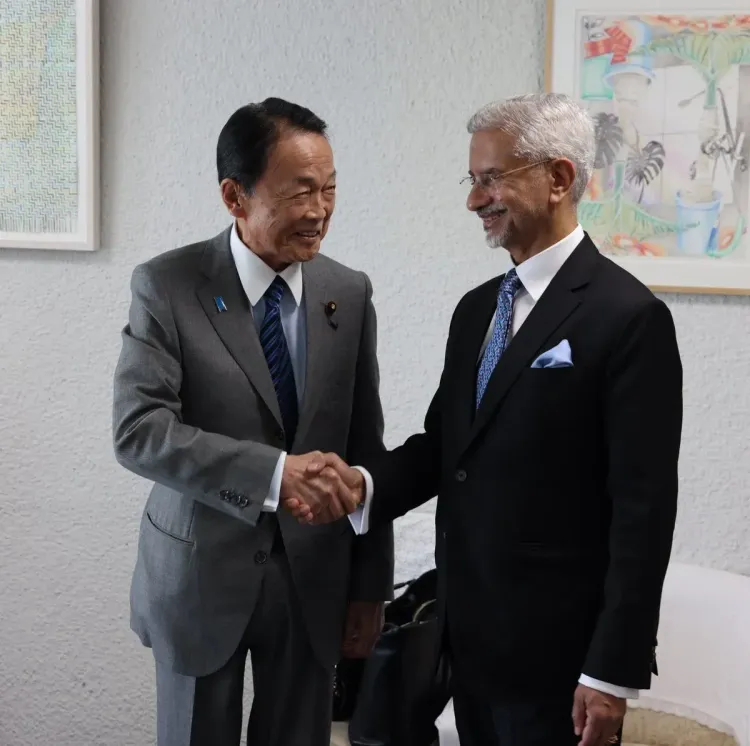
External Affairs Minister Dr. S. Jaishankar met LDP Vice President and former Japanese PM Taro Aso on November 19, 2026, with both sides committing to stronger India-Japan strategic, economic, and energy security cooperation across government, business, and people-to-people channels.
Key Takeaways
Jaishankar met Taro Aso , Vice President of Japan's Liberal Democratic Party , on November 19, 2026 .
Both sides agreed on strengthening strategic, economic, and energy security cooperation between India and Japan.
Taro Aso is a former Prime Minister and Finance Minister of Japan, one of Tokyo's most senior political figures.
The India-Japan partnership is built on agreements including the Strategic and Global Partnership (2006) , Security Cooperation Declaration (2008) , and CEPA (2011) .
Energy security was explicitly flagged as a priority, reflecting both nations' strategic and economic imperatives.
Jaishankar emphasised deepening ties across government, businesses, and people — signalling a multi-track expansion of the relationship.
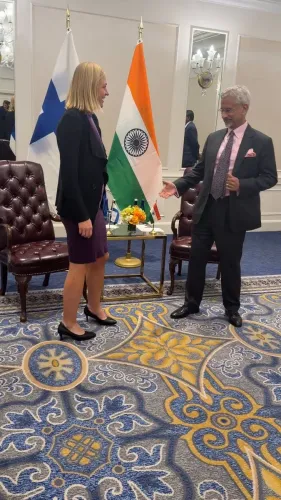
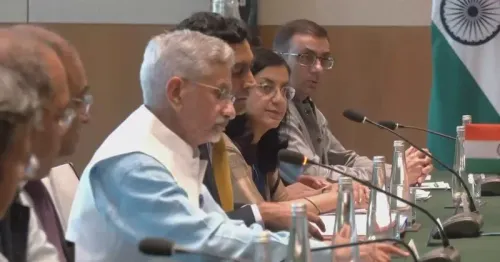
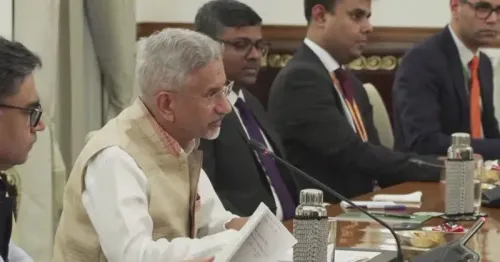
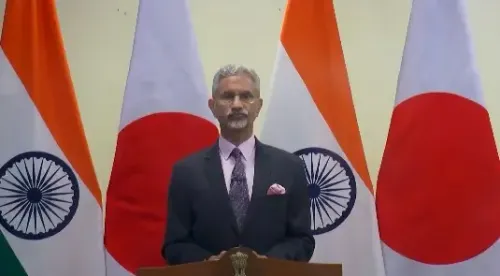
Two veterans of the India-Japan relationship sat down on Thursday, November 19, 2026 — and the conversation carried the weight of decades of alliance-building. Union External Affairs Minister Dr. S. Jaishankar met with Mr. Taro Aso, Vice President of Japan's ruling Liberal Democratic Party (LDP), with both sides agreeing on the urgency of deepening strategic, economic, and energy security cooperation between India and Japan.
Jaishankar, posting on X, described the encounter as a pleasure and underscored Aso's personal commitment to the partnership: 'Value his sentiments and commitment towards deepening our partnership across government, businesses and people.' The national flags of both countries — 🇮🇳 🇯🇵 — punctuated the post, a small but deliberate signal of warmth.
Who is Taro Aso — and why his voice carries weight
Taro Aso is no ceremonial figurehead. A former Prime Minister of Japan and long-serving Finance Minister, he is among the most senior political figures in Tokyo's power architecture. As Vice President of the Liberal Democratic Party — Japan's dominant conservative force that has shaped its foreign and economic posture for most of the post-war era — Aso brings both historical depth and current political relevance to any conversation he joins.
His track record on India is notable. Aso has long been an advocate for a stronger India-Japan axis in Asia, viewing it as a natural counterweight to shifting regional dynamics. A meeting between him and India's External Affairs Minister is not a courtesy call — it is a channel between two countries' strategic establishments.
Energy security and economics: the new centre of gravity
The specific mention of energy security alongside strategic and economic cooperation is the most telling line in Jaishankar's post. India and Japan have long cooperated on defence exercises, infrastructure financing, and supply-chain resilience — foundations laid by the India-Japan Strategic and Global Partnership (elevated in 2006), the Joint Declaration on Security Cooperation (2008), and the Comprehensive Economic Partnership Agreement (2011).
But energy security has surged to the top of both nations' priority lists. For India, securing reliable, diversified energy supply chains is a core economic and geopolitical imperative. For Japan, whose own energy vulnerability remains acute, partnerships with stable, like-minded democracies carry strategic logic beyond economics alone. The Quad framework has further embedded this alignment, with critical technologies and clean energy among its working priorities.
People, businesses, governments — Jaishankar's three-track pitch
The External Affairs Minister's framing — 'government, businesses and people' — signals an intent to widen the partnership beyond high-level diplomacy. Indian and Japanese businesses stand to gain from closer supply-chain integration, infrastructure co-investment, and joint ventures in sectors like semiconductors, green hydrogen, and defence manufacturing. People-to-people ties, still the thinnest strand in the India-Japan relationship relative to its strategic ambitions, are increasingly being brought into formal bilateral conversations.
The next India-Japan annual summit will be the natural moment to watch for concrete follow-through on the working-group commitments both sides are building toward. When Jaishankar and Aso agree on the direction, the summit is usually where the road map gets signed.
Point of View
Who have long championed Tokyo's strategic pivot toward New Delhi. The explicit inclusion of 'energy security' signals that India is working to embed this agenda within every significant bilateral conversation, as global supply-chain anxieties intensify. Aso's personal credibility on the India relationship adds political weight that outlasts any single government's tenure. This kind of senior-level pre-summit alignment is typically the architecture that makes annual summit deliverables stick.
NationPress
19 Nov 2026
Frequently Asked Questions
Who is Taro Aso and what is his role in Japan?
Taro Aso is the Vice President of Japan's Liberal Democratic Party and a former Prime Minister and Finance Minister of Japan, making him one of Tokyo's most senior political figures.
What did Jaishankar and Taro Aso discuss in their November 2026 meeting?
They agreed on the need to strengthen India-Japan strategic, economic, and energy security cooperation, with Jaishankar emphasising ties across government, businesses, and people.
What is the current state of India-Japan relations?
India and Japan share a Comprehensive Strategic and Global Partnership, underpinned by agreements on economic cooperation (CEPA, 2011), security (2008 Joint Declaration), and growing Quad-linked collaboration on defence and critical technologies.
Why is energy security a focus in India-Japan talks?
Both India and Japan face energy supply vulnerabilities and are prioritising diversified, secure energy partnerships. The Quad framework has further elevated joint energy and critical technology cooperation as a shared strategic priority.
What comes next after the Jaishankar-Aso meeting?
The next India-Japan annual summit is the key milestone to watch, where working-group commitments on energy and economic security are typically formalised into concrete deliverables.