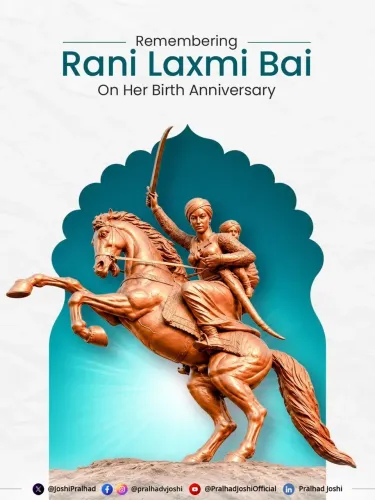
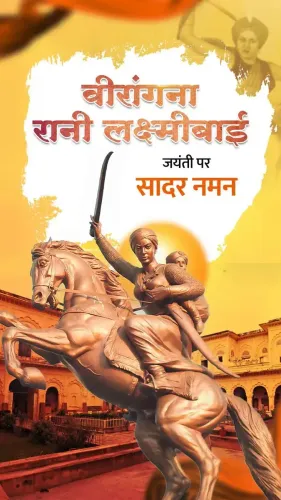
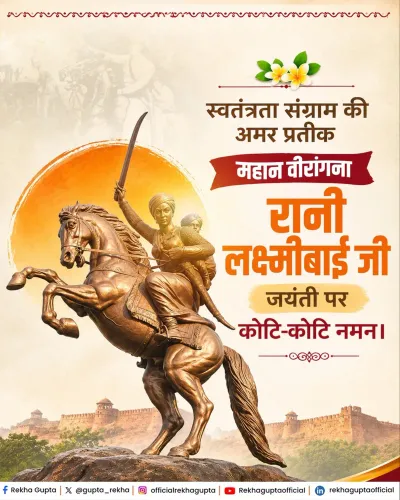
Amit Shah pays tribute to Rani Lakshmibai on her birth anniversary
Synopsis
Union Home Minister Amit Shah on 19 November 2026 honoured Rani Lakshmibai on her birth anniversary, calling her sacrifice in the 1857 First War of Independence an eternal inspiration and saluting her as a supreme symbol of women's power.
Key Takeaways
Union Home Minister Amit Shah posted a tribute to Rani Lakshmibai on her birth anniversary on 19 November 2026 .
Shah hailed her as a warrior who challenged British rule in the 1857 First War of Independence and sacrificed everything for the motherland.
He described her as a symbol of nari shakti (women's power) whose valour and patriotism would inspire Indians for generations.
Rani Lakshmibai , queen of Jhansi , died in battle near Gwalior fighting the British East India Company.
November 19 tributes to Lakshmibai are a cross-party tradition in Indian political life.
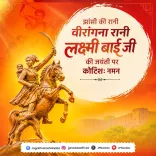
She rode into battle against the most powerful empire of her age and refused to surrender even at the cost of her life. On Thursday, 19 November 2026, Union Home Minister Amit Shah paid tribute to Rani Lakshmibai of Jhansi on her birth anniversary, calling her sacrifice for the motherland an eternal source of inspiration for every Indian.
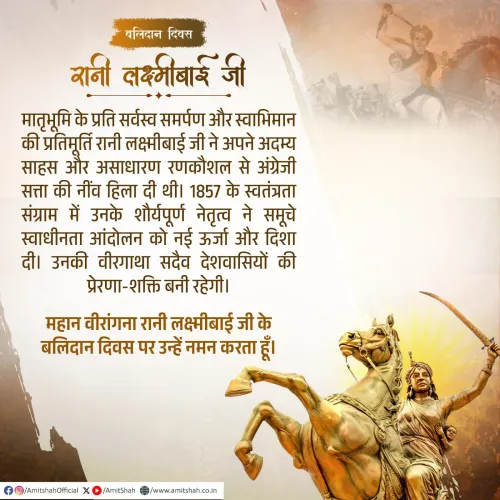
Posting in Hindi on X, Shah wrote: '1857 ke pratham swatantrata sangram mein angrezi hukumat ko chunauti dekar atulniy shaurya ka parichay dene wali veerangana Rani Lakshmibai ji ne matrubhumi ki swatantrata ke liye apna sarvasy balidan kar diya.' — 'Rani Lakshmibai, the valiant warrior queen who displayed incomparable courage by challenging British rule in the First War of Independence of 1857, sacrificed everything for the freedom of the motherland.' He added that her renunciation, valour, and patriotism would inspire the people of this country for ages to come, and offered koti-koti naman — a salute from millions — to the symbol of women's power on her birth anniversary.
Queen of Jhansi and the revolt of 1857
Rani Lakshmibai remains one of the most celebrated figures of India's freedom struggle. As the queen of the princely state of Jhansi in present-day Uttar Pradesh, she led her forces against the British East India Company during the 1857 uprising — an event that Indian historiography designates the First War of Independence. Rather than capitulate to annexation under the Doctrine of Lapse, she took up arms, commanded her troops in the field, and ultimately fell in battle near Gwalior, becoming an enduring symbol of armed resistance and national pride.
A tribute that crosses party lines every November 19
November 19 — Lakshmibai's birth anniversary — draws public tributes from leaders across India's political spectrum each year, a rare moment of cross-party consensus. The themes Shah invoked — sacrifice, valour, and women's power (nari shakti) — are central to how the anniversary is commemorated in official discourse, school curricula, and civic ceremonies from Jhansi to Gwalior. Her legacy sits at the intersection of nationalist memory and the broader conversation around women's agency in Indian history.
Generations after she rode out of Jhansi's gates, Rani Lakshmibai still sets the standard by which Indian leaders measure courage — and on this anniversary, that standard was invoked once more from the highest offices of government.
Point of View
The post aligns ceremonial tribute with a broader political narrative that connects historical resistance to contemporary governance themes around women's empowerment. The cross-party nature of November 19 commemorations, however, means the tribute carries genuine civic weight beyond factional messaging. At a time when official India actively revisits 1857 historiography, gestures like this keep that reframing in public view.
NationPress
19 Nov 2026
Frequently Asked Questions
When is Rani Lakshmibai's birth anniversary celebrated?
Rani Lakshmibai's birth anniversary is celebrated on 19 November each year. Leaders and citizens across India mark the day with tributes honouring her role in the 1857 First War of Independence.
Why is Rani Lakshmibai called a symbol of nari shakti?
Rani Lakshmibai is called a symbol of nari shakti (women's power) because she personally led troops in battle against the British East India Company in 1857, defying the norms of her era and refusing to surrender even at the cost of her life.
What was Rani Lakshmibai's role in the 1857 revolt?
As queen of Jhansi , Rani Lakshmibai resisted British annexation and took up arms during the 1857 uprising, commanding her forces in the field. She died in battle near Gwalior and became one of the most iconic figures of India's freedom struggle.
What did Amit Shah say about Rani Lakshmibai?
On 19 November 2026 , Union Home Minister Amit Shah posted that Rani Lakshmibai sacrificed everything for the motherland by challenging British rule in the 1857 First War of Independence, and that her valour and patriotism would inspire Indians for ages to come.
Where did Rani Lakshmibai die?
Rani Lakshmibai died in battle near Gwalior , in present-day Madhya Pradesh, while fighting against British East India Company forces during the 1857 revolt.