CM Sukhu recovers ₹401 crore for HP from Wild Flower Hall
Synopsis
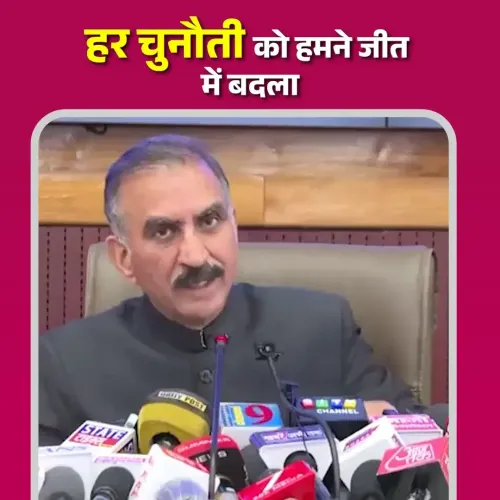
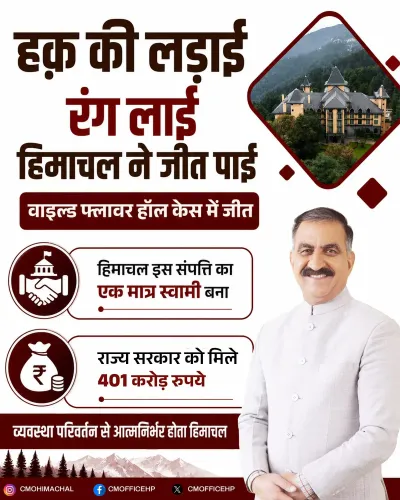
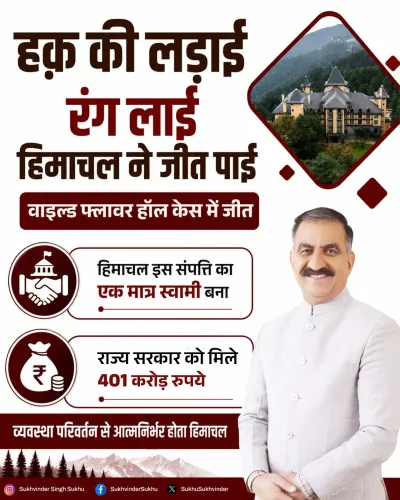
Himachal Pradesh CM Sukhvinder Singh Sukhu says his government won a Supreme Court battle over Wild Flower Hall, took control of the property for seven days to complete mutation, and recovered ₹401 crore with interest — dues the state had not received for 23 years under successive governments including the BJP.
Key Takeaways
₹401 crore recovered with interest from Wild Flower Hall , Mashobra, near Shimla, deposited into the Himachal Pradesh state exchequer .
The state had received no revenue from Wild Flower Hall for 23 years , with its ownership share being progressively reduced.
The Supreme Court of India ruled in favour of the Himachal Pradesh government, enabling a formal takeover of the property.
The state government held direct control of Wild Flower Hall for seven days and completed the legal mutation process during that period.
CM Sukhu blamed the previous BJP government (2017–2022) for 'weak political will' and failure to protect state assets.
Sukhu indicated that other projects are also under review, signalling a broader state asset-recovery drive.
After 23 years of silence from a prized heritage property, Himachal Pradesh Chief Minister Sukhvinder Singh Sukhu announced on Friday, November 20, 2026 that the state has successfully recovered ₹401 crore — with interest — from Wild Flower Hall, a landmark hotel property near Shimla that the state exchequer had not received a single rupee from since the original lease arrangement was put in place over two decades ago.
23 years of empty hands — and how the tide turned
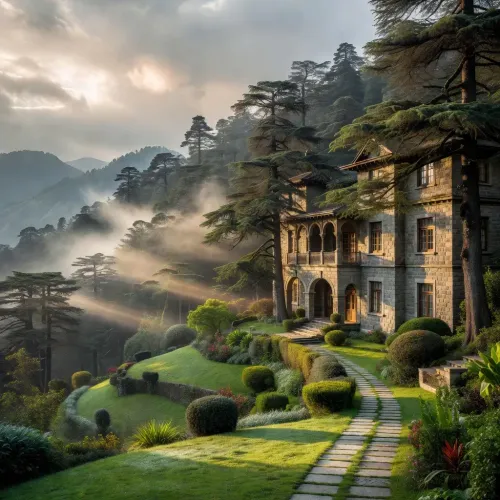
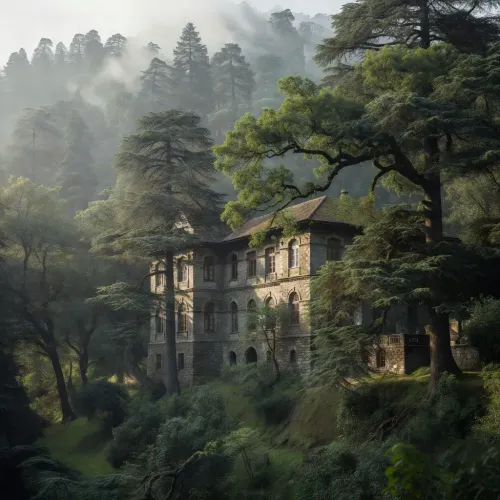
Wild Flower Hall, a heritage property in Mashobra on the outskirts of Shimla, has long been among Himachal Pradesh's most significant tourism assets. Yet for 23 years, the state received nothing from it — and, as CM Sukhu noted, its share in the arrangement was being progressively reduced each time the matter came up for review. The numbers were not just stagnant; they were moving in the wrong direction.
Sukhu's government studied the full portfolio of such projects, took the Wild Flower Hall dispute to the Supreme Court of India, and won. What followed was decisive: the state government seized direct control of the property, held it for seven days, and completed the formal mutation — the legal transfer of ownership records — before releasing control. The ₹401 crore, calculated as dues plus interest accumulated over 23 years, was then deposited into the Himachal Pradesh state exchequer.
The BJP years under scrutiny
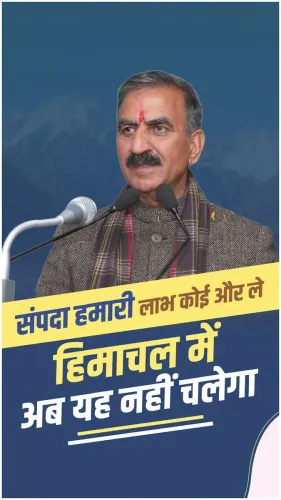
CM Sukhu did not mince words about the political dimension. 'सरकार के ढुलमुल रवैये और कमजोर राजनीतिक इच्छाशक्ति' — 'the government's dithering attitude and weak political will' — was his characterisation of how the previous Bharatiya Janata Party administration, which governed Himachal Pradesh from 2017 to 2022, handled state assets. Sukhu argued that the BJP simply did not pay attention to what was happening to the state's properties, allowing the revenue loss to compound year after year.
The charge fits a well-worn pattern in Indian state politics: each incoming government audits legacy contracts signed or inherited by its predecessor, often discovering disputes that were left to fester. What is less common is a resolution of this scale — a nine-figure recovery via the apex court — delivered in a single term.
What ₹401 crore means for a state under fiscal pressure
Himachal Pradesh, a small hill state heavily dependent on central transfers and borrowings, has faced recurring fiscal stress. A one-time inflow of ₹401 crore directly into the treasury is not a symbolic win — it is a material injection. Sukhu's post also signals that Wild Flower Hall is not an isolated case: he referenced studying 'all projects,' suggesting further audits and possible legal action on other assets where the state believes its dues have been underpaid or eroded over the years.
The government's next moves — how the recovered funds are deployed, and whether litigation proceeds on the other properties hinted at in Sukhu's post — will determine whether this becomes a one-time headline or the opening act of a broader asset-recovery drive.
For a state that watched its share of a heritage property shrink for over two decades, ₹401 crore landing in the treasury in a single court-backed operation is not just an accounting entry — it is a statement of intent.
Point of View
Calculated with interest over 23 years, is designed to be auditable and difficult to dispute, lending the claim political durability beyond a single news cycle. If Sukhu follows through on auditing the 'other projects' he referenced, this could mark the beginning of a systematic asset-recovery campaign that doubles as an election-ready accountability narrative. The BJP will need to offer a counter-narrative on why these disputes were not resolved during their 2017–2022 term — silence on that front will only deepen the contrast.
NationPress
20 Nov 2026
Frequently Asked Questions
What is Wild Flower Hall and why is it in the news?
Wild Flower Hall is a heritage hotel property located in Mashobra, near Shimla, Himachal Pradesh. It is in the news because CM Sukhvinder Singh Sukhu announced that his government won a Supreme Court case over the property, took control of it, completed the legal mutation, and recovered ₹401 crore in dues and interest that had not been paid to the state for 23 years.
How did Himachal Pradesh recover ₹401 crore from Wild Flower Hall?
The Himachal Pradesh government fought and won a legal battle in the Supreme Court of India over Wild Flower Hall. Following the court's ruling, the state took direct control of the property for seven days, completed the formal mutation (legal transfer of records), and recovered ₹401 crore — representing 23 years of dues calculated with interest — which was deposited into the state exchequer.
Why did Himachal Pradesh not receive money from Wild Flower Hall for 23 years?
CM Sukhu attributed the revenue loss to weak oversight and lack of political will, particularly criticising the previous BJP government (2017–2022). He stated that successive governments failed to monitor the state's interest in the property, and Himachal Pradesh's ownership share was being progressively reduced over time.
What did the Supreme Court decide about Wild Flower Hall?
The Supreme Court of India ruled in favour of the Himachal Pradesh state government, enabling it to formally take over Wild Flower Hall. The exact date of the judgment has not been officially specified in the public announcement, but CM Sukhu confirmed the legal victory allowed the state to complete a formal mutation of the property.
Will Himachal Pradesh review other state properties for similar revenue recoveries?
CM Sukhu indicated that his government has already studied all such projects and that Wild Flower Hall is not the only asset under review. While no specific properties or amounts have been named beyond Wild Flower Hall, further audits or legal action on other state assets appear likely based on his public statement.