CM Sukhu: Supreme Court ends 15-yr BBMB dispute, HP gains ₹20,000 cr
Synopsis
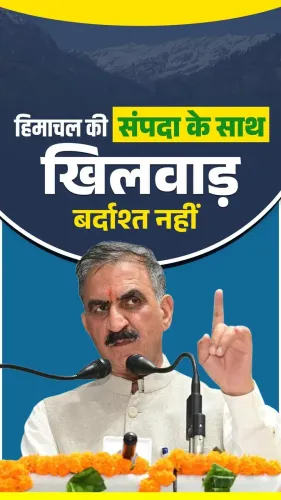
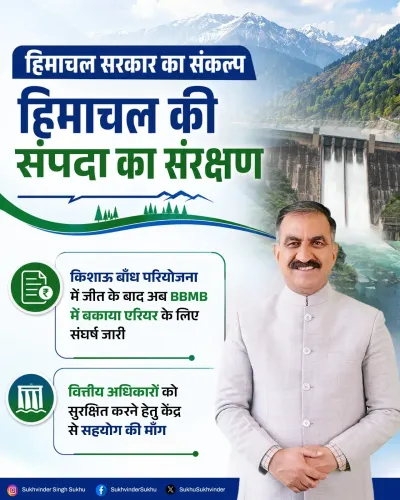
CM Sukhvinder Singh Sukhu announced a Supreme Court win in a 15-year BBMB arrears case granting HP 60 crore power units over 20 years, worth ~₹20,000 crore, alongside school infrastructure funds and new Moral Science classes at Maihla.
Key Takeaways
The Supreme Court of India ruled in favour of Himachal Pradesh in a 15-year-old BBMB arrears case on 6 November 2026 .
The state will receive 60 crore units of electricity supplied over 20 years as a result of the verdict.
CM Sukhu estimates the ruling will generate approximately ₹20,000 crore in financial benefit for Himachal Pradesh over two decades.
An initial grant of ₹2 crore was announced for classroom construction at Rajkiya Model Senior Secondary School, Maihla , with further funds to follow.
Moral Science classes will be introduced at the Maihla school from the next academic year.
The Bhakra Beas Management Board was constituted in 1976 under the Punjab Reorganisation Act and manages joint river projects among Punjab, Haryana, HP and Rajasthan.
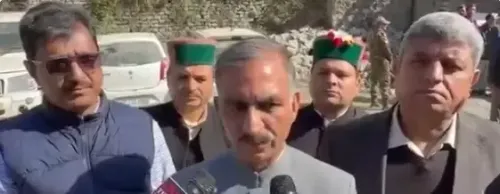
A 15-year-old legal battle ended with a historic verdict on Friday, 6 November 2026, as the Supreme Court of India ruled in favour of Himachal Pradesh in a long-pending Bhakra Beas Management Board (BBMB) arrears case — and Himachal Pradesh Chief Minister Sukhvinder Singh Sukhu announced the win while still on the road, fresh from a candid student interaction at a government school.
What the Supreme Court's BBMB ruling means for Himachal Pradesh
The apex court's order, as described by CM Sukhu on X, entitles Himachal Pradesh to 60 crore units of electricity, to be supplied over the next 20 years. The Chief Minister projects the cumulative financial benefit to the state at approximately ₹20,000 crore over that two-decade period — a figure that underscores just how consequential this long-deferred adjudication is for the hill state's energy economy.
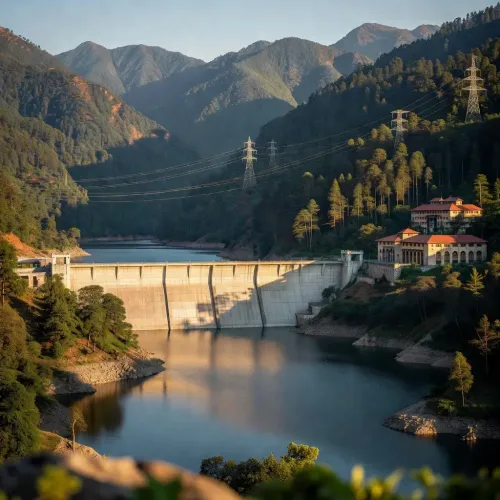
The Bhakra Beas Management Board, constituted in 1976 under the Punjab Reorganisation Act, 1966, governs the joint river valley infrastructure shared between Punjab, Haryana, Himachal Pradesh and Rajasthan. Himachal Pradesh has historically argued that its share of BBMB-generated power does not reflect its disproportionately large catchment-area contribution. Interstate disputes of this kind have repeatedly ended up in the Supreme Court, with rulings that ripple across the energy planning and state finances of all four riparian states.
Sukhu called it 'ek aur aitihasik jeet' — 'one more historic victory' — in what he frames as an ongoing fight for Himachal's interests. For a state whose mountainous geography makes it a net contributor to northern India's power grid yet historically dependent on fiscal transfers, locking in 60 crore units annually over 20 years is a structural shift, not just a headline.
A school visit, ₹2 crore, and Moral Science on the timetable
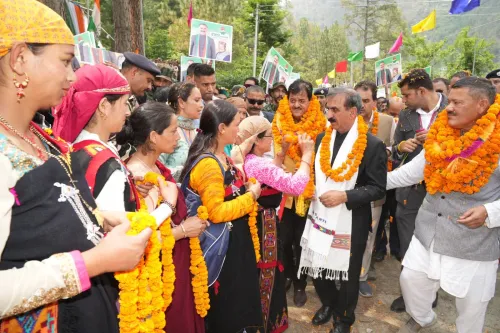
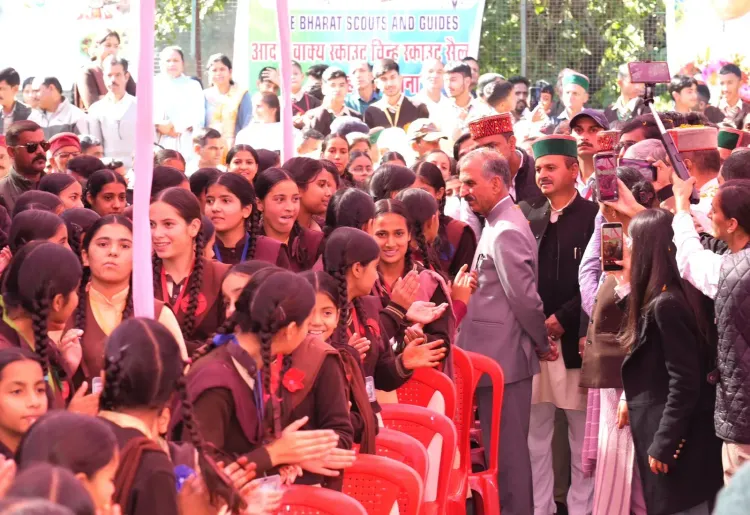
Earlier in the day, CM Sukhu visited Rajkiya Model Senior Secondary School, Maihla, where students peppered him with questions on everything from his personal life to AI, civil services coaching, bus connectivity, and the challenges of running a government. He described the exchange as energising — 'bachon se samvaad hamesha nayi urja deta hai' ('a conversation with children always gives new energy').
He also made two concrete commitments on the spot. First, an initial grant of ₹2 crore will be released for classroom construction at the school, with the remaining amount to follow. Second, starting from the next academic year, Moral Science classes will be introduced at the institution — a curricular addition aimed at values-based education.
These may read as local announcements, but they signal a pattern the CM has cultivated: pairing grassroots outreach with on-the-day resource commitments, blending the visible and the tangible in a single visit.
With the BBMB verdict now in hand and school infrastructure funding committed, CM Sukhu leaves 6 November 2026 having linked two very different kinds of governance — a Supreme Court win two decades in the making and a conversation with teenagers about what comes next. The question now is how fast both promises move from announcement to execution.
Point of View
000 crore projection is spread over 20 years, making it more a planning asset than an immediate revenue windfall. For CM Sukhu, framing the verdict as 'one more historic victory' ahead of what analysts expect will be an increasingly contested political cycle in Himachal Pradesh reinforces a governance-through-courts narrative his administration has leaned on. The school-visit component, meanwhile, reflects a broader INC playbook of coupling flagship legal wins with visible grassroots delivery to maintain credibility at the constituency level. How swiftly the state converts the court order into actual unit allocations — and whether BBMB's other stakeholder states mount implementation challenges — will determine whether the win holds its political lustre.
NationPress
6 Nov 2026
Frequently Asked Questions
What did the Supreme Court rule in the BBMB arrears case involving Himachal Pradesh?
The Supreme Court ruled in favour of Himachal Pradesh in a case that had been pending for 15 years , directing that the state receive 60 crore units of electricity from the Bhakra Beas Management Board , to be supplied over 20 years .
How much money will Himachal Pradesh gain from the BBMB Supreme Court verdict?
CM Sukhu stated the state stands to benefit by approximately ₹20,000 crore over the next 20 years from the electricity it will now receive following the Supreme Court's decision.
What is the Bhakra Beas Management Board (BBMB)?
The Bhakra Beas Management Board is a statutory body constituted in 1976 under the Punjab Reorganisation Act, 1966 , responsible for managing river valley projects on the Bhakra, Nangal and Beas rivers, shared among Punjab, Haryana, Himachal Pradesh and Rajasthan .
What did CM Sukhu announce for Rajkiya Model Senior Secondary School Maihla?
CM Sukhu announced an initial ₹2 crore grant for classroom construction at the school, with the remaining required funds to be released subsequently, and confirmed that Moral Science classes will begin from the next academic year.
What questions did students ask CM Sukhu at Maihla school?
Students at Rajkiya Model Senior Secondary School, Maihla asked CM Sukhu about his personal life, school facilities, sports, civil services coaching, bus connectivity, Artificial Intelligence , and the challenges of governing the state.