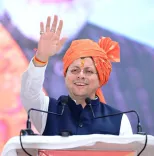
CM Sukhu Targets BJP Leaders Over Unexplained Wealth
Synopsis
Chief Minister Sukhvinder Singh Sukhu publicly demanded scrutiny of BJP leaders in Himachal Pradesh who allegedly hold assets of ₹50–100 crore with no clear income source, warning that no one — regardless of political stature — will be spared if corruption is proven.
Key Takeaways
CM Sukhvinder Singh Sukhu on August 1, 2026 called for investigation into BJP leaders with unexplained assets worth ₹50–100 crore .
Sukhu stated that anyone who acquired wealth through corruption 'will not be spared,' regardless of their position.
The BJP governed Himachal Pradesh from 2017 to 2022 and now sits in opposition to Sukhu's Congress government.
Sukhu framed his government's mandate as protecting 'the state's resources and interests' from corrupt enrichment.
No formal inquiry has been announced yet; observers are watching whether the state vigilance bureau or other agencies are directed to act.
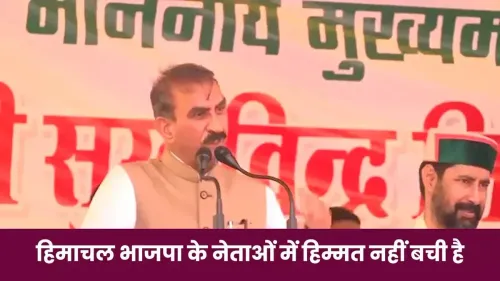
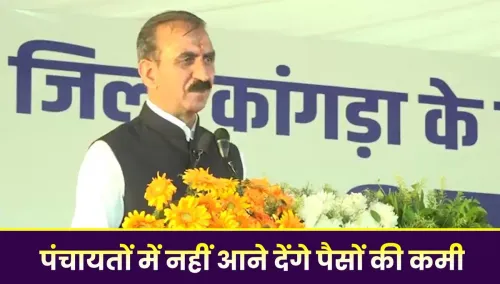
A sharp warning shot rang out from Himachal Pradesh Chief Minister Sukhvinder Singh Sukhu on Saturday, August 1, 2026 — no political figure, however powerful, will escape scrutiny if their wealth cannot be explained. In a combative post on X, Sukhu called out BJP leaders who he claims have accumulated assets worth ₹50–100 crore with no traceable source of income.
Translating his words directly: 'Rajneeti janta ki seva ka madhyam hai, na ki dhan ko doguna karne ka' — 'Politics is a means to serve the people, not to double one's wealth.' The Chief Minister stated that anyone who has acquired property through corruption — regardless of their stature — 'will not be spared.'
The Charge: ₹50–100 Crore With No Paper Trail
Sukhu's post is pointed and specific in its framing: he is not speaking in generalities. He describes BJP leaders whose fortunes have grown steadily and substantially, yet whose income sources remain opaque. The call for investigation into such assets is a direct challenge to the principal opposition party in Himachal Pradesh, which governed the state from 2017 to 2022 before losing power to the Congress.
The figures cited — ₹50 crore to ₹100 crore — are significant enough to demand answers in a hill state where per capita income remains modest. Whether formal probes follow this political statement is the question that now hangs over Shimla.
Congress vs BJP: A Rivalry That Never Really Rests
Himachal Pradesh has swung between Congress and BJP in nearly every assembly election for three decades — a pattern that makes each term in power feel like borrowed time. Since assuming office in December 2022, Sukhu has consistently framed his administration as a corrective to what he portrays as the previous government's excesses.
Anti-corruption messaging is a familiar instrument in Indian state politics, but its effectiveness depends entirely on what follows the rhetoric. Sukhu's closing line — 'We have come to power to protect the state's resources and interests' — positions the Congress government as a guardian against elite capture. BJP leaders have not yet issued a public response to these specific charges.
What Formal Scrutiny Could Look Like
In Indian states, asset investigations of political figures can be initiated through the state's anti-corruption bureau, a referral to the Enforcement Directorate, or a complaint to the Election Commission. A sitting Chief Minister's public demand for inquiry adds political pressure — but translating that into formal, independent action is a different matter entirely. Observers will watch whether the Himachal Pradesh government files any official complaints or directs the state vigilance bureau to act.
Sukhu has drawn a clear line. The next move belongs to the institutions — and to the BJP leaders who now face a public demand to account for their wealth.
Point of View
It could reshape the terrain ahead of the next assembly cycle in Himachal Pradesh. If they do not, the statement risks being read as pressure politics without institutional follow-through — a vulnerability the BJP will almost certainly exploit. The broader pattern here is national: ruling parties across India have increasingly weaponised asset-disclosure norms as a governance-legitimacy argument, and Sukhu is clearly aligned with that strategy.
NationPress
1 Aug 2026
Frequently Asked Questions
What did Himachal Pradesh CM Sukhu say about BJP leaders' assets?
CM Sukhvinder Singh Sukhu alleged that certain BJP leaders have accumulated assets worth ₹50–100 crore without any traceable source of income, and demanded that such wealth be investigated. He warned that no one, regardless of their political stature, will be spared if corruption is found.
Can a state Chief Minister order an investigation into opposition leaders' assets?
A Chief Minister can direct the state's anti-corruption bureau or vigilance department to initiate inquiries. Cases can also be referred to central agencies like the Enforcement Directorate. However, formal action requires documented grounds and is subject to judicial oversight.
Why is there a Congress-BJP rivalry in Himachal Pradesh?
Himachal Pradesh has alternated between Congress and BJP governments in almost every election for roughly three decades. The BJP ruled the state from 2017 to 2022, after which Congress under Sukhvinder Singh Sukhu won the assembly elections and took power in December 2022.
Has BJP responded to Sukhu's corruption allegations?
As of the time of this report, no public response from BJP leadership in Himachal Pradesh to Sukhu's specific August 1, 2026 allegations has been recorded.
What agencies investigate unexplained wealth of politicians in India?
Unexplained assets of politicians in India can be investigated by state anti-corruption bureaus, the Central Bureau of Investigation, the Enforcement Directorate under the Prevention of Money Laundering Act, and the Income Tax Department, depending on the nature and jurisdiction of the alleged offence.