CM Sukhu: No Region of HP Left Out of Development
Synopsis
Chief Minister Sukhvinder Singh Sukhu on June 21, 2026 pledged that no region of Himachal Pradesh will be excluded from development, with the state government pushing developmental projects to the highest standards of public interest and quality to build a well-equipped Himachal.
Key Takeaways
The Chief Minister's Office of Himachal Pradesh posted on behalf of CM Thakur Sukhvinder Singh Sukhu on June 21, 2026 , reaffirming the government's equitable-development commitment.
CM Sukhu stated that no region of Himachal Pradesh should remain outside the mainstream of development.
The government is advancing developmental projects to the highest standards of public interest and quality.
The Congress government has held office since December 2022 , with district-wise infrastructure and last-mile connectivity as stated priorities.
Remote tribal districts and rural communities in Himachal Pradesh are the primary target beneficiaries of this development push.
Progress on roads, power, and water supply schemes is expected to be scrutinised at the next state assembly session.
The Chief Minister's Office of Himachal Pradesh, posting on behalf of Chief Minister Thakur Sukhvinder Singh Sukhu, reaffirmed on Sunday, June 21, 2026, that the state government is committed to ensuring no region is left outside the mainstream of development, with all projects being advanced to the highest standards of public interest and quality.
In the post, CM Sukhu stated: 'हमारा प्रयास है कि प्रदेश का कोई भी क्षेत्र विकास की मुख्यधारा से अछूता न रहे' ('Our endeavour is that no region of the state remains untouched by the mainstream of development'). He added that the government is advancing developmental projects in line with the highest standards of public interest and quality, with the goal of building a well-equipped Himachal Pradesh.
Context
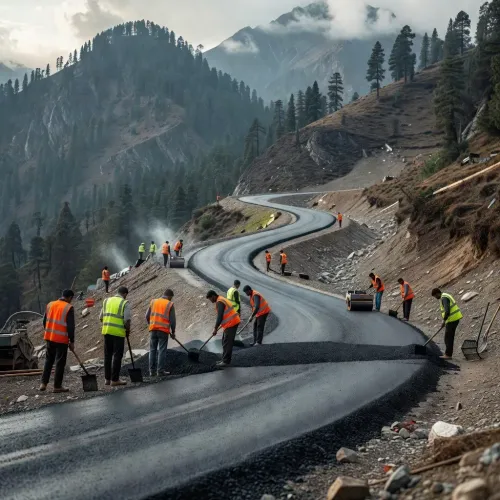
Himachal Pradesh is a northern hill state characterised by rugged terrain, remote tribal pockets, and districts that have historically faced challenges in accessing basic infrastructure such as roads, power, and water supply. Successive state governments have grappled with the dual challenge of extending services to far-flung valleys while maintaining quality benchmarks on projects already under way. The statement comes from the Congress government that took office in December 2022 under CM Sukhu, which had outlined district-wise infrastructure priorities and last-mile connectivity as central planks of its governance agenda.Policy Backdrop
Since assuming office, the Sukhu administration has articulated a framework of equitable regional growth, seeking to bridge the development gap between more accessible lower hills and remote upper valleys and tribal districts. The emphasis on 'quality standards' alongside 'coverage' reflects a two-pronged approach that the government has consistently highlighted in its public communications. This messaging mirrors a broader pattern seen across hilly states in India, where administrations — regardless of political affiliation — face pressure to demonstrate tangible progress in connectivity, civic amenities, and social infrastructure in under-served regions. For Himachal Pradesh, this means sustained focus on roads, power supply, drinking water schemes, and health and education facilities in geographically challenging terrain.Stakeholders and Impact
The primary beneficiaries of the state's stated development thrust are residents of Himachal Pradesh's remote districts and rural communities, particularly those in tribal belts where infrastructure deficits remain most acute. For these populations, the government's commitment to quality-driven project execution carries direct implications for daily access to mobility, utilities, and public services. Urban and semi-urban residents in the state also stand to benefit from improved civic infrastructure, while contractors, local bodies, and panchayati raj institutions are key implementation partners whose capacity will determine whether stated quality benchmarks translate into outcomes on the ground.What's Next
Attention will now turn to the state's budget allocations for multi-district projects and the physical progress of road, water supply, and power schemes — details expected to surface at the next assembly session. The government's ability to demonstrate measurable delivery across all regions, rather than concentrated development in more accessible districts, will be the metric by which this commitment is ultimately judged. For Himachal Pradesh, where geography itself is a governance challenge, translating equitable-development rhetoric into verifiable on-ground progress will define the Sukhu administration's legacy heading into the latter half of its term.Point of View
Not just the more accessible and electorally dense lower hills. By coupling 'coverage' with 'quality standards,' the administration is attempting to pre-empt criticism that development spending is either geographically skewed or poorly executed. This messaging fits a broader pattern among opposition-ruled state governments seeking to distinguish themselves from the Centre's flagship schemes by emphasising state-led, quality-benchmarked delivery. The real test will come when assembly session data on project completion rates and budget utilisation in remote districts is placed on record.
NationPress
19 Sept 2026
Frequently Asked Questions
What did CM Sukhu say about development in Himachal Pradesh?
CM Sukhvinder Singh Sukhu stated on June 21, 2026 that the government's endeavour is to ensure no region of Himachal Pradesh remains outside the mainstream of development, and that all developmental projects are being advanced to the highest standards of public interest and quality.
When did Sukhvinder Singh Sukhu become Chief Minister of Himachal Pradesh?
Sukhvinder Singh Sukhu became Chief Minister of Himachal Pradesh in December 2022, heading the Congress government that came to power after the state assembly elections.
Which regions of Himachal Pradesh face the biggest development challenges?
Remote tribal districts and upper valley areas of Himachal Pradesh face the most acute infrastructure deficits, with challenges in road connectivity, power supply, drinking water, and access to health and education services due to the state's difficult hill terrain.
What are the key development priorities of the Sukhu government in Himachal Pradesh?
Since taking office in December 2022, the Sukhu administration has outlined district-wise infrastructure development, last-mile connectivity, and equitable regional growth as central priorities, with a stated emphasis on quality benchmarks alongside coverage.
What will indicate whether HP government's development promises are being fulfilled?
State budget allocations for multi-district projects and physical progress reports on roads, water supply, and power schemes — expected to come up at the next Himachal Pradesh assembly session — will be key indicators of whether the government's development commitments are translating into on-ground outcomes.