CM Tamang meets WB CM in Kolkata, secures key Sikkim approvals
Synopsis
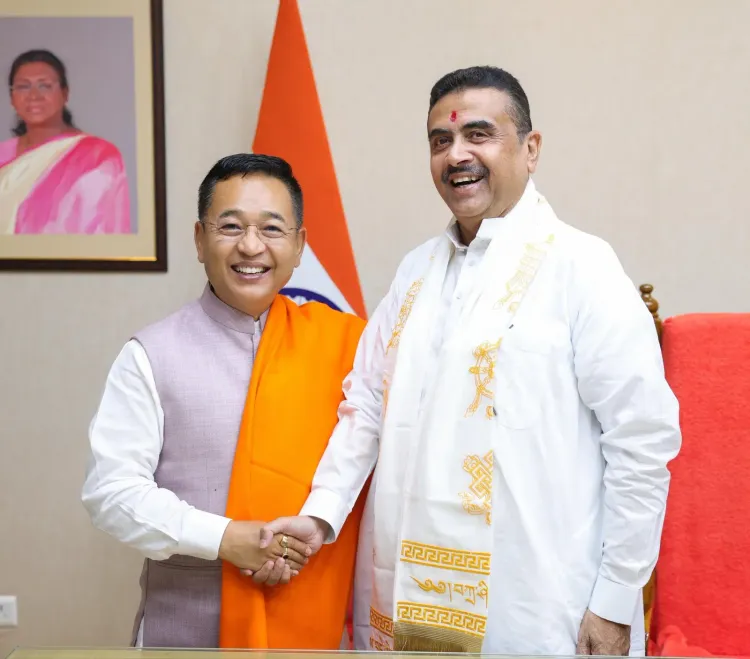
Sikkim Chief Minister Prem Singh Tamang met West Bengal CM Suvendu Adhikari at Nabanna on 2 July 2026, securing approval for the Suswastha Bhawan medical facility in Siliguri, a doubling of taxi permits from 3,000 to 6,000, and a joint Teesta River dredging plan to address post-GLOF flood damage to NH-10.
Key Takeaways
Suswastha Bhawan Sikkim at the SNT Complex, Siliguri received long-awaited approval from West Bengal CM Suvendu Adhikari , with the concerned department directed to issue permission.
Countersignature permits for Sikkim-registered taxis operating in West Bengal have been doubled from 3,000 to 6,000 , benefiting Sikkim's taxi operators and boosting inter-state connectivity.
Both state governments agreed to jointly undertake scientific sediment management through dredging of the Teesta River to address post-GLOF damage.
The October 2023 GLOF from South Lhonak Lake caused extensive damage to National Highway 10 , the primary road link between Sikkim and the rest of India.
The meeting at Nabanna State Secretariat, Kolkata on 2 July 2026 marks the first high-level bilateral engagement between the two states under the new West Bengal government.
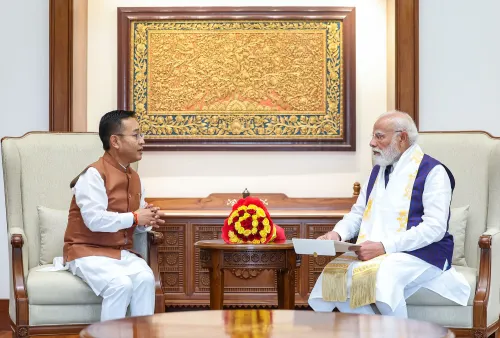
Sikkim Chief Minister Prem Singh Tamang called on West Bengal Chief Minister Suvendu Adhikari at Nabanna State Secretariat in Kolkata on 2 July 2026, securing approvals on three long-pending issues critical to Sikkim's connectivity, healthcare access, and disaster recovery.
Context
CM Tamang opened the meeting by congratulating Adhikari on assuming the office of Chief Minister of West Bengal and conveying best wishes for his tenure. The visit was aimed at resolving a set of bilateral issues that had remained unresolved between the two state governments, spanning infrastructure, transport, and medical facilities.
The Sikkim government has long relied on Siliguri — West Bengal's key commercial hub in the north — as the primary gateway for its residents to access plains-level services, including specialist healthcare unavailable in the hill state.
Policy Backdrop
A flagship outcome of the meeting was the approval of the long-stalled Suswastha Bhawan Sikkim facility, proposed to be built at the SNT Complex in Siliguri. The facility is intended to provide a dedicated support centre for Sikkimese patients travelling to the plains for medical treatment. CM Adhikari acknowledged the initiative's significance and directed the concerned department to issue the necessary permission.
On transport, the two leaders discussed the reciprocal transport agreement governing cross-border commercial vehicle movement. In a significant decision, Adhikari approved doubling the existing quota of countersignature permits for Sikkim-registered taxis operating in West Bengal — from 3,000 to 6,000 permits. CM Tamang said this would benefit 'Sarathis' (taxi drivers) and strengthen inter-state connectivity, particularly to Siliguri.
The third major agenda item was the Teesta River. The Glacial Lake Outburst Flood (GLOF) of October 2023, triggered by the breach of South Lhonak Lake, deposited massive sediment loads into the Teesta, raising the riverbed and repeatedly damaging sections of National Highway 10 — the lifeline linking Sikkim to the rest of India. Both chief ministers agreed to undertake scientific sediment management through dredging of the Teesta River as a joint initiative between the two state governments.
Stakeholders and Impact
The doubling of taxi permits directly benefits Sikkim's large community of commercial taxi operators, who have long sought expanded access to West Bengal routes. The Suswastha Bhawan approval addresses a persistent gap for Sikkimese patients who travel to Siliguri and beyond for tertiary medical care but lack a dedicated state-run support facility in the city.
The Teesta dredging agreement carries wider significance for residents of the Teesta valley on both sides of the state border. Unmanaged sediment accumulation has increased flood risk and repeatedly severed NH-10, isolating Sikkim during the monsoon season. A coordinated dredging programme would be the first structured joint effort between the two states to address post-GLOF river management.
What's Next
The immediate steps to watch include the formal issuance of revised countersignature permits by West Bengal's transport department and the release of construction permission for Suswastha Bhawan Sikkim at Siliguri. On the river front, both governments are expected to constitute a joint technical group to plan and execute the Teesta dredging operation.
The outcomes of this bilateral meeting signal a renewed cooperative framework between Sikkim and West Bengal under new political leadership in Kolkata — and will be closely watched as a template for how the two neighbours manage shared infrastructure and disaster-recovery challenges in the years ahead.
Point of View
More powerful neighbour. By securing three concrete approvals in a single sitting, CM Tamang has demonstrated that Sikkim's bilateral agenda with West Bengal is both granular and urgent, spanning healthcare access, livelihoods, and disaster resilience. The doubling of taxi permits and the Teesta dredging agreement together address the twin vulnerabilities of Sikkim's economic integration with the plains and its physical connectivity after the 2023 GLOF. Whether these approvals translate into on-ground action will depend on departmental follow-through in Kolkata — and that implementation track record will shape the tenor of Sikkim-West Bengal relations for years to come.
NationPress
2 Jul 2026
Frequently Asked Questions
What is Suswastha Bhawan Sikkim and where will it be built?
Suswastha Bhawan Sikkim is a proposed facility at the SNT Complex in Siliguri, West Bengal, designed to support Sikkimese patients who travel to the plains for medical treatment. West Bengal CM Suvendu Adhikari approved its construction during the 2 July 2026 meeting with Sikkim CM Prem Singh Tamang.
How many taxi permits have been approved for Sikkim-registered vehicles in West Bengal?
West Bengal CM Suvendu Adhikari approved an increase in the countersignature permit quota for Sikkim-registered taxis from 3,000 to 6,000, doubling the number of Sikkim taxis that can legally operate across West Bengal, particularly in Siliguri.
What is the plan for Teesta River dredging between Sikkim and West Bengal?
Sikkim CM Prem Singh Tamang and West Bengal CM Suvendu Adhikari agreed to undertake joint scientific sediment management through dredging of the Teesta River. The initiative aims to address the rising riverbed caused by the October 2023 Glacial Lake Outburst Flood, which damaged National Highway 10.
What damage did the 2023 GLOF cause to Sikkim?
The October 2023 Glacial Lake Outburst Flood from South Lhonak Lake deposited large volumes of sediment into the Teesta River, raising the riverbed and causing extensive damage to National Highway 10, the primary road link connecting Sikkim to Siliguri and the rest of India.
Why did Sikkim CM Prem Singh Tamang visit Kolkata on 2 July 2026?
CM Tamang visited Nabanna State Secretariat in Kolkata to meet newly appointed West Bengal CM Suvendu Adhikari, congratulate him on assuming office, and resolve several bilateral issues including the Suswastha Bhawan facility, taxi permit quotas, and joint Teesta River dredging.