HP CM Office: Hydropower is backbone of state economy
Synopsis
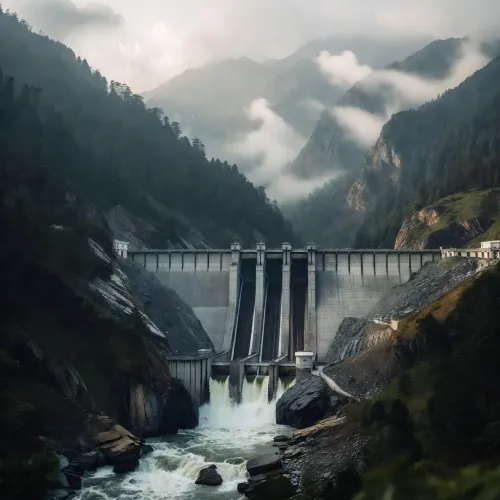
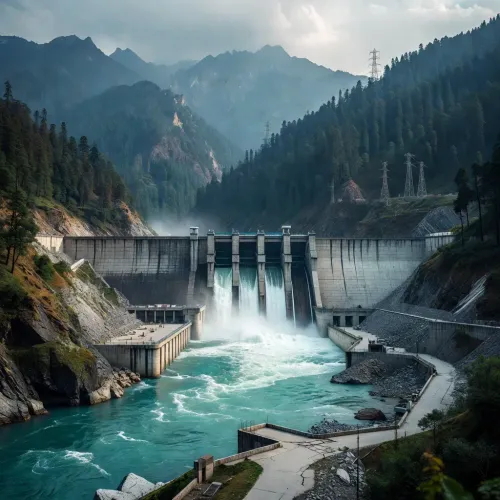
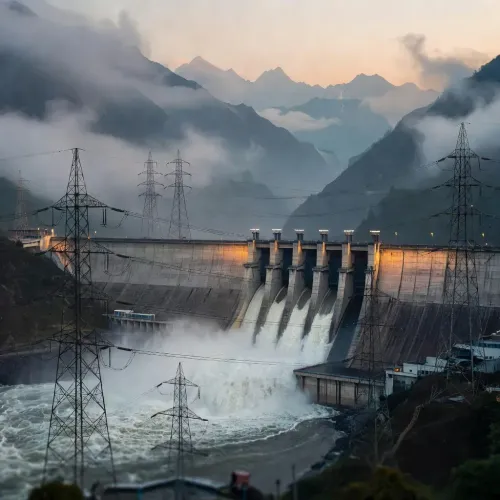
The Chief Minister's Office of Himachal Pradesh has declared hydropower the backbone of the state's economy, pledging to maximise public benefit from the state's vast river-based energy resources. The statement signals renewed political focus on hydropower revenue and project development as Himachal sits on over 27,000 MW of untapped potential.
Key Takeaways
The Chief Minister's Office of Himachal Pradesh posted on 2 July 2026 that hydropower is the 'backbone' of the state's economy.
The government's stated goal is to ensure maximum benefit from hydropower resources reaches the people of Himachal Pradesh.
Himachal Pradesh has an estimated hydropower potential of over 27,000 MW across rivers including the Sutlej, Beas, and Ravi.
The state's hydropower framework traces back to the Himachal Pradesh Hydropower Policy 2006 and central incentives under the Hydro Power Policy 2008 .
Hydropower royalties and free-power entitlements are a primary non-tax revenue source for the state government.
The statement aligns with India's national target of 500 GW non-fossil energy capacity by 2030, in which hydro counts as renewable.
The Chief Minister's Office of Himachal Pradesh reaffirmed on Thursday, 2 July 2026 that hydropower is central to the state's economic identity, stating that the government's goal is to ensure maximum benefit from the state's rich hydropower resources reaches the people of Himachal Pradesh.
The post, shared from the official CMO account, declared in Hindi: 'Jalvidyut Himachal ki arthavyavastha ki reed hai' ('Hydropower is the backbone of Himachal's economy'), adding that the state government aims to secure the fullest possible advantage of the state's abundant hydropower resources for its residents.
Context
Himachal Pradesh sits on an estimated hydropower potential exceeding 27,000 MW, fed by major river systems including the Sutlej, Beas, and Ravi. The state has historically treated hydropower royalties and free-power entitlements as a primary non-tax revenue stream, a model also followed by neighbouring hill states such as Uttarakhand and Sikkim. The CMO's statement signals the incumbent government's intent to keep this resource at the centre of its economic planning.Policy Backdrop
The state's approach to hydropower development is rooted in the Himachal Pradesh Hydropower Policy 2006, which established a framework for attracting private investment while mandating royalty payments and equity participation for the state. This was complemented by the Government of India's Hydro Power Policy 2008, which offered incentives through tariff rationalisation and joint-venture models. After 2010, the state signed multiple memoranda of understanding with central public-sector undertakings to revive stalled projects and increase the state's share in generation capacity. Successive governments, regardless of political affiliation, have sought to balance private-sector participation with demands for higher local equity stakes and employment quotas for residents.Stakeholders and Impact
The primary beneficiaries of any policy push in this sector are Himachal Pradesh's approximately 73 lakh residents, who stand to gain through subsidised or free power allocations, royalty-funded public expenditure, and local employment in hydropower projects. Hydropower developers — both public-sector undertakings and private players — are the other key stakeholders, as state policy directly governs project clearances, royalty structures, and equity-sharing arrangements. The CMO's emphasis on 'maximum benefit' for the public suggests the government may be positioning itself to renegotiate or strengthen terms in favour of the state in ongoing or upcoming project agreements.What's Next
Policy watchers will look for concrete follow-through: any revision to royalty rates, a fresh iteration of the state's hydropower policy, or outcomes of pending project clearances in the Sutlej and Chenab basins. The statement also carries national resonance — India has set a target of 500 GW of non-fossil energy capacity by 2030, with hydropower counted as a renewable source, making Himachal Pradesh's resource base strategically significant for the country's clean-energy ambitions. How the state translates this renewed political commitment into project timelines and revenue models will determine whether the declaration moves beyond rhetoric.Point of View
Giving the state government leverage in negotiations with both central agencies and private developers. Whether this statement precedes a concrete policy move — such as revised royalty rates or new project clearances — will be the real test of its significance.
NationPress
2 Jul 2026
Frequently Asked Questions
Why is hydropower important to Himachal Pradesh's economy?
Hydropower is a primary non-tax revenue source for Himachal Pradesh, generating income through royalties and free-power entitlements from projects built on the state's rivers. The state has an estimated potential of over 27,000 MW across the Sutlej, Beas, and Ravi river systems.
What is the hydropower potential of Himachal Pradesh?
Himachal Pradesh has an estimated hydropower potential exceeding 27,000 MW, making it one of India's richest states for river-based power generation.
What is the Himachal Pradesh Hydropower Policy?
The Himachal Pradesh Hydropower Policy 2006 is the state's core framework for hydropower development, setting rules for private investment, royalty payments, and state equity participation in projects.
How does Himachal Pradesh benefit from hydropower projects?
The state receives royalty payments and free power from hydropower projects built on its rivers, which fund public expenditure. Residents also benefit through subsidised electricity and local employment in the sector.
Does hydropower count as renewable energy in India?
Yes, under India's national energy policy, hydropower is counted as a renewable energy source. India's target of 500 GW non-fossil capacity by 2030 includes hydropower, making Himachal Pradesh's resources strategically significant.