CM Rekha Gupta backs Delhi Next top 60 innovators
Synopsis
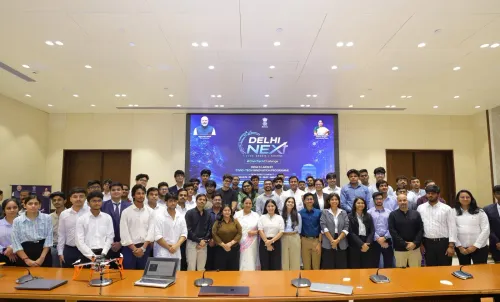
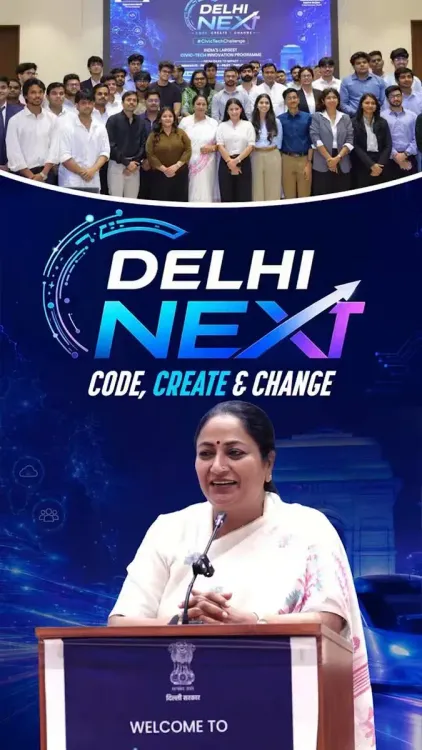
Delhi Chief Minister Rekha Gupta on 2 July 2026 praised the top 60 innovators at the Delhi Next programme and committed the BJP-led government to converting their technology-driven civic solutions into real-world implementations under the Viksit Delhi vision.
Key Takeaways
Delhi CM Rekha Gupta publicly recognised the top 60 innovators of the Delhi Next programme on 2 July 2026 .
The Delhi Government committed to moving selected ideas 'beyond the drawing board' into deployable civic solutions.
The initiative aligns with the national Viksit Bharat framework, which targets India's development by 2047 .
The programme builds on the legacy of Startup India (launched 2016 ) and the Smart Cities Mission (announced 2015 ).
Key stakeholders include young innovators and Delhi residents who stand to benefit from technology-led urban solutions.
Concrete pilots, funding allocations, and departmental partnerships will determine whether the government's commitment is realised.
Delhi Chief Minister Rekha Gupta on Thursday, 2 July 2026, lauded the top 60 innovators recognised under the Delhi Next programme, pledging that the Delhi Government would move their ideas from concept to implementation as part of its vision for a future-ready capital.
Context
Posting on X, CM Gupta wrote that the top 60 innovators at Delhi Next 'have shown how technology and fresh thinking can solve real civic challenges.' She added that the government is 'committed to taking these ideas beyond the drawing board and turning them into solutions that shape the Delhi of tomorrow,' tagging the initiative under the hashtag #ViksitDelhi.
The statement signals the BJP-led Delhi Government's intent to institutionalise civic innovation, moving beyond a competition format toward active deployment of shortlisted solutions within city systems.
Policy Backdrop
The Delhi Next programme sits within a broader national trend of governments using structured innovation challenges to crowdsource urban and civic solutions. At the central level, the Startup India initiative — launched in 2016 — created the ecosystem architecture that state-level programmes now build upon, offering mentorship, funding pathways, and regulatory sandboxes for early-stage ideas.
The Smart Cities Mission, announced in 2015, similarly emphasised technology-driven solutions for urban governance, with Delhi among the cities targeted for upgraded civic infrastructure. CM Gupta's remarks align with Prime Minister Narendra Modi's Viksit Bharat framework — the national vision to make India a developed nation by 2047 — which explicitly positions innovation and digital governance as pillars of that transformation.
Comparable state-level programmes across India have demonstrated that public-private and government-startup collaborations can accelerate service delivery improvements, particularly in areas such as waste management, traffic flow, water distribution, and citizen grievance redressal.
Stakeholders and Impact
The most immediate beneficiaries of the Delhi Next recognition are the top 60 innovators themselves — young entrepreneurs, technologists, and civic thinkers whose proposals have now received formal government endorsement. For this cohort, the Chief Minister's public commitment represents a potential pathway to pilot funding, government contracts, or integration into existing civic infrastructure.
Delhi residents stand to gain if selected innovations are scaled. Urban challenges in the capital — ranging from air quality monitoring to last-mile public transport connectivity — have long resisted conventional administrative solutions, making technology-led approaches increasingly attractive to policymakers.
The announcement also carries political significance for the BJP government in Delhi, which has sought to distinguish its administrative style through a focus on technology adoption and transparent governance since assuming office.
What's Next
The critical test for the Delhi Next programme will be whether government commitment translates into concrete pilots, funding allocations, or formal partnerships with the shortlisted innovators. Watchers will look for budget provisions, departmental tie-ups, or procurement announcements that move selected ideas into live civic deployment.
If the Delhi Government follows through with implementation frameworks, the programme could serve as a replicable model for other state capitals seeking to integrate grassroots innovation into urban administration under the broader Viksit Bharat vision.
Point of View
Differentiating it from predecessors through a governance-by-innovation narrative. The move fits a pattern visible across BJP-ruled states of anchoring urban policy to the Viksit Bharat framework, lending local programmes a national legitimacy. However, the gap between competition recognition and actual civic deployment has historically been wide in India's innovation challenge ecosystem, and the government's credibility on this front will hinge on visible implementation milestones. The announcement is politically low-risk but carries medium-term accountability — residents and innovators alike will watch for tangible follow-through.
NationPress
3 Jul 2026
Frequently Asked Questions
What is the Delhi Next programme?
Delhi Next is an innovation challenge run by the Delhi Government to identify technology-driven solutions for civic problems, with the top 60 innovators recognised by Chief Minister Rekha Gupta on 2 July 2026.
What did CM Rekha Gupta say about Delhi Next?
CM Rekha Gupta said the top 60 innovators 'have shown how technology and fresh thinking can solve real civic challenges' and pledged to take their ideas beyond the drawing board into real solutions for Delhi.
How does Delhi Next connect to Viksit Bharat?
Delhi Next aligns with the Viksit Bharat vision — Prime Minister Narendra Modi's framework to make India a developed nation by 2047 — by using innovation to modernise urban governance at the state level.
Who benefits from the Delhi Next programme?
The top 60 recognised innovators gain government endorsement and a potential pathway to funding or civic contracts, while Delhi residents could benefit if the selected solutions are scaled into city systems.
What happens after the Delhi Next top 60 are recognised?
The next step is government action on pilots, funding, or departmental partnerships; concrete implementation announcements will determine whether the programme moves from recognition to real civic impact.