PoK protests Day 24: JAAC chief says Pak Army armed Kashmiris, 80,000 rally in Rawalakot
Synopsis
On the 24th day of PoK's largest sustained uprising, JAAC chief Sardar Aman Khan accused the Pakistan Army of having armed Kashmiris across the LoC — then branding them terrorists. With 80,000 at Rawalakot's Eidgah and an ultimatum of full Pakistani withdrawal on the table, this is no longer a local grievance movement. It is a direct challenge to Islamabad's legitimacy in the region.
Key Takeaways
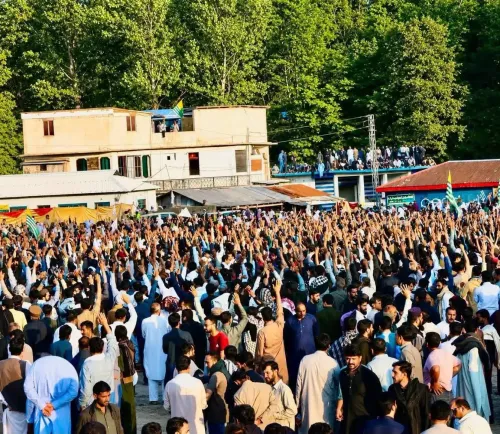
PoK protests entered Day 24 on 3 July , with over 80,000 people gathering at Eidgah grounds, Rawalakot .
JAAC chief Sardar Aman Khan accused the Pakistan Army of supplying weapons to Kashmiris across the Line of Control .
Khan cited a Jaish-e-Mohammed rally in Rawalakot in February last year where armed participants carried AK-47s and swords , permitted by the local Deputy Commissioner .
The movement centres on 38 key demands ; JAAC has warned of escalation to a full call for Pakistani withdrawal if demands go unmet.
Expatriate supporters have staged demonstrations outside Pakistani diplomatic missions in multiple countries.
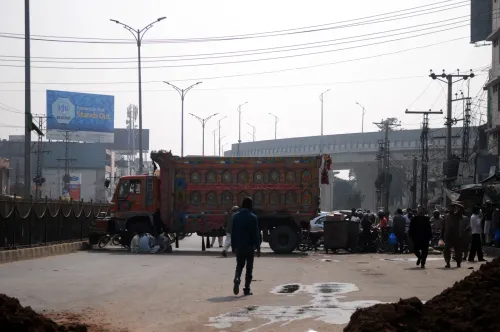
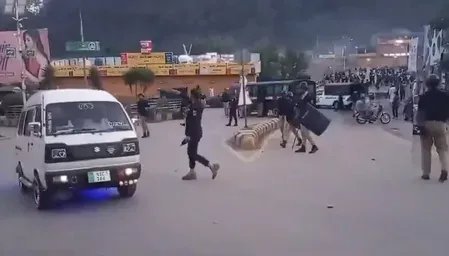
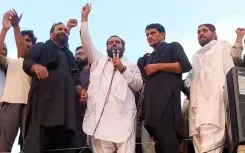
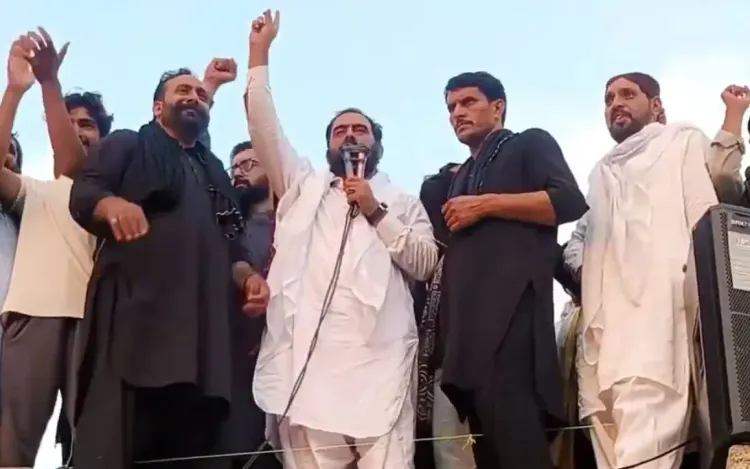
Pakistan-occupied Kashmir (PoK) entered the 24th consecutive day of anti-government protests on 3 July, with over 80,000 demonstrators converging on the Eidgah grounds in Rawalakot in what has become the largest sustained civilian uprising against Islamabad's control of the region in recent memory.
JAAC Chief's Explosive Accusation
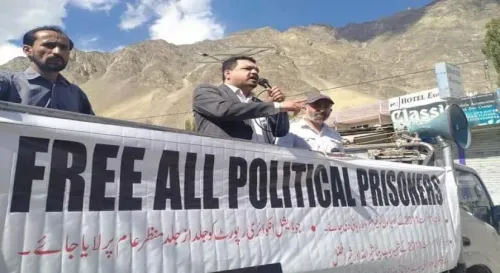
Sardar Aman Khan, chief of the Joint Awami Action Committee (JAAC), delivered one of the movement's most incendiary addresses on Thursday, directly implicating the Pakistan Army in arming Kashmiri militants across the Line of Control.
'It was the Pakistan Army that handed guns to Kashmiris. And today, they dare to call us terrorists,' Khan declared, drawing thunderous applause from the crowd. The accusation cuts to the core of Pakistan's long-maintained narrative on regional militancy — and came from within its own administered territory.
The Jaish-e-Mohammed Rally Reminder
Khan went further, citing a Jaish-e-Mohammed rally held in Rawalakot in February last year, during which armed participants openly paraded through the streets carrying AK-47s and swords. He pointed out that the Deputy Commissioner of Rawalakot had not only permitted the event but had also arranged security for it.
'Deputy Commissioner Rawalakot, you used to organise rallies here with guns and swords. Do you remember? And now you call us terrorists,' Khan said. 'All these people are heirs of this land.'
The 38 Demands and an Ultimatum
The protest movement, which has drawn together residents from across PoK under the JAAC banner, centres on 38 key demands covering basic rights, economic grievances, and political autonomy. Khan issued a stark warning: if these demands are not immediately accepted and implemented, the agitation will escalate from a reform movement into a full-fledged call for Pakistan to withdraw entirely from the region.
Several speakers at the Rawalakot gathering went further, openly rejecting Islamabad's dominance and, according to reports, suggesting the time had come for deeper engagement with India. Khan also asserted that PoK does not belong to Pakistan and that Islamabad depends on the region far more than its residents depend on Islamabad.
International Dimension
The protests are no longer confined to PoK's borders. Expatriate supporters have reportedly taken to the streets outside Pakistani diplomatic missions in multiple countries, giving the movement an international dimension that complicates Islamabad's ability to manage the narrative domestically.
What Comes Next
The scale and sustained nature of the Rawalakot gatherings signal a profound shift in public sentiment — residents increasingly describe themselves not as beneficiaries of Pakistani administration but as its victims. Whether the groundswell forces meaningful concessions from Islamabad or escalates into a broader constitutional crisis remains to be seen. The movement's trajectory over the coming days will be closely watched by observers on both sides of the Line of Control.
Point of View
000 people inside PoK itself is a different order of magnitude. Islamabad has historically managed dissent in the region through a combination of administrative pressure and selective accommodation; neither tool looks adequate here. The invocation of India as a potential interlocutor by some speakers, however rhetorical, gives New Delhi a passive diplomatic lever without lifting a finger. The real question is whether the Pakistan Army — which controls PoK policy far more than any civilian government — reads this as a containable protest cycle or a structural legitimacy crisis. Its response will define the movement's next chapter.
NationPress
3 Jul 2026
Frequently Asked Questions
What is the JAAC and what does it want in PoK?
The Joint Awami Action Committee (JAAC) is a coalition of civil society groups and local leaders in Pakistan-occupied Kashmir leading the current protest movement. It has presented 38 key demands covering basic rights, economic relief, and greater political autonomy, and has warned that failure to implement them will prompt a call for Pakistan to withdraw entirely from the region.
What did JAAC chief Sardar Aman Khan accuse the Pakistan Army of?
Sardar Aman Khan accused the Pakistan Army of having directly supplied weapons and ammunition to Kashmiris across the Line of Control, and then labelling those same people as terrorists. He also cited a Jaish-e-Mohammed rally in Rawalakot in February last year, where armed participants marched with AK-47s and swords under a permit granted by the local Deputy Commissioner.
How large are the Rawalakot protests and how long have they been going on?
The protests entered their 24th consecutive day on 3 July, with over 80,000 demonstrators gathering at the Eidgah grounds in Rawalakot alone. The movement has also spread internationally, with expatriate supporters protesting outside Pakistani diplomatic missions in multiple countries.
Have any speakers at the protests called for engagement with India?
According to reports, several speakers at the Rawalakot gathering suggested the time had come for deeper engagement with India, reflecting a shift in sentiment among some residents who increasingly view themselves as victims of Pakistani rule rather than its beneficiaries. JAAC chief Khan also asserted that PoK does not belong to Pakistan.
What happens if Pakistan does not meet the 38 demands?
JAAC chief Sardar Aman Khan has warned that the agitation will evolve beyond a reform movement into a full-fledged call for Pakistan to withdraw completely from the region if the 38 demands are not immediately accepted and implemented.