CM Tamang slams Rahul Gandhi's protest at PM's residence
Synopsis
Sikkim Chief Minister Prem Singh Tamang on 21 July 2026 condemned Rahul Gandhi's protest outside the Prime Minister's official residence, calling it irresponsible, a breach of security protocols, and an affront to democratic institutions. Tamang urged political differences be expressed through constitutional and parliamentary forums.
Key Takeaways
Sikkim CM Prem Singh Tamang publicly condemned Rahul Gandhi 's protest at the Prime Minister's official residence on 21 July 2026 .
Tamang called the protest 'deeply irresponsible and condemnable,' citing disregard for security protocols at a high-security zone.
He argued that political differences must be expressed through 'constitutional and parliamentary forums, not through unnecessary confrontation.' Tamang is founder-president of the Sikkim Krantikari Morcha (SKM) , an NDA ally in power in Sikkim since 2019 .
The statement reflects a broader pattern of NDA-aligned regional leaders defending central security norms during opposition protests.
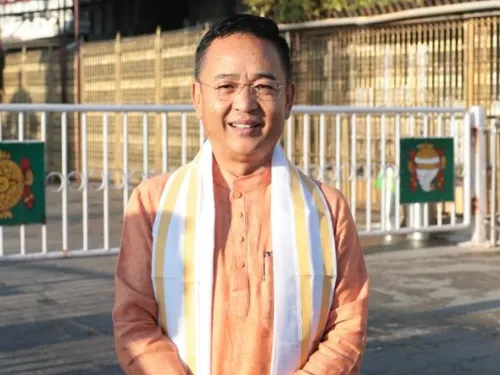
Sikkim Chief Minister Prem Singh Tamang on Tuesday, 21 July 2026, publicly condemned Congress leader Rahul Gandhi for staging a protest at the doorstep of the Prime Minister's official residence at 7, Lok Kalyan Marg, New Delhi, calling the act 'deeply irresponsible and condemnable' and a threat to democratic institutions and security protocols.
Context
Rahul Gandhi, a prominent opposition voice and former Leader of the Opposition in the Lok Sabha, led a protest outside the Prime Minister's official residence, one of the most heavily guarded locations in the country. CM Tamang argued that such demonstrations at a designated high-security zone disregard established security protocols and set a troubling precedent for political expression in India.
In his post on X, Tamang wrote: 'Democracy thrives on responsible debate, not on political theatrics... such acts undermine the dignity of our democratic institutions and disregard the security protocols of a highly protected location.'
Policy Backdrop
Prem Singh Tamang, founder-president of the Sikkim Krantikari Morcha (SKM), has governed Sikkim since 2019 after the SKM ended the long reign of the Sikkim Democratic Front. The SKM is part of the National Democratic Alliance (NDA) at the Centre, making Tamang one of Prime Minister Narendra Modi's key regional allies.
NDA-aligned chief ministers have periodically issued statements defending central security norms and parliamentary channels during high-profile opposition protests. Tamang's statement follows this pattern of coalition discipline, reinforcing the NDA's position that legitimate political differences must be channelled through 'constitutional and parliamentary forums,' as he put it.
Stakeholders and Impact
The statement is directed squarely at the Indian National Congress and its leadership, particularly Rahul Gandhi, who has frequently used street-level protests to amplify issues such as unemployment, institutional erosion, and governance concerns. By framing the protest as an affront to democratic dignity, Tamang adds a regional NDA voice to what is likely to be a broader chorus of ruling-alliance criticism.
Security agencies responsible for the protection of 7, Lok Kalyan Marg are directly implicated in the debate, as the protest raises questions about access and crowd management near one of the country's most sensitive zones. Opposition supporters, meanwhile, may view the statement as an attempt to delegitimise constitutionally protected forms of dissent.
What's Next
The episode is likely to fuel exchanges in the upcoming session of Parliament, where opposition benches may raise the issue of the right to protest, while the treasury benches and NDA allies are expected to defend institutional sanctity and security norms. Whether other NDA chief ministers echo Tamang's remarks will indicate the degree of coordinated messaging within the alliance.
India's political temperature ahead of the next parliamentary session will be shaped in part by how both sides frame this confrontation — as reckless theatrics or as legitimate democratic expression — with implications for the broader debate on the boundaries of political protest in a constitutional democracy.
Point of View
Tamang shifts the frame from 'right to protest' to 'responsibility near sensitive zones,' a ground more difficult for the opposition to contest. The statement also signals that the SKM's alignment with the NDA extends beyond electoral arithmetic to active ideological solidarity. As Parliament's next session approaches, such interventions from state capitals tend to harden positions on both sides rather than open dialogue.
NationPress
22 Jul 2026
Frequently Asked Questions
Why did Sikkim CM Prem Singh Tamang criticise Rahul Gandhi?
Tamang condemned Rahul Gandhi for protesting at the Prime Minister's official residence at 7, Lok Kalyan Marg, calling it irresponsible and a breach of security protocols at one of India's most sensitive locations.
What did Prem Singh Tamang say about Rahul Gandhi's protest?
Tamang said the protest was 'deeply irresponsible and condemnable,' arguing it undermined democratic institutions and that differences should be expressed through constitutional and parliamentary forums.
Is Sikkim CM Tamang part of the NDA?
Yes. Prem Singh Tamang's Sikkim Krantikari Morcha (SKM) has been an NDA ally since the party came to power in Sikkim in 2019.
Where is the Prime Minister's official residence in India?
The Prime Minister's official residence is at 7, Lok Kalyan Marg (formerly Race Course Road) in New Delhi, a designated high-security zone.
What is the Sikkim Krantikari Morcha?
The Sikkim Krantikari Morcha (SKM) is a regional political party founded by Prem Singh Tamang. It has governed Sikkim since 2019 after defeating the Sikkim Democratic Front, and is allied with the NDA at the national level.