Tamil Nadu CM Vijay Inspects 108 Emergency Call Centre at DMS Campus
Synopsis
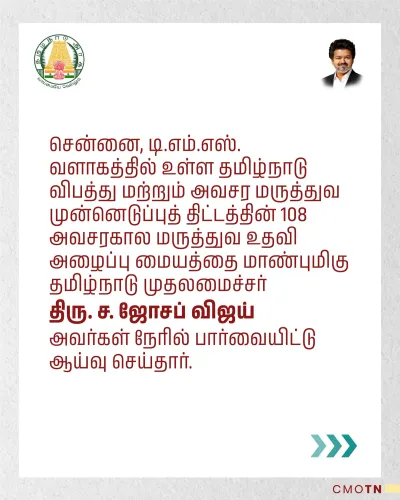
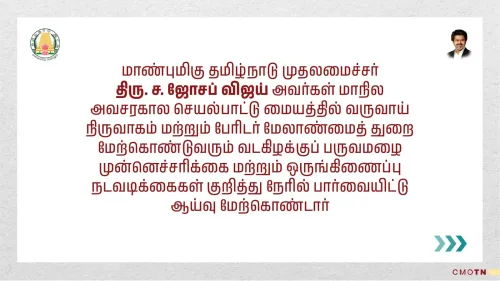
Tamil Nadu Chief Minister C. Joseph Vijay on 17 November 2026 conducted an on-site inspection of the 108 Emergency Response Call Centre at the DMS Campus in Chennai, reviewing the state's core ambulance dispatch and emergency medical coordination infrastructure.
Key Takeaways
Joseph Vijay personally visited the 108 Emergency Response Call Centre on 17 November 2026 .
The centre is located at the Directorate of Medical Services (DMS) Campus, Chennai .
The 108 service is Tamil Nadu's toll-free ambulance dispatch and emergency medical coordination system, adopted around 2008 under the National Rural Health Mission framework.
The Chief Minister inspected the centre's operations and functioning during the visit.
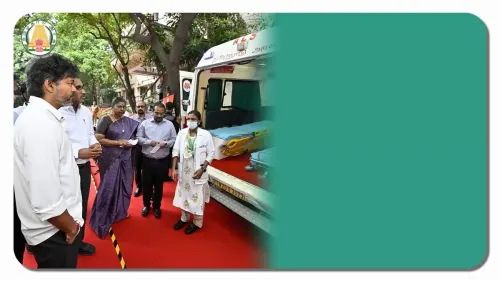
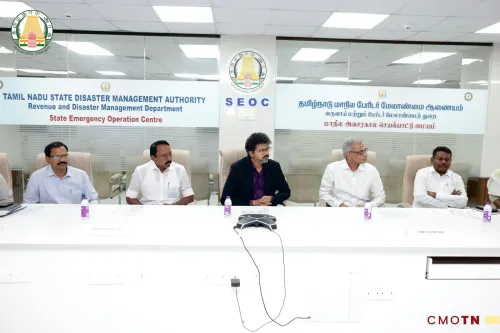
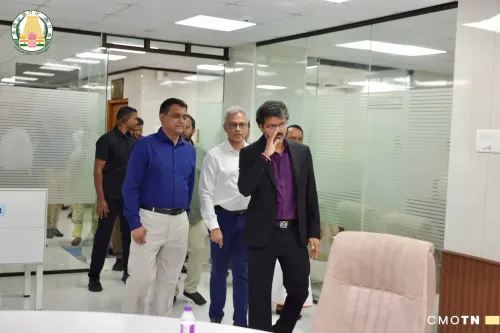
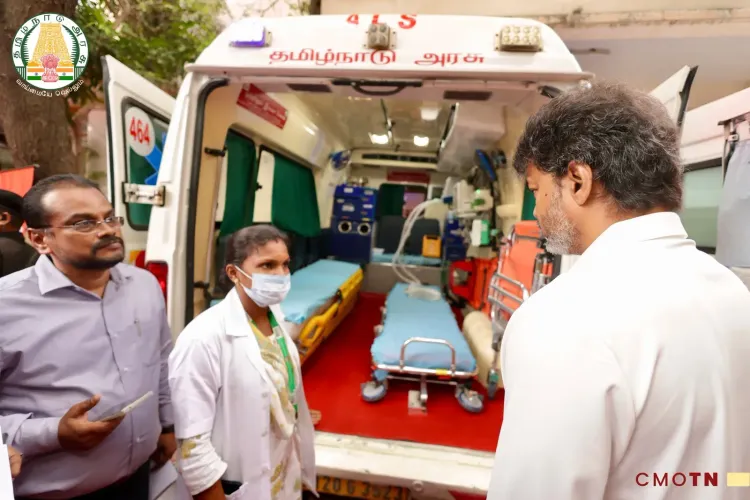
The CMO posted 15 photographs from the inspection on X, flagging the visit as a direct administrative review.
Any follow-up statements on response metrics or technology upgrades will indicate the direction of potential service improvements.
A Chief Minister walking into an emergency call centre unannounced sends a signal — that the state's first line of medical response is under direct scrutiny. Tamil Nadu Chief Minister C. Joseph Vijay on Tuesday, 17 November 2026, visited the 108 Emergency Response Call Centre at the DMS Campus in Chennai, conducting an on-site inspection of its operations.
Inside the DMS Campus nerve centre
The Directorate of Medical Services (DMS) Campus in Chennai serves as the administrative and operational backbone of Tamil Nadu's public health machinery. Housed within it, the 108 Emergency Response Call Centre functions as the state's toll-free ambulance dispatch and medical coordination hub — the number that rings when seconds count. The Chief Minister personally reviewed how the centre operates, examining coordination protocols and response workflows during the visit.
Tamil Nadu's 108 system: nearly two decades of emergency care
Tamil Nadu adopted the 108 ambulance-based emergency response system around 2008, under the National Rural Health Mission framework — one of the early adopters among Indian states. The service connects callers in distress to the nearest available ambulance, dispatching crews across urban and rural districts alike. Over time, the system has become core public infrastructure, handling medical emergencies, trauma cases, and obstetric calls across the state's vast geography.
Periodic high-level reviews of such centres are a recognised practice across Indian states, used to assess real-time response metrics, identify bottlenecks in dispatch coordination, and evaluate readiness. An in-person inspection by the Chief Minister elevates the signal — drawing direct administrative attention to whether the system is performing at the standard citizens depend on.
What the inspection puts on the table
The CMO's post, accompanied by 15 photographs from the visit, underscores the hands-on character of the review. The key questions such inspections typically surface: average call-to-dispatch times, fleet availability across districts, technology infrastructure sustaining the call centre, and staffing depth during peak hours. Any follow-up directives from the Chief Minister's Office on service upgrades or performance benchmarks would indicate how the state intends to act on what was observed today.
For the millions of Tamil Nadu residents who rely on the 108 as their emergency lifeline, a Chief Minister personally walking the floor of that call centre is more than a photo opportunity — it is an accountability moment for a service where delay has consequences.
Point of View
Not merely a departmental function. In a state with Tamil Nadu's population density and geographic spread, the 108 system's performance is a tangible public-service metric that cuts across voter demographics. High-level inspections of this kind often precede either reform announcements or increased budget allocations for health infrastructure. The visit sets a visible accountability benchmark — and the pressure to follow it with measurable improvements will be immediate.
NationPress
17 Nov 2026
Frequently Asked Questions
What is the 108 Emergency Response Call Centre in Tamil Nadu?
The 108 Emergency Response Call Centre is a state-run, toll-free service in Tamil Nadu that dispatches ambulances and coordinates emergency medical response across the state. It was adopted around 2008 under the National Rural Health Mission framework and operates from the DMS Campus in Chennai.
Why did CM Joseph Vijay visit the 108 call centre?
Chief Minister C. Joseph Vijay visited the 108 Emergency Response Call Centre on 17 November 2026 to conduct a personal inspection of its operations and functioning, in line with periodic high-level reviews of core public emergency infrastructure.
Where is the 108 Emergency Response Call Centre located?
The 108 Emergency Response Call Centre is located at the Directorate of Medical Services (DMS) Campus in Chennai, which serves as the headquarters for Tamil Nadu's health administration.
What does the 108 number do in Tamil Nadu?
Dialling 108 in Tamil Nadu connects callers to the state emergency response system, which dispatches the nearest available ambulance and coordinates medical assistance for emergencies, trauma cases, and obstetric calls across the state.
What could follow from the Chief Minister's inspection of the 108 centre?
Following such inspections, state governments typically issue directives on response time improvements, technology upgrades for the call centre, or enhanced fleet availability. Any official follow-up statements from the Chief Minister's Office would clarify the specific actions being planned.