CM Vijay Launches 'Eri' Portal, Issues NOCs for Lake Restoration
Synopsis
Chief Minister C. Joseph Vijay launched the 'Eri' digital portal for Tamil Nadu's water bodies on 10 November 2026 and issued No Objection Certificates to five NGOs — Mega Foundation, ExNoRa, EFI, Dhanam Foundation, and Siruthuli — to begin coordinated restoration of the state's ancient irrigation tanks.
Key Takeaways
Joseph Vijay launched the 'Eri' web portal at the Secretariat on 10 November 2026 .
The portal is developed by Tamil Nadu's Water Resources Department to centralise data on the state's water bodies.
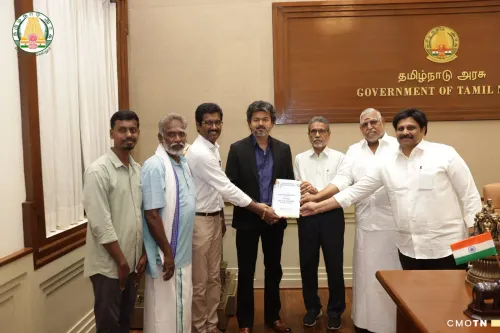
No Objection Certificates were issued to five NGOs : Mega Foundation, ExNoRa International Foundation, EFI, Dhanam Foundation, and Siruthuli.
The NOCs formally authorise these organisations to undertake water-body restoration projects across Tamil Nadu.
Tamil Nadu's traditional eris are critical for agriculture and water security ; decades of neglect have reduced their capacity significantly.
The move extends the state's civil-society partnership model for irrigation-tank management to a coordinated, digitally-tracked statewide programme.
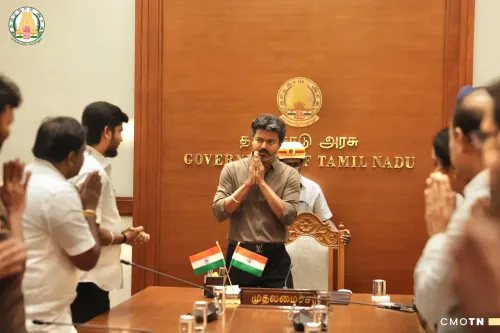
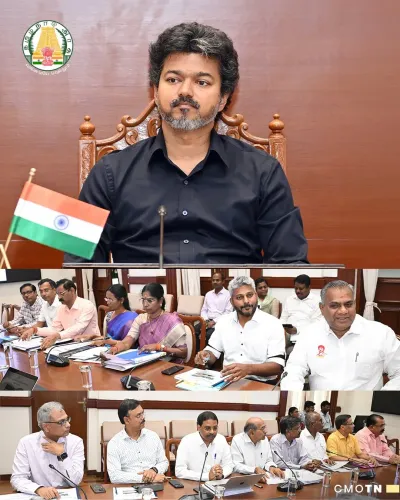
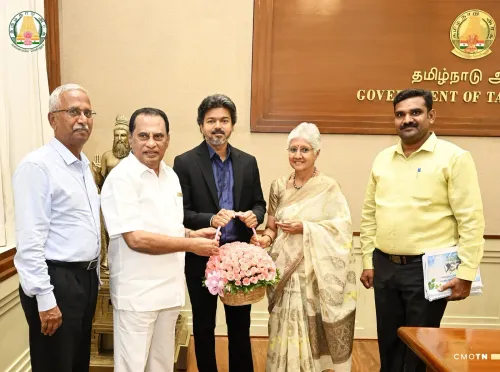
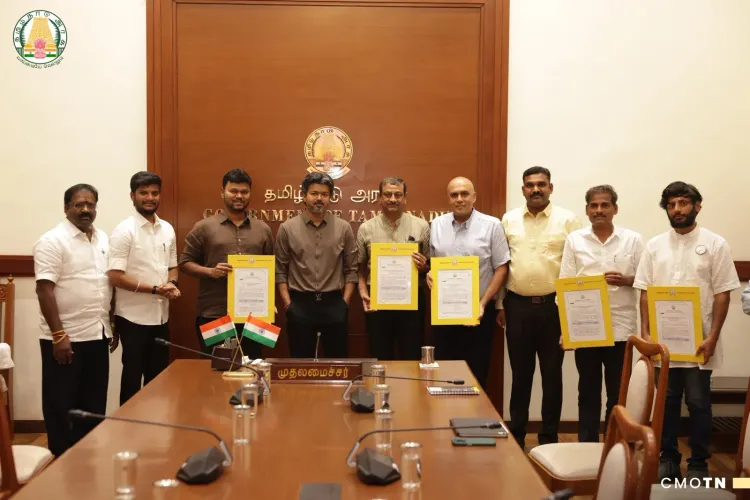
Tamil Nadu's thousands of ancient irrigation tanks — the eris that have fed the state's fields for centuries — got a digital champion on Tuesday, 10 November 2026, when Chief Minister C. Joseph Vijay launched the 'Eri' web portal developed by the state's Water Resources Department and handed over formal authorisations to five civil-society organisations to begin lake-restoration work across the state.
What the 'Eri' portal sets out to do
The Eri website — 'eri' being the Tamil word for a tank or lake — is designed to serve as a centralised digital platform for information on Tamil Nadu's water bodies. Developed by the Water Resources Department, the portal is intended to bring together data on the condition, location, and restoration status of the state's vast network of traditional tanks, making monitoring accessible to both government officials and the public.
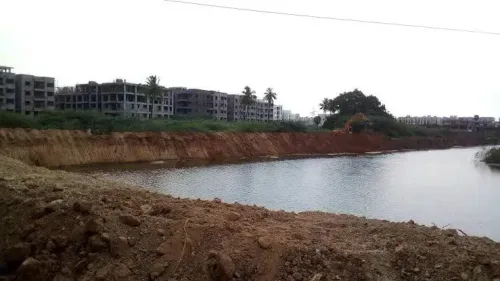
Tamil Nadu is home to tens of thousands of these heritage water bodies, many dating back to ancient agrarian civilisations. Decades of encroachment, siltation, and neglect have diminished their capacity, with direct consequences for farmers and drinking-water security in rural districts.
Five NGOs cleared to restore water bodies
At the Secretariat in Chennai, CM Vijay handed No Objection Certificates (NOCs) to representatives of five non-governmental organisations: Mega Foundation, ExNoRa International Foundation, Environmentalist Foundation of India (EFI), Dhanam Foundation, and Siruthuli. The NOCs formally authorise each organisation to undertake restoration work on specific water bodies in coordination with the state government.
ExNoRa International Foundation has a long track record of lake-restoration and community-cleanliness drives across Tamil Nadu. EFI is widely recognised for urban lake revival projects spanning multiple states, while Siruthuli, based in Coimbatore, has led the revival of several traditional water bodies in the city's catchment areas. The inclusion of all three in a single state-level authorisation signals an attempt to scale up what have historically been city-specific or project-specific interventions into a coordinated statewide effort.
Civil-society partnership as state water policy
Tamil Nadu has periodically brought NGOs into irrigation-tank management through community-participation models, particularly for desilting and maintenance. This event follows that lineage but adds two new elements: a dedicated digital infrastructure in the form of the Eri portal, and formal legal clearances issued at the Chief Ministerial level — signalling that the government intends to treat civil-society involvement as structured policy rather than ad hoc goodwill.
The five NGOs will now work alongside the Water Resources Department, with the Eri portal expected to track progress and serve as a public accountability tool. Farmers' groups and local communities — the primary stakeholders in functional tank systems — stand to benefit most directly if restoration targets are met.
With a digital monitor now in place and formal authorisations issued, the real test will be how quickly shovels hit silt — and whether the Eri portal becomes the living record of that work.
Point of View
The Tamil Nadu government is institutionalising civil-society participation in water governance rather than leaving it to departmental discretion. The move follows a pattern of states using NGO partnerships to extend the reach of under-resourced irrigation departments — but the addition of a public-facing portal introduces an accountability layer that could either prove transformative or become another underutilised government website. For CM Vijay, the optics align neatly with an administration keen to project environmental stewardship; the harder question is whether the five NGOs have the on-ground capacity to match the ambition of a statewide mandate.
NationPress
10 Nov 2026
Frequently Asked Questions
What is the 'Eri' website launched by Tamil Nadu CM?
The 'Eri' website is a digital portal developed by Tamil Nadu's Water Resources Department to provide centralised information on the state's water bodies, including their condition and restoration status. CM C. Joseph Vijay launched it on 10 November 2026.
Which NGOs received NOCs from Tamil Nadu CM for lake restoration?
Five NGOs received No Objection Certificates: Mega Foundation, ExNoRa International Foundation, Environmentalist Foundation of India (EFI), Dhanam Foundation, and Siruthuli. The NOCs authorise them to undertake restoration of water bodies in Tamil Nadu.
What is ExNoRa International Foundation?
ExNoRa International Foundation is an environmental NGO with a long history of lake-restoration and community cleanliness drives across Tamil Nadu.
What is the significance of Tamil Nadu's traditional eris?
Tamil Nadu's traditional eris (tanks) are ancient irrigation water bodies critical to agriculture and rural water security. Thousands exist across the state, but many have suffered from encroachment, siltation, and neglect over decades.
What is Siruthuli foundation and where is it based?
Siruthuli is a Coimbatore-based environmental foundation focused on water conservation and the revival of traditional water bodies. It is one of the five NGOs authorised by Tamil Nadu's CM for lake restoration work.