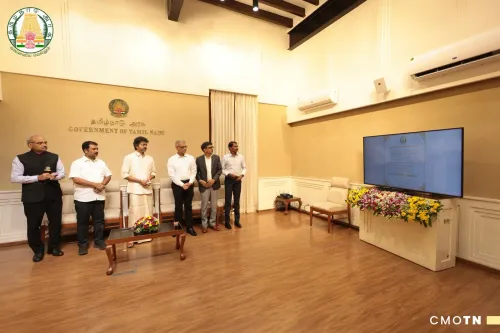
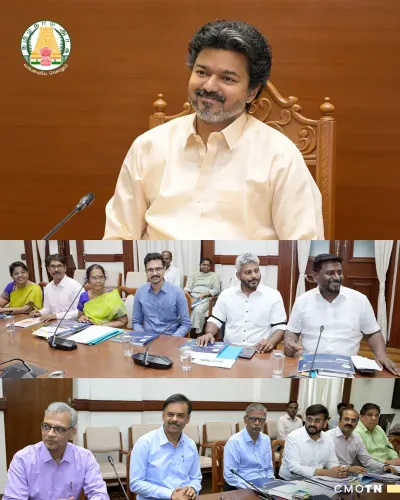
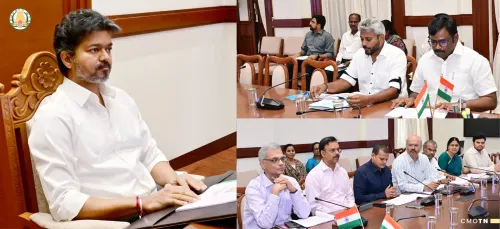
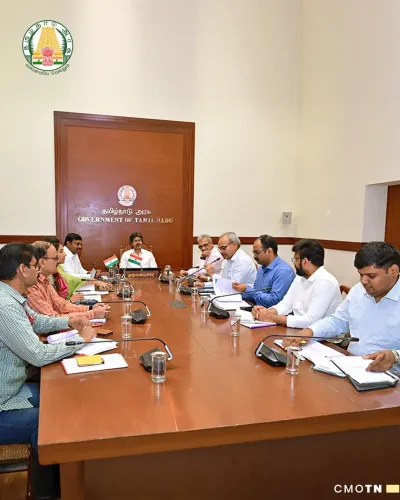
CM Vijay orders 12 Mini Taluk Offices for Chennai at ₹2.14 Cr
Synopsis
Tamil Nadu CM S. Joseph Vijay has ordered 12 Mini Taluk Offices across 8 taluks in Chennai at ₹2.14 crore, decentralising revenue administration to cut wait times for certificates and land records for city residents.
Key Takeaways
12 Mini Taluk Offices ordered for the Chennai district revenue unit by CM S.
The offices will be spread across 8 taluks within Chennai district.
Total estimated project cost is ₹2.14 crore , roughly ₹17.8 lakh per office.
The move aims to improve citizen access to revenue services such as certificates and land records.
Fits Tamil Nadu's broader pattern of expanding taluk-level infrastructure in densely populated urban areas.
Progress on construction, staffing, and operationalisation will be the key milestones to watch.
Twelve new sub-district revenue offices are coming to Chennai — and for millions of residents who have long queued at overloaded taluk counters for certificates and land records, the wait just got shorter. Tamil Nadu Chief Minister S. Joseph Vijay on Thursday, 12 November 2026, ordered the establishment of 12 Mini Taluk Offices across 8 taluks within the Chennai district revenue unit, at a total estimated cost of ₹2.14 crore.
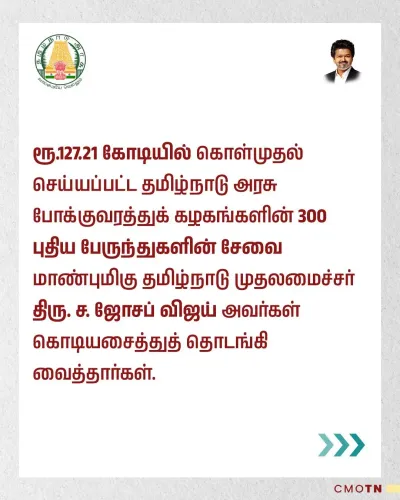
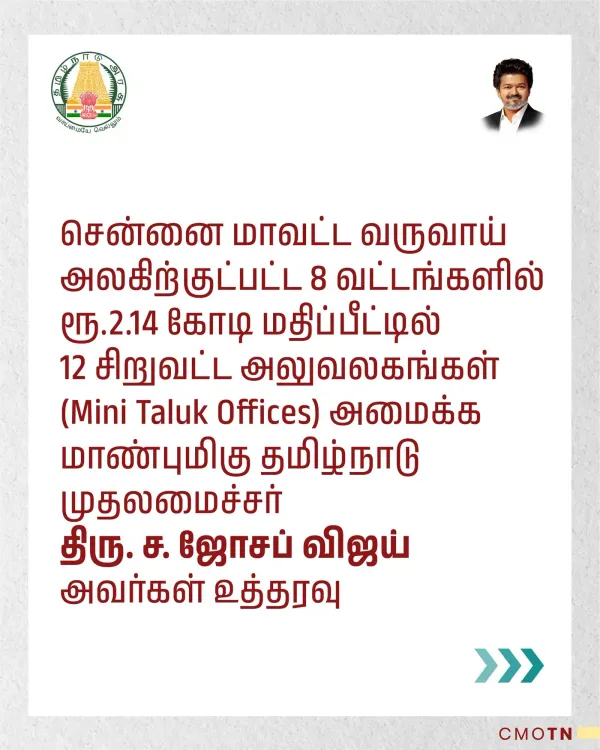
The Chief Minister's Office announced the directive on X, stating — in Tamil — that the honourable Chief Minister had issued orders to set up 12 Mini Taluk Offices across the 8 taluks under the Chennai district revenue unit at an estimated value of ₹2.14 crore, tagging the announcement with #CMJosephVijay.What Mini Taluk Offices actually do — and why Chennai needs them
Mini Taluk Offices are decentralised revenue administration units, essentially neighbourhood-level extensions of the full taluk office. They handle the bread-and-butter transactions of civic life: community and nativity certificates, income certificates, land record copies, and other government documents that citizens need for school admissions, job applications, and property transactions. Chennai is one of India's most densely urbanised districts, and its existing taluk offices bear the pressure of that density every single working day. By placing 12 new offices across 8 taluks, the government is essentially bringing the revenue counter closer to the doorstep — cutting both commute time and waiting time for ordinary residents.A pattern of taluk expansion in Tamil Nadu
This move fits a longer arc of revenue-infrastructure investment in Tamil Nadu. State governments across administrations have periodically created new taluk and sub-taluk units as urban populations swell and demand for government services outpaces the capacity of existing offices. The Chennai push is particularly pointed: the city's population density makes adding physical offices one of the most direct ways to reduce administrative bottlenecks without requiring major digital infrastructure upgrades. At ₹2.14 crore across 12 offices, the per-unit cost works out to roughly ₹17.8 lakh — a lean, targeted spend designed for rapid deployment rather than landmark construction.What comes next for Chennai's revenue administration
The order marks the starting gun, not the finish line. The key milestones to track now are construction timelines, staffing appointments, and the date these offices open their counters to the public. Whether the model gets replicated across other high-density districts in Tamil Nadu will be the bigger signal of how seriously this government intends to push decentralised governance beyond the state capital. For Chennai residents navigating the revenue system today, twelve new offices on the horizon is a tangible promise — the question is how quickly it becomes a functioning reality.Point of View
Ground-level governance dividends in Tamil Nadu's most high-profile urban constituency. At ₹2.14 crore, the outlay is modest but strategically placed: decentralising revenue services in Chennai addresses a chronic pain point for urban voters without requiring sweeping legislative change. If the model is operationalised quickly and extended statewide, it could become a template for low-cost, high-visibility governance. The real test of intent will be whether these offices are staffed and functional within a reasonable timeframe or stall at the construction-order stage.
NationPress
12 Nov 2026
Frequently Asked Questions
What are Mini Taluk Offices in Tamil Nadu?
Mini Taluk Offices are decentralised, neighbourhood-level extensions of full taluk offices that provide revenue services — such as community certificates, income certificates, and land record copies — closer to where citizens live.
How many Mini Taluk Offices are being set up in Chennai?
12 Mini Taluk Offices are being established across 8 taluks within the Chennai district revenue unit, as ordered by Chief Minister S. Joseph Vijay on 12 November 2026.
What is the budget for the new Chennai Mini Taluk Offices?
The total estimated cost for constructing all 12 offices is ₹2.14 crore , working out to approximately ₹17.8 lakh per office.
Why is Chennai getting new Mini Taluk Offices?
Chennai is one of India's most densely urbanised districts. The existing taluk offices face high demand for certificates and revenue documents, and the new sub-offices are intended to reduce crowding, travel time, and waiting time for residents.
Will other Tamil Nadu districts also get Mini Taluk Offices?
The current order covers only Chennai. Whether the model expands to other high-density districts will depend on future government announcements — this will be a key development to watch.