CM Vishnu Deo Sai Celebrates Hareli Tihar at Nava Raipur Residence
Synopsis
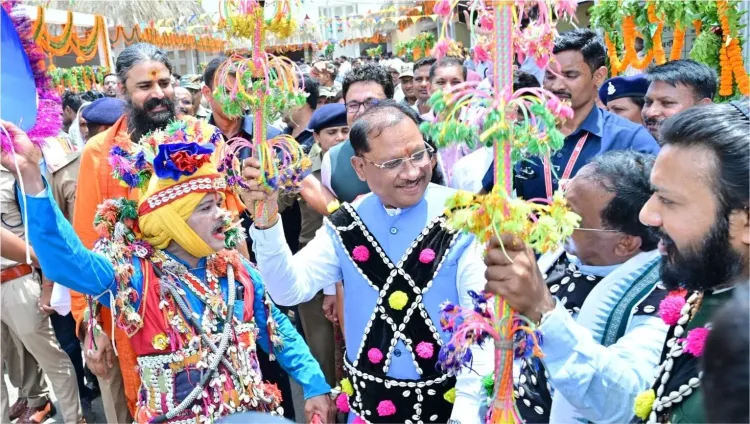
Chhattisgarh CM Vishnu Deo Sai celebrated Hareli Tihar at his Nava Raipur residence on 12 August 2026, hosting folk performances from Surguja to Bastar — gedi, monsoon swings, traditional games — and calling the festival a symbol of Chhattisgarhi identity and agricultural heritage.
Key Takeaways
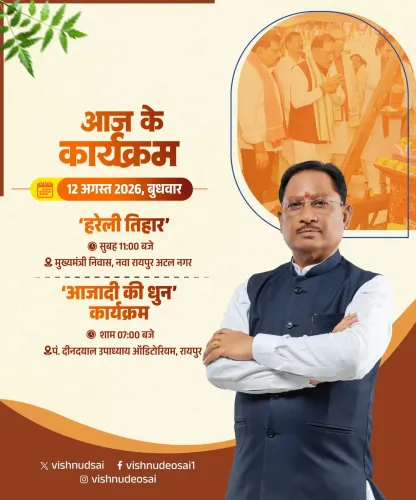
CM Vishnu Deo Sai hosted Hareli Tihar celebrations at the Chief Minister's official residence in Nava Raipur on 12 August 2026 .
The event featured gedi (bamboo stilt) performances, Sawan swings, traditional folk games, and Chhattisgarhi folk songs.
Folk traditions from both Surguja (northern Chhattisgarh) and Bastar (southern Chhattisgarh) were represented at the celebration.
CM Sai described Hareli as 'the fragrance of our soil' and called farming traditions and ancestral cultural heritage 'our greatest wealth.' Hareli Tihar marks the end of the sowing season in the monsoon month of Sawan and is Chhattisgarh's first major agricultural festival of the year.
Chhattisgarh , formed in 2000 , has promoted tribal and folk festivals as part of state cultural identity since its inception.
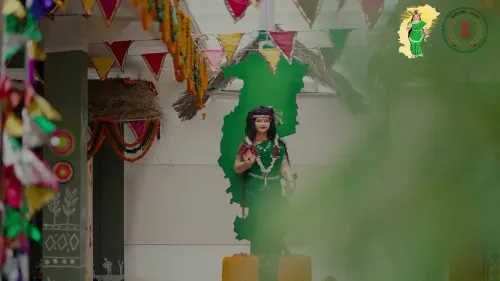
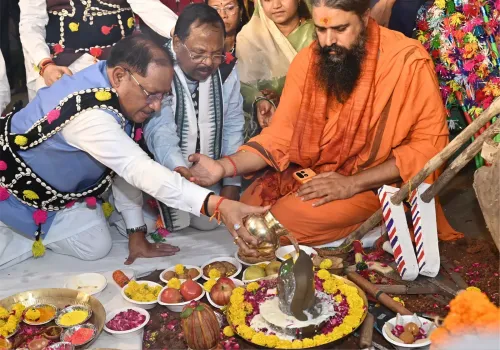
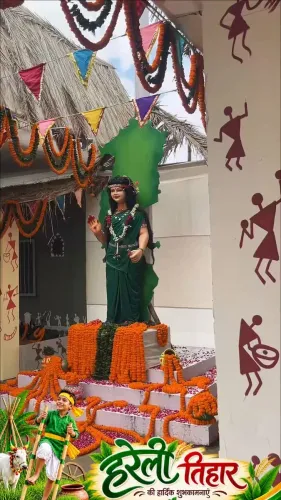
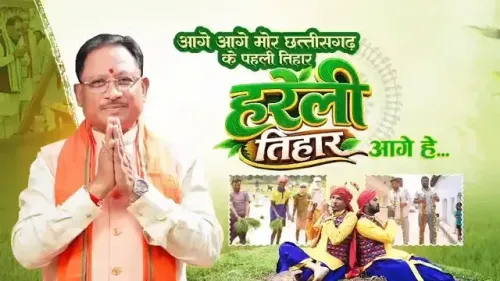
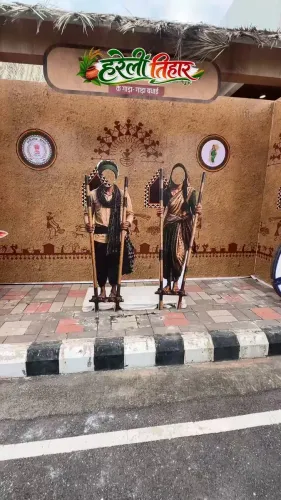
Gedi poles swaying, monsoon swings creaking, and folk melodies drifting across the lawns — Chhattisgarh Chief Minister Vishnu Deo Sai marked Hareli Tihar on Wednesday, 12 August 2026, hosting a vibrant celebration of the state's oldest monsoon festival at his official residence in Nava Raipur.
Describing the occasion in Hindi, CM Sai wrote that Hareli Tihar is 'hamaari maati ki mahak, lokjeevan ki mithaas aur Chhattisgarhi asmita ka utsav' — 'the fragrance of our soil, the sweetness of folk life, and a festival of Chhattisgarhi identity.' The Chief Minister's residence became a canvas for the state's full cultural range, drawing folk traditions from Surguja in the north all the way to Bastar in the south.
From Surguja to Bastar: One Stage, Many Traditions
Hareli — the name derives from the word for 'green' — is Chhattisgarh's first major festival of the agricultural calendar, falling in the Sawan (monsoon) month and marking the completion of sowing season. Farmers worship their tools and cattle; children ride the iconic gedi, a pair of bamboo stilts that turn village lanes into impromptu arenas. At the CM's residence, that spirit was replicated in full: gedi performances, traditional swings, competitive folk games, and live renditions of Chhattisgarhi folk songs.
The gathering spotlighted just how culturally diverse the state's 36 districts are. Surguja's tribal communities carry distinct song and ritual traditions, while Bastar — long associated with the Gondi and Halbi-speaking peoples — brings its own ceremonial vocabulary. Bringing both onto a single stage at the seat of state power is itself a statement about whose heritage the government is choosing to honour.
Agriculture, Ancestry, and the Politics of Cultural Pride
CM Sai used the occasion to frame the festival as more than pageantry. 'Hareli connects us to our roots,' he wrote, adding that farming traditions, village customs, and the cultural inheritance passed down from ancestors are 'our greatest wealth.' The message is calibrated: Chhattisgarh, formed in 2000 by carving tribal-majority districts out of Madhya Pradesh, has always had a complex relationship between state identity and tribal self-expression.
State governments across the political spectrum have hosted Hareli events at official venues since the state's formation — but the scale and visibility of such celebrations have grown as regional identity politics have intensified across India. For the BJP administration under Sai, who took office in December 2023, championing Chhattisgarhi folk culture serves both a cultural and an electoral logic in a state where tribal voters form a decisive bloc.
The kicker: when a Chief Minister trades the podium for a bamboo gedi stage, he is not just celebrating a festival — he is telling the state's farmers, tribal communities, and rural households exactly whose story he believes Chhattisgarh is built on.
Point of View
Placing the government at the centre of Chhattisgarhi cultural identity. For the BJP, which wrested the state from Congress in late 2023, embedding itself in tribal and agrarian folk traditions is both a cultural commitment and a political investment in a state where tribal constituencies are electorally decisive. The Surguja-to-Bastar framing is also notable: it bridges the state's two most distinct tribal belts, projecting unity across a geography that has historically seen uneven development. Whether this cultural embrace translates into substantive policy for tribal communities — land rights, forest access, welfare delivery — remains the more consequential question.
NationPress
12 Aug 2026
Frequently Asked Questions
What is Hareli Tihar in Chhattisgarh?
Hareli Tihar is Chhattisgarh's first major festival of the agricultural calendar, celebrated during the monsoon month of Sawan to mark the end of the sowing season. Farmers worship their tools and cattle, children perform on bamboo stilts called gedi, and communities gather for folk songs, traditional games, and swings.
Where did CM Vishnu Deo Sai celebrate Hareli Tihar 2026?
CM Vishnu Deo Sai celebrated Hareli Tihar 2026 at the Chief Minister's official residence in Nava Raipur, the planned capital city of Chhattisgarh, on 12 August 2026.
What is the significance of gedi in Hareli Tihar?
Gedi — a pair of tall bamboo stilts — is one of the most iconic symbols of Hareli Tihar in Chhattisgarh. Children and young people ride gedi through village lanes as part of the festival's folk celebrations, and gedi performances are a centrepiece of official Hareli events.
Why does Chhattisgarh celebrate Hareli Tihar officially?
Chhattisgarh state governments have promoted Hareli and other tribal folk festivals since the state was formed in 2000 as a way to preserve regional cultural identity. The festival connects the state's large tribal and farming communities to their agricultural and ancestral traditions.
Who is Vishnu Deo Sai and when did he become Chief Minister?
Vishnu Deo Sai is a BJP leader who became Chief Minister of Chhattisgarh in December 2023 after the BJP won the state assembly elections. He is the first tribal Chief Minister of Chhattisgarh.