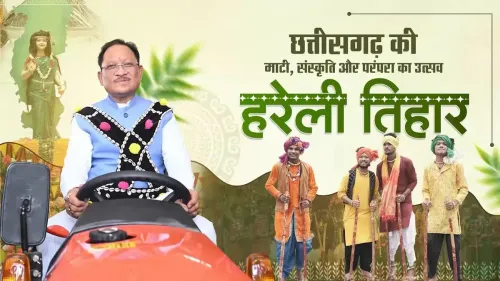
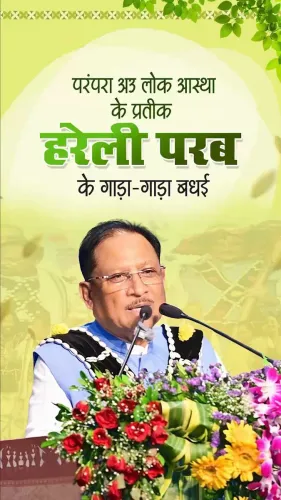
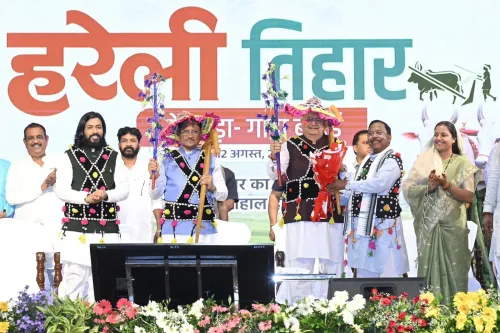
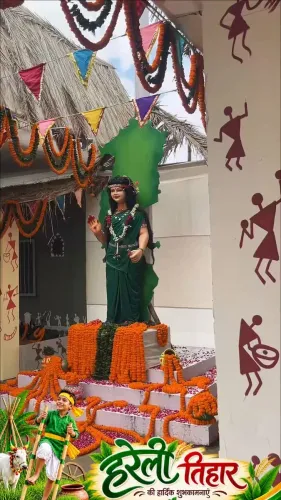
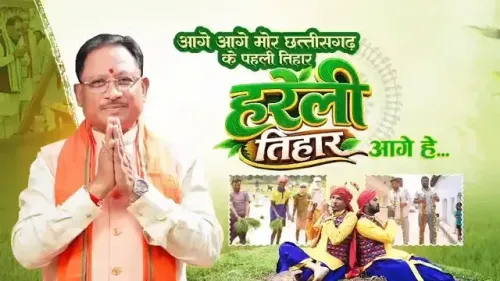
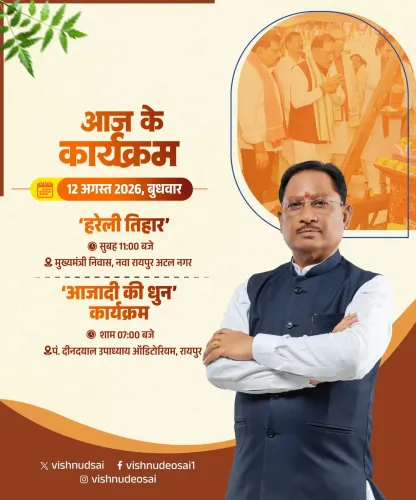
CM Vishnu Deo Sai greets Chhattisgarh on Hareli Tihar
Synopsis
On Hareli Tihar, 13 August 2026, Chhattisgarh Chief Minister Vishnu Deo Sai pledged his government's commitment to preserving the state's folk traditions, agricultural heritage, and rural identity — framing the festival as a symbol of Chhattisgarhi cultural pride.
Key Takeaways
CM Vishnu Deo Sai posted a Hareli Tihar greeting on 13 August 2026 , honouring Chhattisgarh's agricultural folk festival.
Hareli marks the start of the kharif sowing season; farmers worship their tools and cattle as part of the tradition.
Chhattisgarh has a large Scheduled Tribe population for whom Hareli is a significant cultural and agrarian ritual.
Sai, who took office in December 2023 as the state's first tribal CM from the BJP, framed heritage preservation as a core governance commitment.
The post pledges that future generations will remain connected to the state's rich cultural legacy.
Hareli Tihar — Chhattisgarh's oldest agricultural festival — arrived on 13 August 2026, and Chief Minister Vishnu Deo Sai used the occasion to reaffirm his government's pledge to protect the state's folk traditions and rural identity.
In his message, CM Sai described Hareli as 'lokasanskrti, krshi parampara aur Chhattisgarhi asmita ka parv' — 'a festival of folk culture, agricultural tradition, and Chhattisgarhi identity' — calling it a living thread that connects the people of the state to their roots and their land. He added that the festival is 'a beautiful symbol of Chhattisgarh's affinity for its farmers, rural life, and nature.'
What Hareli Tihar means to Chhattisgarh's farming communities
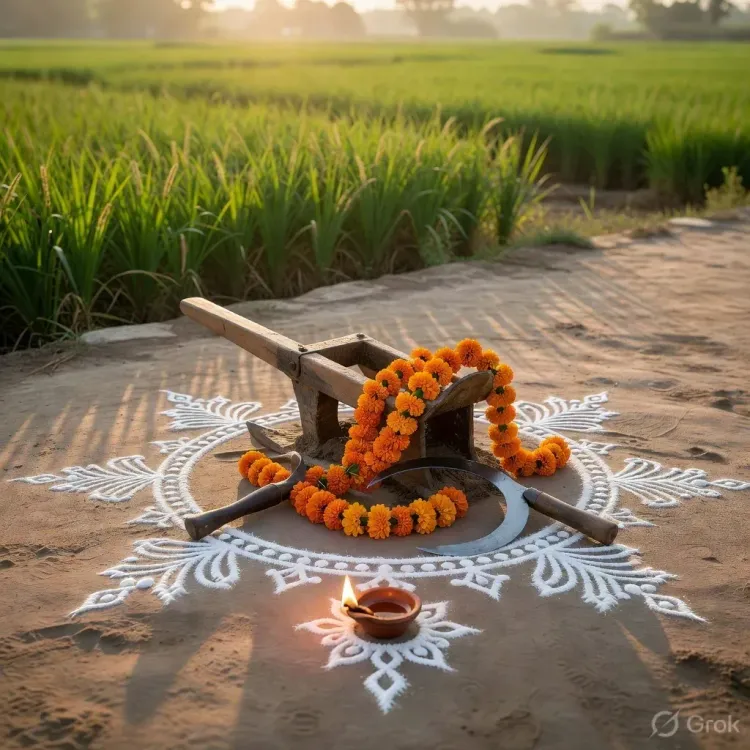
Hareli, derived from the Hindi word for 'green', marks the very start of the kharif sowing season. Farmers across the state worship their agricultural implements — ploughs, sickles, and cattle — seeking a prosperous harvest ahead. In a state where a large share of the population depends on farming and where tribal communities maintain centuries-old agrarian rituals, the festival carries weight that goes well beyond ceremony. Chhattisgarh has one of the highest proportions of Scheduled Tribe populations among Indian states, and Hareli sits at the intersection of indigenous custom and mainstream folk culture — making it a touchstone for questions of cultural continuity.BJP's cultural-preservation pitch in a tribal heartland
Vishnu Deo Sai, who took office in December 2023 as the state's first tribal Chief Minister from the BJP, has consistently positioned his administration around the twin pillars of development and cultural pride. His Hareli message fits a broader pattern: BJP-led state governments have increasingly used regional festival moments to signal that governance and heritage are not competing priorities but complementary ones. Sai's post closed with a resolve — 'hamari samrddh virasat yun hi jivant rahe aur aane vali pidhiyan bhi isse judi rahen' — 'may our rich heritage remain alive, and may future generations stay connected to it.' It is a line aimed squarely at Chhattisgarh's rural and tribal electorate, for whom cultural recognition is as tangible a political ask as roads or electricity. As Hareli celebrations unfold in villages across the state, the question worth watching is whether the government's cultural commitment translates into concrete heritage programmes or schemes in the months ahead.Point of View
The BJP attempts to close the cultural-distance gap that opposition parties have long tried to exploit in Chhattisgarh. The festival moment is low-stakes in news terms, but it feeds a steady drumbeat of cultural signalling that compounds over an electoral cycle. Whether tangible heritage schemes follow will determine if the pledge has policy teeth or remains seasonal messaging.
NationPress
13 Aug 2026
Frequently Asked Questions
What is Hareli Tihar and why is it celebrated in Chhattisgarh?
Hareli Tihar is Chhattisgarh's first major festival of the year, marking the start of the kharif agricultural season. Farmers worship their ploughs, sickles, and cattle to seek a good harvest, and the festival celebrates the state's deep connection to rural life and folk culture.
What did CM Vishnu Deo Sai say on Hareli Tihar 2026?
CM Sai described Hareli as a festival of folk culture, agricultural tradition, and Chhattisgarhi identity. He pledged that his government is committed to preserving local traditions and festivals, and expressed the resolve that future generations remain connected to the state's rich heritage.
When did Vishnu Deo Sai become Chief Minister of Chhattisgarh?
Vishnu Deo Sai became Chief Minister of Chhattisgarh in December 2023, following the BJP's victory in the state assembly elections. He is the state's first tribal Chief Minister from the BJP.
Why does Hareli Tihar matter to Chhattisgarh's tribal communities?
Chhattisgarh has one of the highest proportions of Scheduled Tribe populations in India. Hareli sits at the intersection of indigenous custom and mainstream folk culture, making it a key marker of cultural identity and continuity for tribal and rural communities across the state.
What is the BJP government's stance on cultural heritage in Chhattisgarh?
The BJP administration under CM Sai has consistently linked governance with cultural pride, using regional festivals to signal commitment to preserving local identity alongside development. Heritage protection is framed as complementary to, not separate from, rural and agricultural policy.