Owaisi: UCC Imposes Hindu Customs on Minorities
Synopsis
AIMIM president Asaduddin Owaisi has accused the BJP of framing the Uniform Civil Code as a women's rights measure while actually imposing Hindu legal customs on religious minorities — reigniting a foundational debate about civil law, identity, and constitutional equity in India.
Key Takeaways
Asaduddin Owaisi posted on 13 August 2026 accusing the BJP of using universal rights language to mask a majoritarian agenda in the UCC push.
The Uniform Civil Code proposes common civil laws on marriage, divorce, inheritance, and adoption for all Indians regardless of religion.
Article 44 of the Indian Constitution directs the state to endeavour to secure a UCC; the BJP's 2019 manifesto committed to implementing it.
Critics argue Hindu personal law was already reformed in the 1950s , meaning the UCC would primarily alter Muslim personal law — not create a genuinely new common standard.
State-level UCC moves and the prospect of a central parliamentary bill keep the legal and political battle active.
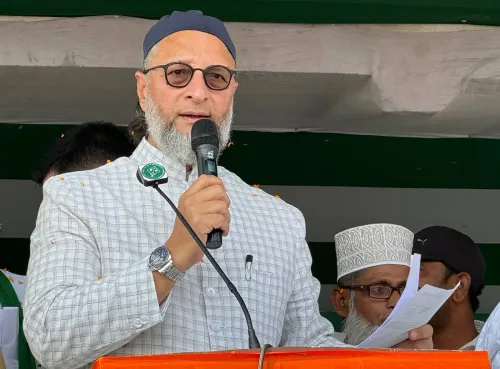
A rights shield or a majoritarian lever? AIMIM president Asaduddin Owaisi sharpened that question on Thursday, 13 August 2026, accusing the Bharatiya Janata Party of using the language of universal rights — especially women's rights — to dress up what he calls a one-directional cultural imposition on India's religious minorities.
Owaisi's post cuts to the bone of the longest-running fault line in Indian civil law. 'The BJP presents the new codes as a matter of universal human rights, in particular women's rights,' he wrote. 'But look more closely and what is actually going on is a process of imposing on religious minorities the laws and customs that Hindus already follow.'
The UCC Debate: What the BJP Has Long Promised
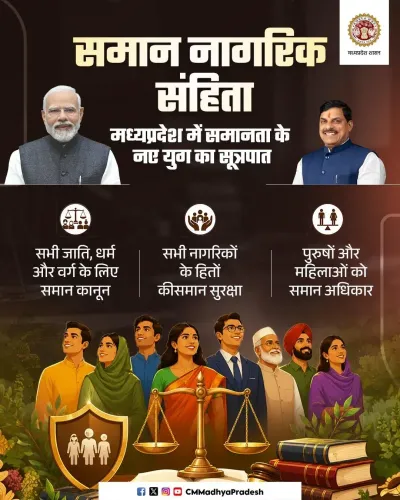
The Uniform Civil Code (UCC) — a single set of civil laws on marriage, divorce, inheritance, and adoption applicable to every Indian citizen regardless of religion — has been a cornerstone of BJP electoral politics for decades. The party's 2019 general election manifesto explicitly committed to its nationwide implementation. Proponents frame it as fulfilling the directive in Article 44 of the Indian Constitution (1950), which calls on the state to 'endeavour to secure' a common civil code.
The pitch is built on equity: that personal laws inherited from colonial-era religious codes leave women in minority communities vulnerable, and that a uniform framework would level the field. It is a framing that has proved politically potent — and deeply contested.
The Counter-Argument Owaisi Is Making
Minority leaders, including Owaisi, have long pushed back on a specific asymmetry: Hindu personal law was substantially reformed through a series of parliamentary acts in the 1950s, codifying and in many places modernising practices on marriage and succession. Those reforms are now settled law. What the UCC would primarily rewrite, critics argue, is Muslim personal law — meaning the code is less a universal convergence than a one-way migration toward existing Hindu legal norms.
That is precisely the charge the Hyderabad MP is renewing. The 'human rights' framing, in his reading, is a rhetorical cover for a process that has a clear directional bias. It is a combative position, but it maps onto a substantive debate that constitutional scholars and minority rights advocates have rehearsed in parliamentary committees and courtrooms for years.
Where the Fight Goes Next
The political and legal battleground is live. Several BJP-governed states have moved toward state-level UCC frameworks, and any introduction of a central UCC bill in Parliament would immediately test the coalition arithmetic of the ruling alliance and trigger fresh constitutional challenges. Courts, minority bodies, and civil society groups are all watching the same door.
Owaisi's intervention signals that opposition to the codes — framed not just as religious sentiment but as a structural critique of how 'rights' language can be deployed — will be loud, organised, and constitutionally grounded. The debate is no longer about whether the UCC arrives; it is about who gets to define what it actually does.
Frequently Asked Questions
What is the Uniform Civil Code and why is it controversial in India?
The Uniform Civil Code (UCC) is a proposed single set of civil laws — covering marriage, divorce, inheritance, and adoption — applicable to all Indian citizens regardless of religion. It is controversial because it would replace community-specific personal laws, with critics arguing it disproportionately targets Muslim personal law while Hindu law was already reformed in the 1950s.
What did Owaisi say about the BJP and the UCC?
Owaisi said the BJP presents the new codes as advancing universal human rights, particularly women's rights, but argued that what is actually happening is the imposition of Hindu laws and customs on religious minorities.
Does the Indian Constitution support a Uniform Civil Code?
Yes. Article 44 of the Indian Constitution (1950) lists the UCC as a Directive Principle, directing the state to 'endeavour to secure' a common civil code for all citizens — though Directive Principles are not judicially enforceable rights.
Has any BJP government implemented the UCC?
The BJP's 2019 national election manifesto committed to a nationwide UCC. Some BJP-governed states have moved toward state-level frameworks, but as of available records no central UCC legislation has been enacted.
Why do minority leaders oppose the Uniform Civil Code?
Minority leaders, including Owaisi, argue the UCC is directionally biased — Hindu personal law was codified and reformed through 1950s legislation, so a new common code would primarily alter Muslim personal law rather than creating a genuinely neutral universal standard.