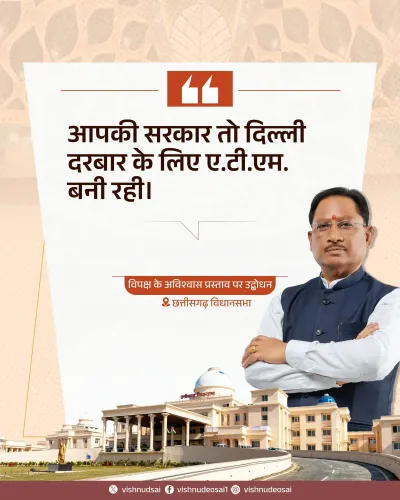
CM Vishnu Deo Sai hits Congress over EVM double standard

Synopsis
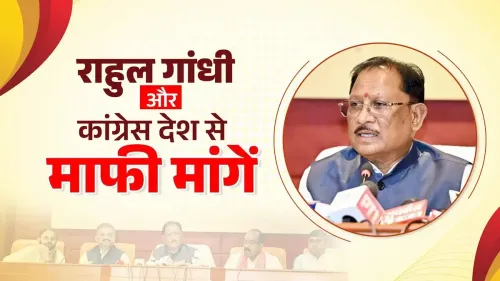
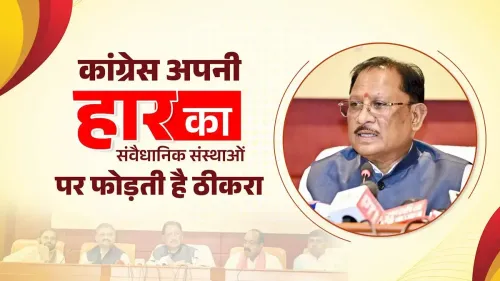
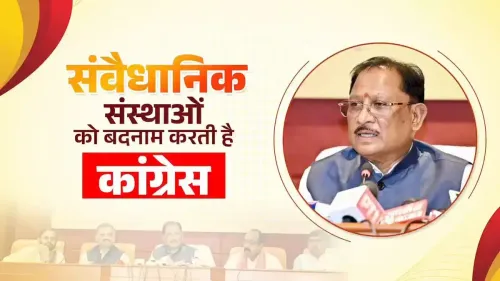
Chhattisgarh CM Vishnu Deo Sai fired a sharp broadside at Congress on 30 October 2026, asking why the party blames EVMs and the Election Commission only when it loses, but accepts the same system without question when it wins.
Key Takeaways
Chhattisgarh CM Vishnu Deo Sai posted on X on 30 October 2026 accusing Congress of a double standard on EVMs.
Congress has historically questioned EVM integrity after electoral defeats while accepting wins on the same machines.
The Election Commission of India and the Supreme Court have repeatedly upheld EVM reliability against legal challenges.
Sai, a BJP leader who oversaw the party's return to power in Chhattisgarh in 2023 , speaks from direct electoral experience in the state.
The EVM debate is expected to intensify ahead of upcoming state assembly elections and any fresh Supreme Court petitions on VVPAT protocols.
Every time the votes are counted, the same script plays out — and Chhattisgarh Chief Minister Vishnu Deo Sai is calling it out. On Friday, 30 October 2026, the senior BJP leader posted a pointed challenge on X, targeting the Congress party's selective faith in India's election machinery.
Sai's post — in Hindi — translates directly: 'Congress blames EVMs and the Election Commission for its losses, but whenever the same Congress wins somewhere, everything suddenly becomes fine. Why this double standard?' The question is short. The political charge behind it is not.
The EVM credibility argument — a recurring opposition refrain
The Electronic Voting Machine has been a flashpoint in Indian electoral politics since it became universal in the early 2000s. After the 2014 Lok Sabha results reshaped the national landscape, the pattern became almost predictable: parties that lost pointed at the machines, parties that won defended them. The Congress, as the principal national opposition, has been at the centre of this argument more than once — raising doubts after defeats in Madhya Pradesh, Rajasthan, and Chhattisgarh itself, while simultaneously claiming victories in states like Karnataka and Telangana without contest.
The Election Commission of India, a constitutionally independent body, has consistently defended EVM integrity, citing end-to-end encryption, tamper-proof hardware, and a sealed manufacturing chain. The Supreme Court has also periodically examined EVM-VVPAT verification petitions, each time declining to mandate a full paper-count.
Why Sai's jab lands differently from Raipur
Sai is not a casual commentator — he is the sitting Chief Minister of a state that Congress governed for fifteen years before the BJP's decisive return in 2023. His credibility on Chhattisgarh's electoral history is direct. When he frames the EVM argument as hypocrisy, he is speaking from a state where both parties have won and lost on the same machines.
The broader BJP line has long been that the EVM narrative is a coping mechanism, activated selectively and conveniently. Sai's post distils that argument into a single, rhetorically efficient question — a format designed for maximum reach on social media rather than a formal policy statement.
With assembly elections scheduled in several states and ongoing Supreme Court scrutiny of VVPAT verification protocols, the EVM debate is far from archived. Every electoral cycle re-arms both sides — and posts like this one signal that the 2026-27 election season will be no different. The machines will keep counting; the argument will keep running.
Point of View
The BJP attempts to delegitimise the opposition's loss-narrative before it can take root. The rhetorical move — 'you trusted the machines when you won' — is hard to rebut and travels well on social media. It also reflects a broader BJP strategy of forcing Congress to defend its consistency rather than its policies, shifting the debate from governance to credibility.
NationPress
30 Oct 2026
Frequently Asked Questions
Why does Congress blame EVMs after election losses?
Congress and other opposition parties have alleged EVM tampering after several defeats, arguing machines can be manipulated. The Election Commission and the Supreme Court have repeatedly rejected these claims, citing tamper-proof design and sealed manufacturing.
What did Vishnu Deo Sai say about Congress and EVMs?
On 30 October 2026, Chhattisgarh CM Vishnu Deo Sai posted on X that Congress blames EVMs and the Election Commission when it loses but accepts the same system without complaint when it wins, calling this a double standard.
Are EVMs reliable in Indian elections?
The Election Commission of India maintains that EVMs are tamper-proof, with end-to-end encryption and a sealed hardware chain. The Supreme Court has upheld their use and declined petitions for a full paper ballot count.
Who is Vishnu Deo Sai?
Vishnu Deo Sai is the Chief Minister of Chhattisgarh and a senior BJP leader. He took office after the BJP's decisive victory in the 2023 Chhattisgarh assembly elections.
What is the VVPAT controversy in Indian elections?
VVPAT — Voter Verifiable Paper Audit Trail — prints a paper slip confirming each EVM vote. Opposition parties have petitioned the Supreme Court to mandate counting all VVPAT slips alongside EVM tallies; the court has so far upheld the existing limited verification system.