CM Vishnu Deo Sai Marks Hareli Tihar, Chhattisgarh's Festival of Green

Synopsis
Chhattisgarh Chief Minister Vishnu Deo Sai marked Hareli Tihar on 12 August 2026, greeting residents on the state's oldest monsoon festival — an agrarian celebration rooted in tribal traditions of tree worship, tool blessing, and folk ritual.
Key Takeaways
Vishnu Deo Sai posted Hareli Tihar greetings on 12 August 2026 , acknowledging Chhattisgarh's most significant agrarian festival.
Hareli Tihar is observed during the Shravan month and marks the onset of the monsoon, when fields turn green and farmers worship their tools and cattle.
The festival is rooted in the traditions of Chhattisgarh's tribal communities , who form a major share of the state's population.
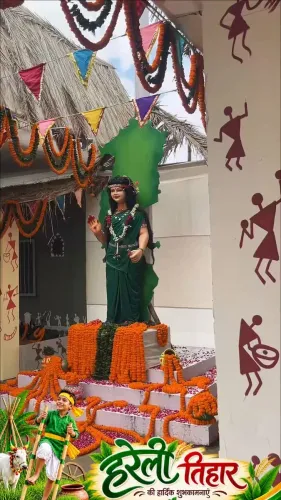
Rituals include fixing neem branches at home entrances, rope swings on trees, and folk music performances across villages.
Hareli is considered the first festival of Chhattisgarh's annual cultural calendar, symbolising the bond between people, land, and nature.
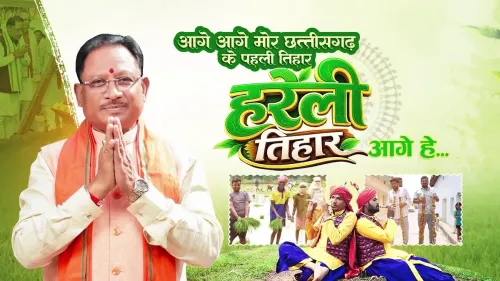
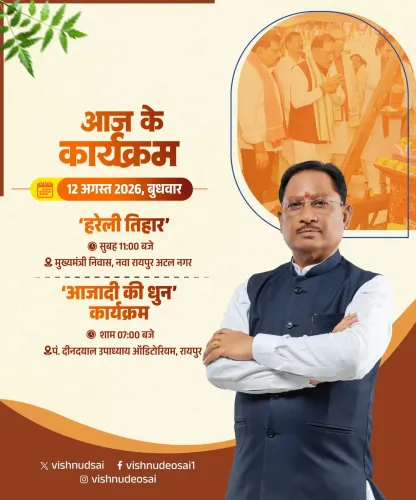
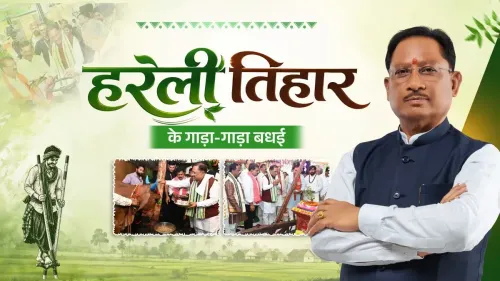
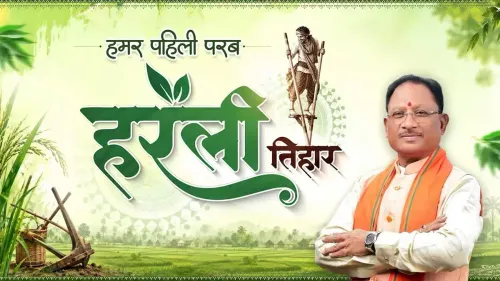
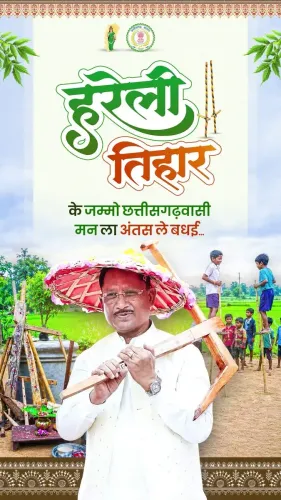
Chhattisgarh's oldest festival of the monsoon season arrived on Wednesday, 12 August 2026, and Chief Minister Vishnu Deo Sai marked the occasion with a post on X, sharing greetings for Hareli Tihar — the state's beloved agrarian festival that opens the annual cycle of Chhattisgarhi celebrations.
The post, carrying just the words 'Hareli Tihar' alongside a broadcast link and an image, is a compact but culturally loaded gesture. Hareli — derived from the Hindi word for 'green' — is observed during the Shravan month of the Hindu calendar, typically falling in July or August when the monsoon is in full force and the fields of Chhattisgarh turn a vivid green.
What Hareli Tihar Means for Chhattisgarh
For the state's predominantly agrarian and tribal communities, Hareli is not merely a date on the calendar — it is a living ritual. Farmers worship their agricultural tools and cattle, seeking blessings for a good harvest. Neem branches are fixed at the entrances of homes as a symbol of protection and prosperity. Children and adults take to traditional rope swings tied to trees, and folk music fills village squares across the state. The festival marks the formal start of Chhattisgarh's festive year, and successive state governments have treated it as an anchor for promoting the region's indigenous cultural identity. For a state where tribal communities form a significant share of the population, Hareli carries deep social meaning — a collective affirmation of the bond between people, land, and nature.CM Sai and the State's Cultural Calendar
Vishnu Deo Sai, who assumed office as Chief Minister in December 2023, himself comes from a tribal background — a fact that lends particular resonance to his public acknowledgement of festivals rooted in Chhattisgarh's indigenous traditions. Chief ministers of Indian states routinely use social media to connect with constituents around local festivals, but for Sai, such moments also carry a signal about the government's commitment to cultural preservation. State-level efforts to document and promote indigenous practices have been a quiet but consistent theme in Chhattisgarh's governance, and Hareli sits at the centre of that effort — a festival that is simultaneously a religious observance, an agricultural ritual, and a statement of regional identity. As the monsoon deepens and Chhattisgarh's fields fill with the promise of harvest, Hareli Tihar remains the moment when the state pauses, looks at the green earth around it, and gives thanks.Point of View
While ceremonial in form, feed into a longer-running political project of aligning governance with local cultural pride. Whether they translate into substantive policy on cultural preservation remains the more consequential question to watch.
NationPress
12 Aug 2026
Frequently Asked Questions
What is Hareli Tihar and why is it celebrated in Chhattisgarh?
Hareli Tihar is Chhattisgarh's first and oldest festival of the year, observed during the Shravan month of the Hindu calendar. It marks the onset of the monsoon and is rooted in agrarian traditions — farmers worship their tools and cattle, neem branches are placed at home entrances, and communities gather for folk music and rope swings on trees.
When is Hareli Tihar celebrated in 2026?
In 2026, Hareli Tihar was marked on 12 August , falling during the Shravan month when the monsoon is at its peak and Chhattisgarh's fields are at their greenest.
Who is Vishnu Deo Sai and what is his connection to tribal culture?
Vishnu Deo Sai is the Chief Minister of Chhattisgarh, having assumed office in December 2023. He is a BJP leader from a tribal background, which lends personal resonance to his public acknowledgement of festivals like Hareli that are central to the state's indigenous cultural identity.
What rituals are associated with Hareli Tihar?
Key Hareli rituals include the worship of agricultural tools and cattle, fixing neem branches at home entrances as symbols of protection, traditional rope swings tied to trees, and folk music and dance in village squares across Chhattisgarh.
Why do Indian chief ministers post about regional festivals on social media?
Chief ministers across Indian states routinely use social media to connect with constituents around local festivals, signalling cultural solidarity and awareness of regional identity. For leaders like Sai, such posts also reflect state-level commitments to promoting and preserving indigenous traditions.