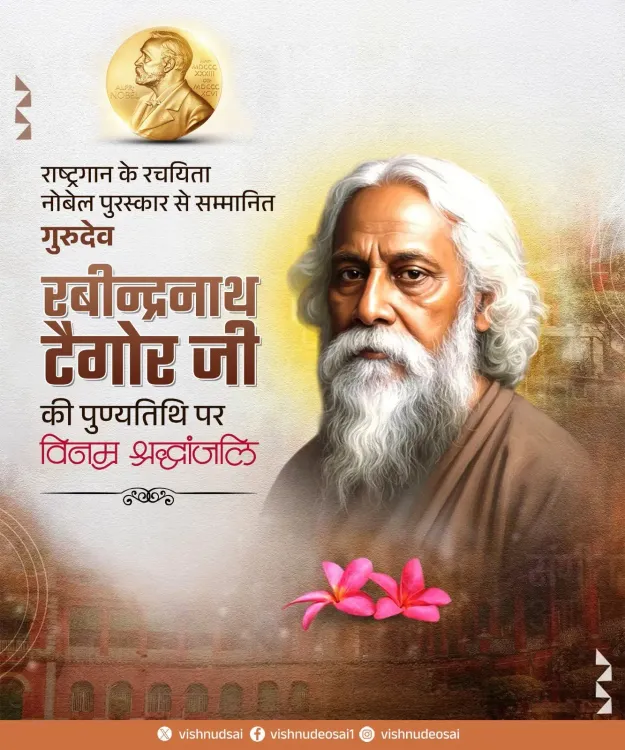
CM Vishnu Deo Sai pays tribute to Rabindranath Tagore on death anniversary
Synopsis
Chhattisgarh Chief Minister Vishnu Deo Sai on 7 August 2026 paid tribute to Rabindranath Tagore on his death anniversary, honouring the Nobel laureate's contributions to Indian literature, education, and the national anthem.
Key Takeaways
Chhattisgarh CM Vishnu Deo Sai posted a tribute to Rabindranath Tagore on his death anniversary on 7 August 2026 .
Tagore won the Nobel Prize in Literature in 1913 , the first non-European to do so.
His composition Jana Gana Mana was adopted as India's national anthem in 1950 by the Constituent Assembly.
CM Sai highlighted Tagore's timeless works, humanist values, and his vision for education as enduring sources of inspiration.
Indian political leaders across parties routinely pay tribute to Tagore on his birth and death anniversaries, reflecting his non-partisan place in national memory.
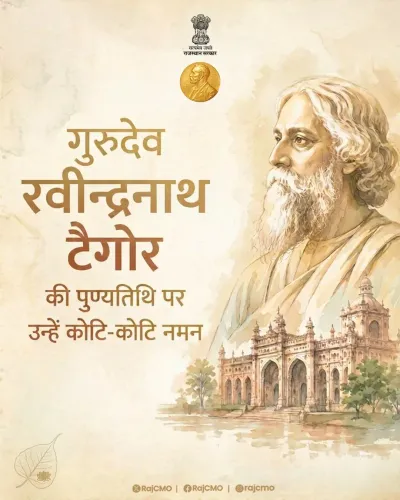
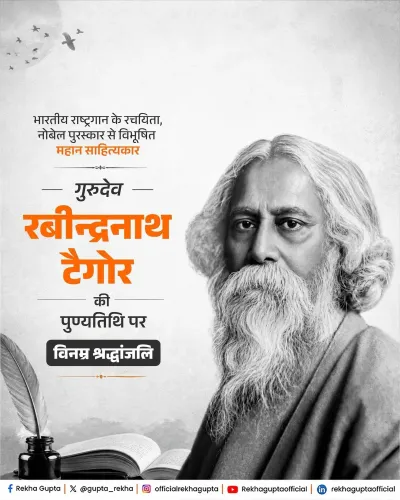
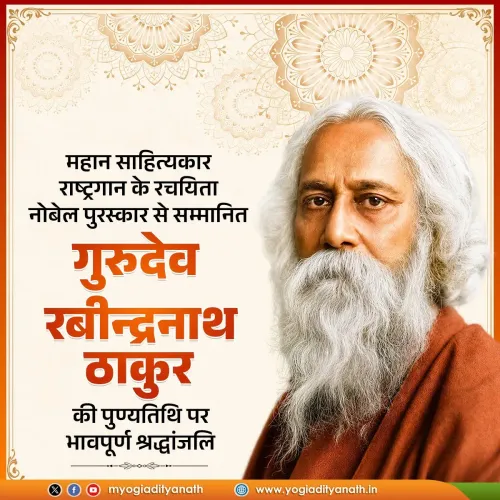
On the death anniversary of Rabindranath Tagore, Chhattisgarh Chief Minister Vishnu Deo Sai offered a solemn tribute to the Nobel laureate whose words became the soul of a nation — and whose legacy continues to shape how India thinks about literature, education, and identity.
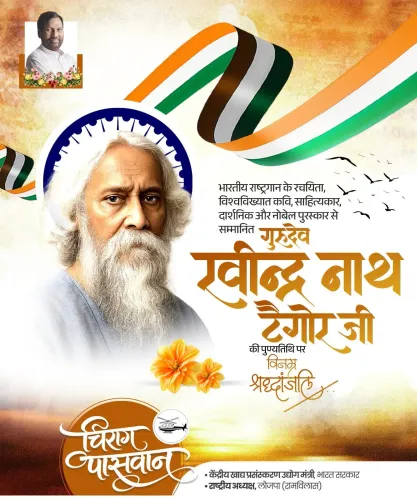
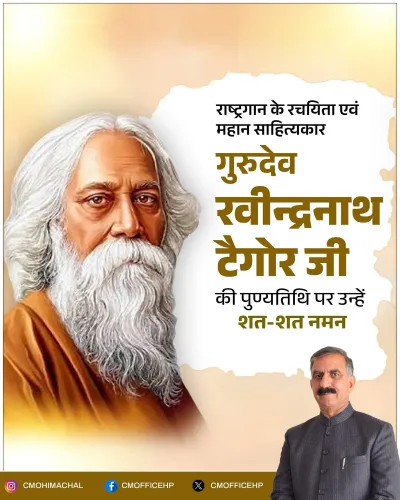
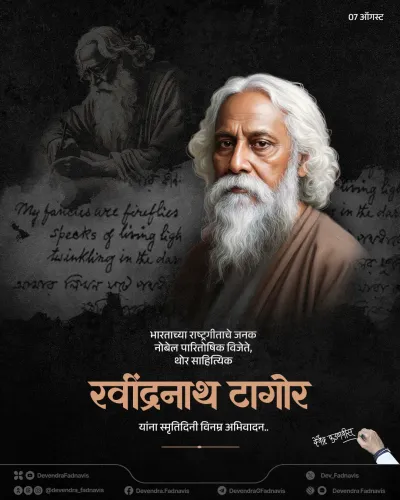
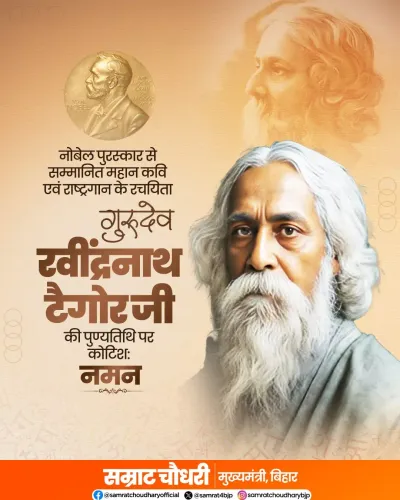
In his post on 7 August 2026, CM Sai wrote: 'Rashtragan ke rachayita, Nobel Puraskar se sammanit mahan sahityakar Gurudev Rabindranath Tagore ji ki punyatithi par unhe vinamra shraddhanjali' — ('A humble tribute to Gurudev Rabindranath Tagore, composer of the national anthem and great Nobel-honoured literary figure, on his death anniversary'). He added that Tagore's timeless works, his humanist values, and his vision for education 'will forever inspire generations', and that his 'invaluable contribution to Indian literature and culture will always be remembered.'
The poet who gave India its voice
Rabindranath Tagore remains one of the most towering figures in world literature. In 1913, he became the first non-European to win the Nobel Prize in Literature — a recognition of his collection Gitanjali, which stunned the Western literary world with its spiritual depth and lyrical precision. But for India, his greatest gift was simpler and more permanent: Jana Gana Mana, the song that India's Constituent Assembly adopted as the national anthem in 1950.
Tagore's reach extended far beyond verse. He founded Visva-Bharati University at Santiniketan in Bengal, built on a philosophy that learning should breathe open air — literally and philosophically — rejecting the rigid colonial model of education. That vision still animates debates about pedagogy in India today.
A tribute that crosses party lines
CM Sai's tribute reflects a pattern as consistent as the calendar: on Tagore's birth and death anniversaries, leaders across India's political spectrum pause to acknowledge the poet's place in the national consciousness. It is one of the few acts of public remembrance that carries no partisan edge. The acknowledgement of Tagore is, in a sense, an acknowledgement of the idea of India itself.
For students, educators, and cultural institutions, these annual commemorations serve as a prompt — a moment to revisit Tagore's essays on nationalism, his short stories of rural Bengal, and the songs of Rabindra Sangeet that remain a living tradition across West Bengal and beyond.
A hundred and fifty years after his birth, Tagore's question — what does it mean to be fully human, fully educated, fully free — still does not have a final answer. That is precisely why he endures.
Point of View
Like administrations before it, anchors its cultural messaging in figures whose legacy commands near-universal reverence. Tagore is politically safe but also genuinely foundational — invoking him is a way of claiming continuity with India's civilisational inheritance. The emphasis on education and humanist values in Sai's tribute subtly aligns with the broader national conversation around the New Education Policy and India's cultural identity. Tagore remains the rare consensus figure whose name closes arguments rather than opening them.
NationPress
7 Aug 2026
Frequently Asked Questions
When is Rabindranath Tagore's death anniversary?
Rabindranath Tagore passed away on 7 August 1941 , and his death anniversary is observed every year on that date.
What did Rabindranath Tagore win the Nobel Prize for?
Tagore won the Nobel Prize in Literature in 1913 for his collection of poems Gitanjali , becoming the first non-European to receive the honour.
Did Rabindranath Tagore write India's national anthem?
Yes. Rabindranath Tagore composed Jana Gana Mana , which India's Constituent Assembly adopted as the national anthem in 1950 .
Why did Chhattisgarh CM Vishnu Deo Sai post about Tagore?
CM Vishnu Deo Sai posted a tribute on 7 August 2026 to mark Tagore's death anniversary, honouring his contributions to Indian literature, education, and the national anthem — a practice common among Indian political leaders on Tagore's anniversaries.
What is Rabindranath Tagore's contribution to Indian education?
Tagore founded Visva-Bharati University at Santiniketan, built on an open, nature-integrated philosophy of learning that challenged the rigid colonial education model and continues to influence Indian educational thought.