CM Vishnu Deo Sai Pitches Tech-Driven Governance for Chhattisgarh
Synopsis
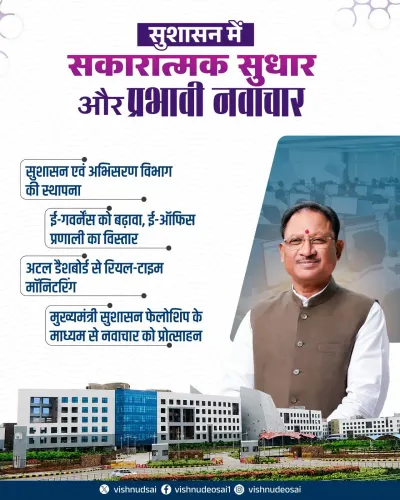
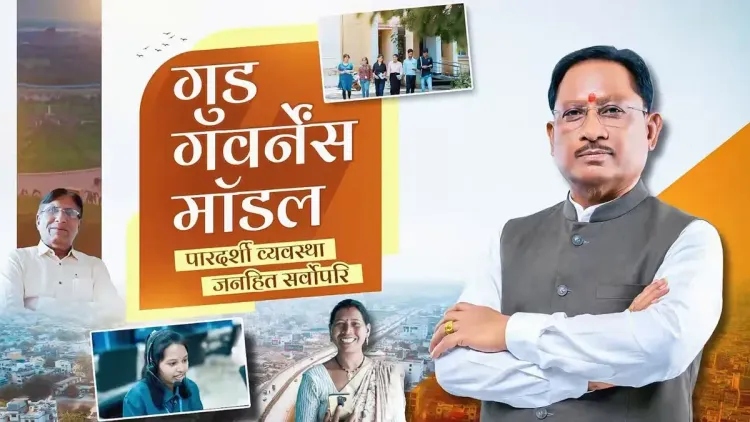
Chhattisgarh Chief Minister Vishnu Deo Sai declared on 29 July 2026 that IT and digital innovation are making the state's administration simpler, accountable, and people-centric — framing technology-enabled governance as the core mantra of his government.
Key Takeaways
CM Vishnu Deo Sai posted on 29 July 2026 articulating his government's governance philosophy centred on IT and digital innovation.
He described the goal as making administration 'simpler, more accountable, and people-centric' through technology.
The statement emphasises reaching the 'last person' — a direct reference to Chhattisgarh's challenge of serving remote, forested, and tribal regions.
The framing aligns with the national Digital India programme launched in 2015 and the broader BJP suhasasan narrative active since 2014 .
No specific schemes or metrics were cited; the post signals a policy direction rather than announcing a new programme.
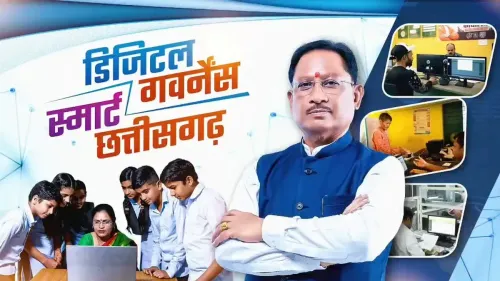
Technology is not just a tool — for Chhattisgarh Chief Minister Vishnu Deo Sai, it is the very architecture of accountable government. On Wednesday, 29 July 2026, the BJP leader articulated his administration's core governance philosophy: that information technology and digital innovation must power a simpler, more responsive, and citizen-first state.
Posting in Hindi, CM Sai wrote: 'सूचना प्रौद्योगिकी और डिजिटल नवाचार के प्रभावी उपयोग से हम प्रशासन को अधिक सरल, जवाबदेह और जनकेंद्रित बना रहे हैं' — 'Through the effective use of information technology and digital innovation, we are making governance simpler, more accountable, and people-centric.' The closing line landed the sharpest: 'This is the core mantra of our good governance.'
The Last-Mile Imperative
The Chief Minister's emphasis on reaching the 'last person' — अंतिम व्यक्ति — is not incidental rhetoric. Chhattisgarh is a state where geography itself is a governance challenge: dense forests, remote tribal districts, and dispersed rural populations have historically made service delivery uneven. The argument CM Sai is making is structural — that a sensitive, technology-enabled, and results-oriented administration is the only mechanism capable of closing that gap.Suhasasan as State Policy
The post is a distillation of the suhasasan (good governance) framework that BJP-led governments have championed at both the central and state levels since 2014. The national Digital India programme, launched in 2015, set the template: digitise public services, reduce friction between citizen and state, and use technology as a transparency layer. States like Chhattisgarh have since built on that foundation — deploying IT platforms for grievance redressal, benefit transfers, and administrative monitoring. CM Sai's statement signals that this direction remains the defining priority of his government, which took office after the 2023 assembly elections. The watch point now is execution: whether state-specific digital portals, citizen-service applications, or measurable improvements in last-mile delivery metrics follow the philosophy being articulated from the top.Point of View
Articulating a digital-first philosophy publicly signals to both voters and the bureaucracy where administrative priorities lie. The emphasis on the 'last person' is a pointed acknowledgement that tribal and forested districts remain the hardest test of any governance model. Whether this translates into verifiable last-mile delivery improvements will determine whether the rhetoric becomes a political asset or a liability by the next election cycle.
NationPress
29 Jul 2026
Frequently Asked Questions
What did Chhattisgarh CM Vishnu Deo Sai say about digital governance?
CM Vishnu Deo Sai stated on 29 July 2026 that information technology and digital innovation are being used to make Chhattisgarh's administration simpler, more accountable, and citizen-centric, calling this the 'core mantra' of his government's good governance approach.
What is the Digital India programme and how does it relate to Chhattisgarh?
Digital India is a national programme launched in 2015 to promote e-governance and digital empowerment across states. Chhattisgarh, like other BJP-governed states, has aligned its administrative reforms with this framework, using IT platforms for service delivery and grievance redressal.
When did Vishnu Deo Sai become Chief Minister of Chhattisgarh?
Vishnu Deo Sai became Chief Minister of Chhattisgarh after the 2023 state assembly elections , when the BJP returned to power in the state.
What does 'suhasasan' mean in the context of Indian politics?
'Suhasasan' is the Hindi term for good governance. It has been a central plank of BJP governance messaging since 2014, emphasising accountability, transparency, and technology-enabled public service delivery at both central and state levels.
What are the governance challenges specific to Chhattisgarh?
Chhattisgarh faces significant last-mile delivery challenges due to its geography — dense forests, remote tribal districts, and dispersed rural populations make it difficult to extend government services uniformly, which is why CM Sai's emphasis on technology-driven, citizen-centric administration carries particular weight in the state's context.