Shekhawat Busts E20 Petrol Mileage Myths on Social Media

Synopsis
Union Minister Gajendra Singh Shekhawat has pushed back against viral misinformation about E20 petrol, stating the fuel blend causes an average mileage drop of just 0.6 kmpl — far less than the impact of tyre pressure, traffic, or driving habits.
Key Takeaways
Union Minister Gajendra Singh Shekhawat addressed E20 petrol misinformation on social media on 29 July 2026 .
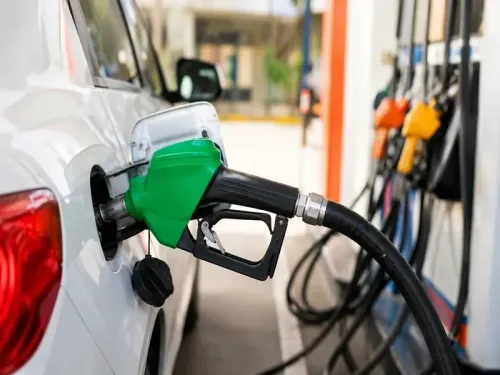
E20 — a blend of 20% ethanol and 80% petrol — causes an average mileage drop of just 0.6 kmpl , per the minister's post.
Tyre pressure, traffic conditions, and driving style have a greater effect on fuel efficiency than the ethanol blend.
India advanced its 20% ethanol blending target to 2025 from the original 2030 deadline, under the Ethanol Blended Petrol Programme .
The National Policy on Biofuels 2018 expanded feedstock options to support the programme's scale-up.
The programme aims to cut crude oil imports, support farmers, and reduce vehicular emissions.
India's roads are running on a new fuel blend — and so is a wave of misinformation. Union Culture and Tourism Minister Gajendra Singh Shekhawat stepped into the debate on Wednesday, 29 July 2026, using his social media platform to directly counter viral claims about E20 petrol and its impact on vehicle mileage.
Shekhawat's post, written in Hindi, posed the question bluntly: 'E20 पेट्रोल को लेकर सोशल मीडिया पर कई दावे किए जाते हैं, लेकिन सच क्या है?' ('Many claims are made about E20 petrol on social media — but what is the truth?'). His answer was equally direct: the average mileage difference from switching to E20 is just 0.6 kmpl. Tyre pressure, traffic conditions, and driving style, he argued, affect fuel efficiency far more than the ethanol blend ever could.
What E20 Actually Is — and Why It Matters
E20 is a blend of 20% ethanol and 80% petrol, the centrepiece of India's Ethanol Blended Petrol Programme. The government accelerated its original timeline in 2021, pushing the 20% blending target forward to 2025 from 2030 — a signal of how seriously New Delhi treats the programme. The logic is threefold: cut crude oil import bills, give sugarcane and grain farmers a reliable buyer for surplus produce, and chip away at vehicular emissions as part of a broader energy transition.
The National Policy on Biofuels, 2018 laid the groundwork, expanding the feedstock options beyond molasses to include grains and other agricultural waste. Since then, India has steadily scaled ethanol blending percentages across states, with E20 representing the current peak ambition for the pump.
The Mileage Anxiety Driving the Misinformation
For millions of two-wheeler and car owners, fuel economy is not an abstract policy number — it is a monthly household calculation. That anxiety makes E20 a fertile ground for rumour. Claims circulating online have suggested steep mileage drops, engine damage, and long-term mechanical harm, none of which are supported by official testing data.
Shekhawat's intervention is part of a broader government push to normalise E20 adoption. The minister's message — 'अफवाहों नहीं, तथ्यों पर भरोसा करें' ('Trust facts, not rumours') — frames the misinformation problem as the primary obstacle to a policy that benefits farmers, reduces imports, and lowers emissions all at once.
The real test now is whether official communication can outrun the rumour mill — because a fuel blend that helps farmers, cuts import bills, and barely dents your mileage deserves better than a viral myth.
Point of View
But public adoption is being slowed by misinformation on social media. A senior minister personally stepping in to counter fuel-economy myths signals that the Centre sees the credibility gap as a genuine policy risk. The intervention also underscores how the BJP is increasingly using ministers' personal social media presence to do the work that formal government advisories often fail to accomplish — reaching ordinary vehicle owners where they actually consume information.
NationPress
29 Jul 2026
Frequently Asked Questions
Does E20 petrol reduce mileage significantly?
According to Union Minister Gajendra Singh Shekhawat, E20 petrol causes an average mileage difference of just 0.6 kmpl — a marginal impact compared to factors like tyre pressure, traffic, and driving style.
When is India's 20% ethanol blending target?
India advanced its 20% ethanol blending target to 2025, brought forward from the original 2030 deadline, as part of its National Policy on Biofuels.
Is E20 petrol safe for all vehicles?
The government promotes E20 as suitable for modern vehicles. Official guidance recommends checking manufacturer compatibility, particularly for older engines, before switching.
Why is India pushing ethanol blending in petrol?
India's ethanol blending programme aims to reduce dependence on crude oil imports, provide a stable market for surplus sugarcane and grain produce, and achieve modest reductions in vehicular emissions.