Giriraj Singh hails first direct freight train as new India-Nepal chapter
Synopsis
Union Textiles Minister Giriraj Singh on 29 July 2026 welcomed the launch of the first direct freight train between India and Nepal, calling it a new chapter in bilateral relations and reinforcing India's Neighbourhood First connectivity push with its landlocked northern neighbour.
Key Takeaways
Union Textiles Minister Giriraj Singh hailed the launch of the first direct freight train between India and Nepal on 29 July 2026 .
Nepal is landlocked and relies on Indian overland routes for the bulk of its trade, making cross-border rail links strategically critical.
The Raxaul-Birgunj rail link , operational since 2008 , was the foundational India-Nepal freight rail connection; this new direct service is the next step.
Rail connectivity has been a standing priority at India-Nepal Joint Commission meetings since 2014 under India's Neighbourhood First policy.
Indian Railways operates the cross-border freight services; border traders, Nepali importers, and Indian exporters are the primary beneficiaries.
Further route expansions and integrated check-post upgrades are expected at upcoming India-Nepal bilateral meetings.
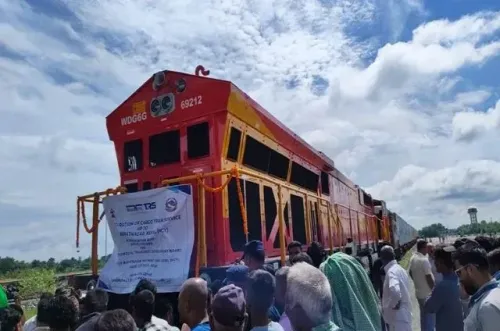
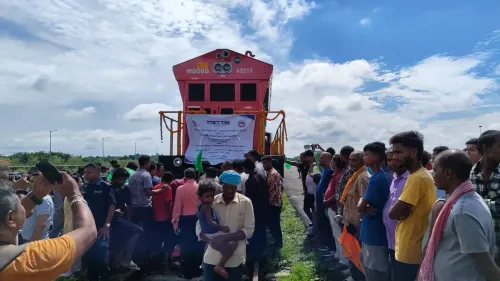
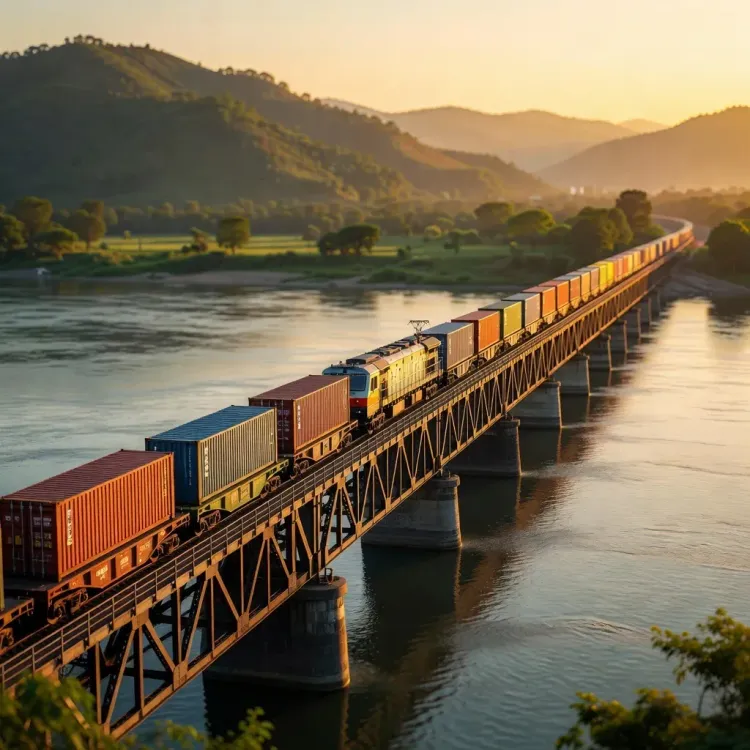
A single freight train crossing a border can rewrite decades of logistics history — and that is precisely what Union Textiles Minister Giriraj Singh signalled on Wednesday, 29 July 2026, when he shared news of the first direct freight train service between India and Nepal, calling it the opening of a new chapter in bilateral relations.
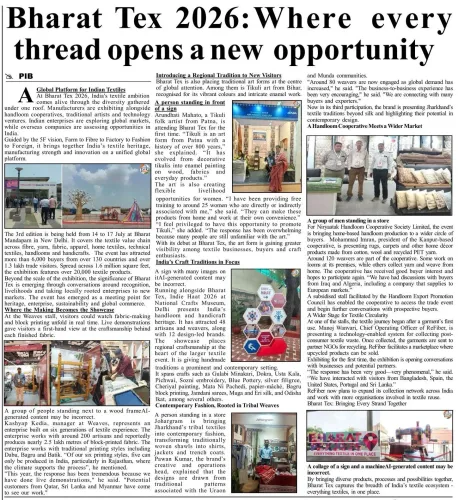
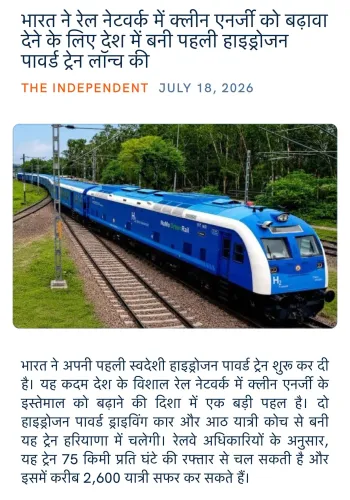
Posting in Hindi on X, the senior BJP leader and Lok Sabha MP from Begusarai, Bihar wrote: 'पहली सीधी मालगाड़ी से भारत-नेपाल संबंधों में नए अध्याय की शुरुआत' — 'The first direct freight train marks the beginning of a new chapter in India-Nepal relations.' The post was shared via the NaMo App alongside an image, underscoring the political weight the ruling establishment is placing on this connectivity milestone.
Why a freight train to Nepal is a bigger deal than it sounds
Nepal is landlocked. Every container of goods it imports overland must pass through India, making cross-border rail links not a convenience but a lifeline. India is Nepal's largest trading partner, and the logistics chain between the two countries has long been a pressure point for Nepali importers and Indian exporters alike.
The foundational piece of this connectivity story dates to 2008, when the Raxaul-Birgunj rail link became operational, enabling containerised cargo to reach Nepal's inland dry port at Birgunj. That link proved the concept. What follows now — a 'direct' freight service, as described — represents the next rung on a ladder that successive governments have been climbing under India's Neighbourhood First policy.
Neighbourhood First, one rail line at a time
Since 2014, India-Nepal Joint Commission meetings have consistently prioritised rail connectivity as a strategic lever — lowering logistics costs, deepening economic interdependence, and keeping Nepal firmly within India's orbit at a time when Beijing has also pursued infrastructure diplomacy in Kathmandu. Every new rail link is, simultaneously, a trade facilitator and a geopolitical signal.
Indian Railways operates these cross-border freight services, stitching the Indian rail network to Nepal's nascent rail infrastructure. Border traders on both sides, Nepali importers, and Indian exporters are the immediate beneficiaries — shorter transit times, lower trucking costs, and more predictable supply chains.
The next test will come at upcoming India-Nepal bilateral meetings, where further route announcements and integrated check-post upgrades are expected to follow this inaugural run. One direct freight train today; a rail corridor tomorrow. That is how neighbourhood diplomacy compounds.
Point of View
New Delhi's counter-move has been to bind Kathmandu through trade corridors and rail links that reduce Nepali dependence on costlier, longer alternative routes. Giriraj Singh's amplification of this milestone — via the NaMo App — signals that the ruling establishment views rail connectivity with neighbours as a political asset worth broadcasting. The real measure of success will be freight volumes and route expansion in the months ahead.
NationPress
28 Oct 2026
Frequently Asked Questions
What is the first direct freight train between India and Nepal?
It is a new direct rail freight service connecting India and Nepal, hailed by Union Textiles Minister Giriraj Singh on 29 July 2026 as opening a new chapter in bilateral relations. Specific route and operational details are yet to be officially detailed.
What is the Raxaul-Birgunj rail link?
The Raxaul-Birgunj rail link became operational in 2008, enabling containerised cargo to move between India and Nepal's inland dry port at Birgunj. It was the first major cross-border freight rail connection between the two countries.
Why does India prioritise rail connectivity with Nepal?
Nepal is landlocked and its primary overland trade routes pass through India. Rail links lower logistics costs, deepen economic interdependence, and reinforce India's Neighbourhood First policy of keeping neighbours closely tied to the Indian economy.
Who is Giriraj Singh and why did he post about the India-Nepal train?
Giriraj Singh is India's Union Textiles Minister, a senior BJP leader, and Lok Sabha MP from Begusarai, Bihar. He shared the news of the first direct India-Nepal freight train on X on 29 July 2026, calling it a new chapter in bilateral ties.
What is India's Neighbourhood First policy?
Neighbourhood First is India's foreign policy approach of prioritising connectivity, trade, and diplomacy with its immediate neighbours — including Nepal, Bangladesh, Sri Lanka, and Bhutan — to deepen regional economic integration and strategic ties.