Giriraj Singh Hails India as World's No. 2 Sailor Supplier
Synopsis
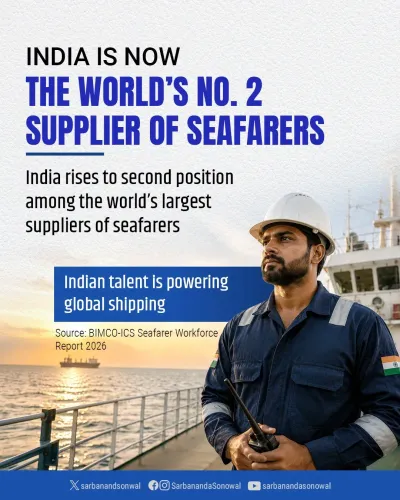
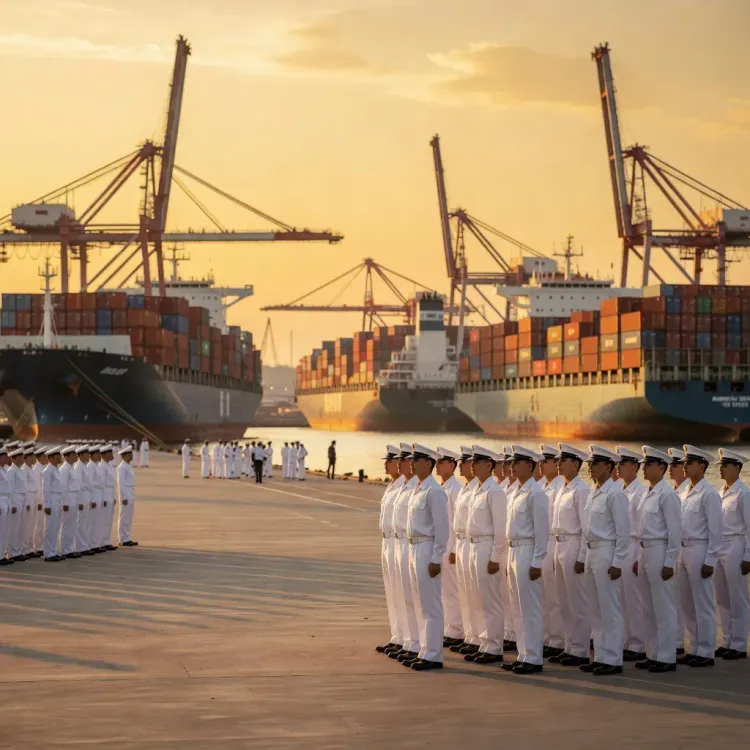
India has emerged as the world's second-largest supplier of sailors, Union Textiles Minister Giriraj Singh announced on 29 July 2026. The milestone reflects decades of maritime skill development under IMO-aligned institutions and underscores India's expanding role in global shipping labour markets.
Key Takeaways
India is now the world's second-largest supplier of sailors , according to a report shared by Union Textiles Minister Giriraj Singh on 29 July 2026 .
Indian seafarers are trained under International Maritime Organization (IMO) standards through institutions regulated by the Directorate General of Shipping .
The global shipping industry moves approximately 90 per cent of world cargo by volume, making maritime labour a high-value services export.
Seafarer remittances form a meaningful component of India's services trade and contribute to foreign exchange earnings.
Future growth depends on bilateral crew-supply agreements and India's ability to fill higher-value officer and specialist roles aboard international vessels.
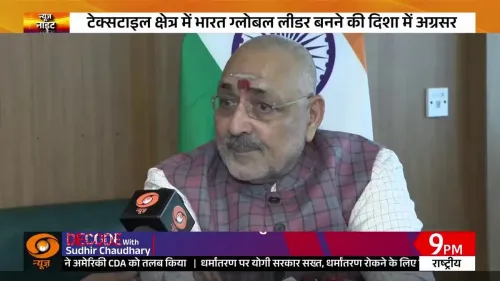
India has climbed to the position of the world's second-largest supplier of sailors, a milestone that Union Textiles Minister Giriraj Singh amplified on Wednesday, 29 July 2026, sharing the development with his followers on X and calling attention to the country's growing footprint in global maritime labour markets.
What the ranking means for India's maritime workforce
India has long been a significant exporter of skilled seafarers — officers, engineers, and ratings trained under the standards of the International Maritime Organization (IMO) and certified through institutions overseen by the Directorate General of Shipping. Reaching the second spot in global sailor supply is the payoff of decades of investment in maritime education and vocational training, positioning Indian seafarers as a sought-after workforce for shipping companies worldwide.
The global shipping industry is the backbone of international trade, moving roughly 90 per cent of world cargo by volume. The nationality of the crew aboard those vessels is a multi-billion-dollar labour market, and India's rise to second place means a larger share of that market — and the foreign exchange remittances that come with it — now flows back to Indian families.
Skill pipelines and the Ministry of Ports' role
Maritime training in India runs through a network of nautical academies and training institutes spread across coastal states, producing officers and ratings who meet STCW (Standards of Training, Certification and Watchkeeping) norms recognised globally. Successive governments have backed expansion of this pipeline, framing seafarer exports as a high-value segment of India's services trade — invisible on a cargo manifest but very visible in the current account.
While the Textiles Ministry is not the nodal department for shipping, Giriraj Singh's decision to share the milestone reflects a broader BJP communication strategy of spotlighting India's sectoral rankings across industries — from textiles to maritime — as proof of economic ascent under the current dispensation.
What comes next for Indian seafarers
The real test of this ranking is whether India can convert headcount into higher-value billets — senior officers and specialised ratings command significantly better pay than entry-level crew. Bilateral crew-supply agreements with major flag states and shipping nations remain the key lever; progress on those deals will determine whether India consolidates the second spot or pushes for the top.
For the hundreds of thousands of Indian families whose livelihoods depend on a berth at sea, the number is more than a statistic — it is a signal that the world still wants India on the bridge.
Point of View
It fits neatly into a broader narrative of India ascending global rankings — from defence exports to renewable energy — that ministers across portfolios have been amplifying. The harder policy question is whether India can move up the value chain from crew supply to owning and operating more vessels under the Indian flag, which would multiply the economic multiplier. Until that shift happens, the ranking is a strong foundation, but not yet a structural transformation.
NationPress
13 Sept 2026
Frequently Asked Questions
Which country is the largest supplier of sailors in the world?
India is currently reported as the second-largest supplier of sailors globally. The Philippines has traditionally held the top position in global seafarer supply, though rankings can shift with updated data.
How many Indian sailors work on international ships?
India has a large certified seafarer workforce running into hundreds of thousands, trained through institutes regulated by the Directorate General of Shipping and certified under IMO's STCW standards. Exact current figures are updated periodically by the Ministry of Ports, Shipping and Waterways.
What body regulates seafarer training in India?
The Directorate General of Shipping, under the Ministry of Ports, Shipping and Waterways, oversees maritime training institutes and ensures Indian seafarers meet International Maritime Organization (IMO) certification norms.
Why did Textiles Minister Giriraj Singh post about sailors?
Giriraj Singh shared the report as a point of national pride, highlighting India's growing global economic footprint. Senior ministers across portfolios frequently amplify sectoral milestones as part of broader government communication.
What is STCW and why does it matter for Indian seafarers?
STCW stands for Standards of Training, Certification and Watchkeeping for Seafarers — an international convention that sets minimum qualification standards. Indian seafarers holding STCW-compliant certificates are eligible for employment on vessels worldwide, which underpins India's strong maritime labour export.