Giriraj Singh flags Rajasthan tiger count rise to 149
Synopsis
Rajasthan's tiger population has risen to 149, with nearly half concentrated in Ranthambore National Park. Union Textiles Minister Giriraj Singh flagged the figure on 29 July 2026, underlining India's ongoing tiger recovery under Project Tiger.
Key Takeaways
Rajasthan's tiger count has risen to 149 , according to a report shared by Union Textiles Minister Giriraj Singh on 29 July 2026 .
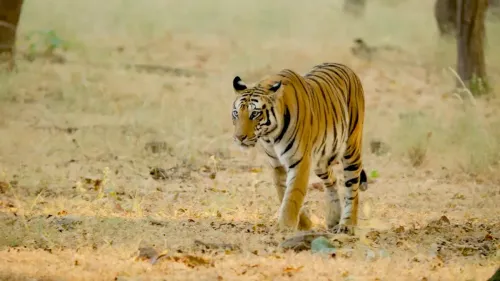
Nearly 50 percent of Rajasthan's tigers — roughly 75 animals — are concentrated in Ranthambore National Park in Sawai Madhopur district.
Ranthambore is one of India's original Project Tiger reserves, established under the Central scheme launched in 1973 .
India's national tiger population reached 2,967 in the 2018 All India Tiger Estimation , up from 1,411 in 2006.
Conservationists continue to monitor dispersal and corridor connectivity as risks when a single reserve dominates a state's tiger population.
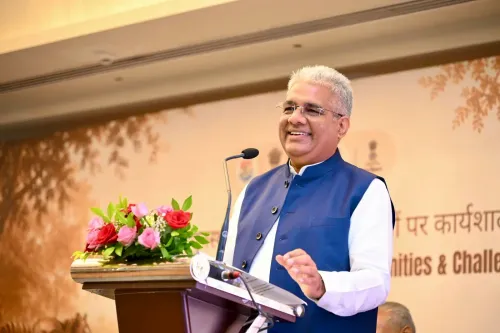
India's tiger recovery story just got a fresh data point from the desert state. Union Textiles Minister Giriraj Singh on Wednesday, 29 July 2026 shared a report on X highlighting that Rajasthan's tiger population has climbed to 149 — with nearly 50 percent of those big cats concentrated in a single reserve.
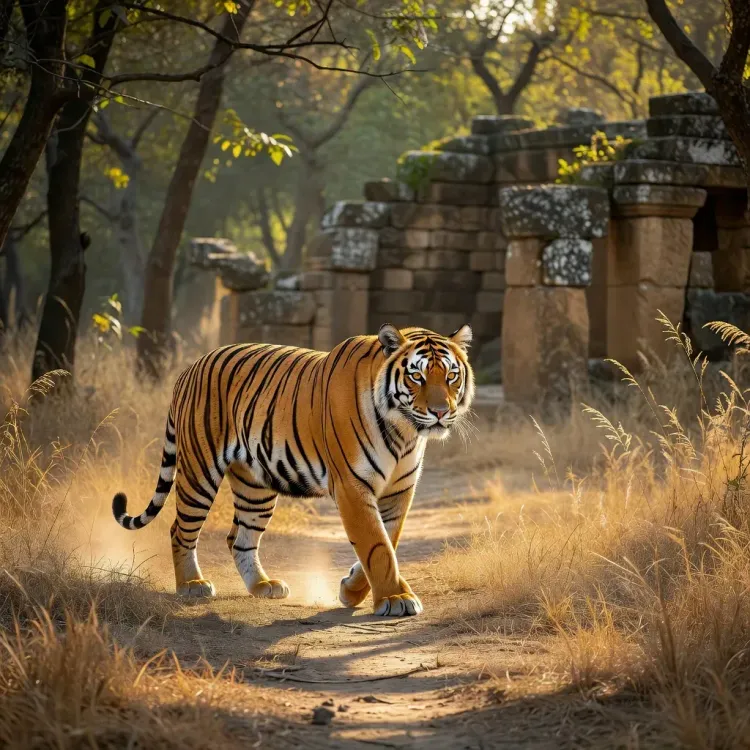
The minister shared the report via the NaMo App, flagging the headline figure: 'राजस्थान में बाघों की संख्या बढ़कर 149 हुई' ('Rajasthan's tiger count has risen to 149'). The detail that drew attention was the geographic concentration — roughly 75 tigers are believed to reside in Ranthambore National Park alone, making it the dominant tiger landscape in the state.
Why Ranthambore carries so much weight
Ranthambore, nestled in Sawai Madhopur district, is one of India's oldest and most intensively managed tiger reserves. It was among the original reserves brought under Project Tiger when the Central government launched the conservation programme in 1973 to pull the species back from the brink. Decades of anti-poaching enforcement, habitat protection, and tourism-funded conservation have made Ranthambore a benchmark for what a well-run reserve can achieve. Half of Rajasthan's entire tiger population sheltering within a single park is a testament to that — and a reminder of how much the broader landscape still needs to catch up.Rajasthan's count in the national picture
India's national tiger population stood at 2,967 in the 2018 All India Tiger Estimation, a dramatic recovery from the alarming low of 1,411 recorded in 2006. State-level figures from Rajasthan have tracked that upward national curve, with successive estimations reporting incremental gains across reserves including Sariska, Mukundra Hills, and Ranthambore. Political leaders across parties have periodically amplified such figures — they serve as visible proof points for conservation policy working as intended. The concentration of tigers in Ranthambore, while impressive, also raises a practical question conservationists watch closely: dispersal. When a single reserve holds half a state's population, the risks — disease, territorial conflict, human-wildlife interface pressure — are concentrated too. The next All India Tiger Estimation report and updates from the Rajasthan Forest Department on corridor management will tell whether the state is building a broader tiger landscape or deepening dependence on one iconic park. For now, the number 149 is a milestone worth marking — and a prompt to ask what comes next.Point of View
But the underlying data point carries real policy weight. Rajasthan's rise to 149 tigers fits India's broader narrative of Project Tiger success — a story the BJP government has consistently promoted as evidence of effective environmental stewardship. The 50-percent concentration in Ranthambore, however, quietly signals an unresolved structural challenge: tiger recovery in India remains uneven, with iconic reserves doing the heavy lifting while secondary habitats lag. The next national tiger estimation will be the real test of whether state-level gains reflect genuine landscape-scale recovery or a single-reserve effect.
NationPress
29 Jul 2026
Frequently Asked Questions
How many tigers are there in Rajasthan in 2026?
According to a report shared by Union Textiles Minister Giriraj Singh on 29 July 2026, Rajasthan's tiger population has risen to 149.
How many tigers are in Ranthambore National Park?
Ranthambore houses nearly 50 percent of Rajasthan's tigers — approximately 75 animals — making it the state's dominant tiger reserve.
Where is Ranthambore National Park located?
Ranthambore National Park is located in Sawai Madhopur district of Rajasthan and is one of India's oldest Project Tiger reserves.
What is Project Tiger and when was it launched?
Project Tiger is a Central government scheme launched in 1973 to conserve tigers through dedicated reserves, habitat protection, and anti-poaching enforcement.
What is India's total tiger population?
The 2018 All India Tiger Estimation placed India's national tiger population at 2,967, a major recovery from 1,411 recorded in 2006.