CM Mohan Yadav: Cabinet to Take Tough Call on Paper Leaks
Synopsis
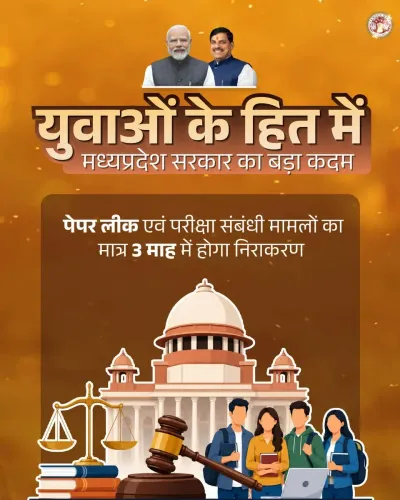
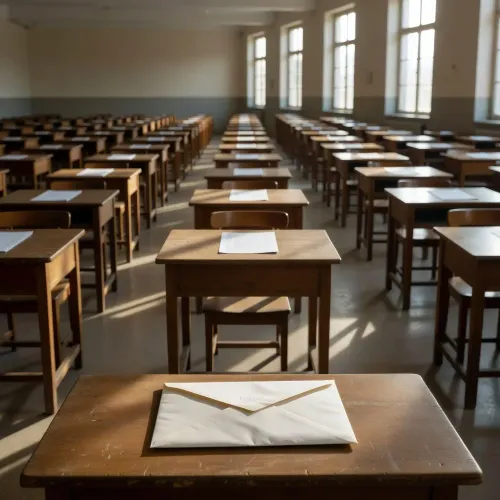
MP Chief Minister Dr. Mohan Yadav announced on 24 July 2026 that the Union Cabinet, meeting under PM Modi the next day, would take tough decisions against paper leaks — reaffirming the government's commitment to protecting students' futures and examination integrity.
Key Takeaways
Mohan Yadav , Chief Minister of Madhya Pradesh , stated on 24 July 2026 that students' futures are the government's top priority.
He announced that the Union Cabinet meeting on 25 July 2026 , chaired by PM Narendra Modi , would take firm decisions against paper leaks.
Parliament had already enacted the Public Examinations (Prevention of Unfair Means) Act, 2024 , prescribing up to 10 years' imprisonment and fines of Rs 1 crore for organised exam malpractice.
The National Testing Agency (NTA) , which conducts NEET and JEE Main , has faced repeated scrutiny over examination integrity.
Effective enforcement will require coordination between central bodies and state governments, including Madhya Pradesh .
Madhya Pradesh Chief Minister Dr. Mohan Yadav on Thursday, 24 July 2026 declared that students' futures are paramount and that the Union Cabinet, meeting the following day under Prime Minister Narendra Modi, would take firm decisions against paper leaks in competitive examinations.
Context
In a post on X, Dr. Yadav wrote — 'विद्यार्थियों का भविष्य सर्वोपरि है' ('Students' futures are paramount') — affirming that the government stands with students at every step. He specifically stated that the Cabinet meeting scheduled for the next day, under the leadership of Prime Minister Narendra Modi, would yield stringent decisions against paper leaks.
The statement comes amid sustained public and political pressure on both central and state governments to crack down on organised exam malpractice that has repeatedly undermined the credibility of major competitive examinations across India.
Policy Backdrop
Parliament had already passed the Public Examinations (Prevention of Unfair Means) Act, 2024, which criminalises paper leaks and provides for penalties of up to 10 years' imprisonment and fines of up to Rs 1 crore for those involved in organised malpractice.
The National Testing Agency (NTA), established in 2017 under the Ministry of Education, conducts high-stakes national examinations including NEET and JEE Main. Repeated controversies around these examinations have kept exam integrity at the centre of national debate. The National Education Policy 2020 had also emphasised transparent assessment systems and reducing undue influence of the coaching industry.
Madhya Pradesh, governed by the BJP, has broadly aligned with central directives on exam integrity and student welfare, making Dr. Yadav's statement a reinforcement of that coordinated approach.
Stakeholders and Impact
Millions of students and competitive examination aspirants across India stand to be directly affected by any Cabinet-level decisions on paper leak prevention. For many, a single examination determines access to medical colleges, engineering institutes, and government employment — making the integrity of these tests a matter of life-altering consequence.
State education departments, examination bodies, and law enforcement agencies are also key stakeholders, as effective implementation of anti-leak measures requires close coordination between central agencies like the NTA and state-level machinery. Madhya Pradesh has its own state-level competitive examinations that have faced scrutiny in the past, giving the Chief Minister a direct interest in stronger national frameworks.
What's Next
The Union Cabinet meeting, chaired by Prime Minister Modi, was scheduled for Friday, 25 July 2026. Any decisions taken are expected to build on the existing legislative framework of the 2024 Act and could include operational guidelines, stricter enforcement protocols, or coordination mechanisms between the Centre and states.
How the Centre and states like Madhya Pradesh translate Cabinet-level resolve into on-ground enforcement will be the defining test of whether this round of policy action restores student confidence in India's examination ecosystem.
Point of View
He is reinforcing the party's unified messaging on exam integrity — a politically sensitive issue that has galvanised student communities. The announcement follows the 2024 anti-paper-leak legislation, suggesting the Cabinet may now focus on enforcement architecture rather than fresh lawmaking. Whether the resulting decisions translate into structural reform of examination bodies or remain largely declaratory will determine their long-term political and policy impact.
NationPress
22 Oct 2026
Frequently Asked Questions
What decisions will the Cabinet take on paper leaks in July 2026?
The Union Cabinet, chaired by PM Narendra Modi , was scheduled to take strict decisions against paper leaks on 25 July 2026 , as announced by MP CM Dr. Mohan Yadav . Specific agenda items had not been publicly disclosed at the time of the announcement.
What is the law against paper leaks in India?
The Public Examinations (Prevention of Unfair Means) Act, 2024 criminalises paper leaks and imposes penalties of up to 10 years' imprisonment and fines of up to Rs 1 crore for organised malpractice in public examinations.
What is the NTA and why is it controversial?
The National Testing Agency (NTA) is an autonomous body set up in 2017 under the Ministry of Education to conduct national exams like NEET and JEE Main . It has faced repeated controversy over alleged paper leaks and examination irregularities that have undermined student confidence.
What did Mohan Yadav say about paper leaks?
Dr. Mohan Yadav said students' futures are paramount and that the government stands with students at every step. He stated that the Cabinet meeting on 25 July 2026 under PM Modi would yield tough decisions against paper leaks.
How does Madhya Pradesh plan to tackle exam malpractice?
Madhya Pradesh under CM Dr. Mohan Yadav has aligned with central government directives on exam integrity. The state is expected to coordinate with central agencies on any enforcement mechanisms emerging from the 25 July 2026 Cabinet meeting.