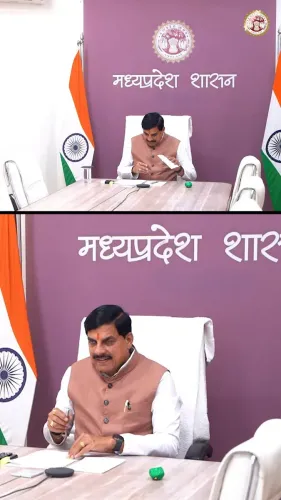
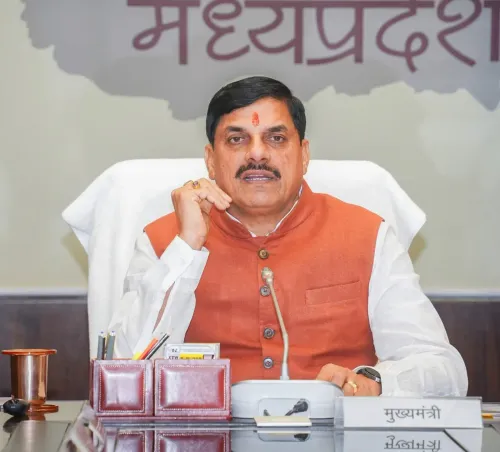
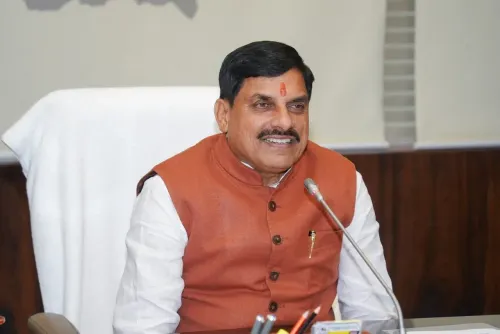
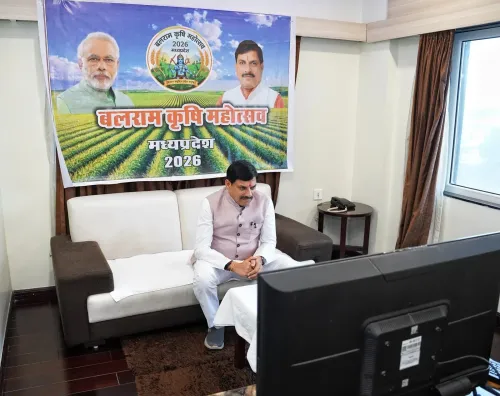
CM Mohan Yadav Pushes Natural Farming in Singrauli at Balram Krishi Mahotsav
Synopsis
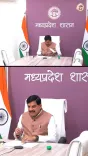
MP Chief Minister Dr. Mohan Yadav virtually joined Singrauli's Balram Krishi Mahotsav under 'Krishak Kalyan Varsh-2026', highlighting over 3,000 farmers practising natural farming across 12,000-plus hectares and pushing local agro-processing to generate rural employment.
Key Takeaways
Mohan Yadav addressed the Balram Krishi Mahotsav in Singrauli virtually on September 25, 2026 .
Over 3,000 farmers in Singrauli are engaged in natural farming, covering more than 12,000 hectares , as stated by the CM.
The event falls under 'Krishak Kalyan Varsh-2026' , MP's year-long farmer welfare initiative.
Multiple agro-processing units have been established in Singrauli to enable local value addition.
The government aims to diversify Singrauli's identity beyond energy to include farming, culture, and tourism.
Policy lineage traces to central schemes: Paramparagat Krishi Vikas Yojana (2015) and Bharatiya Prakritik Krishi Padhati (2020-21) .
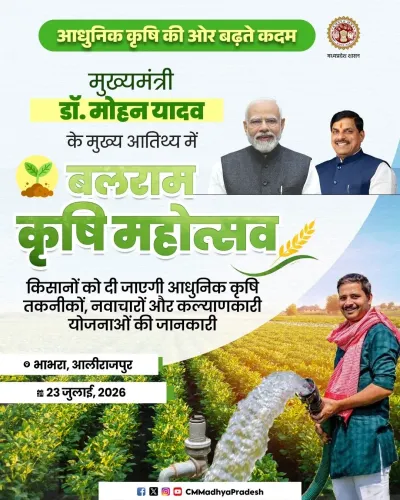
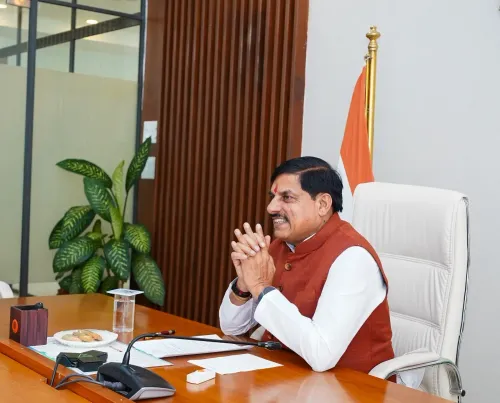
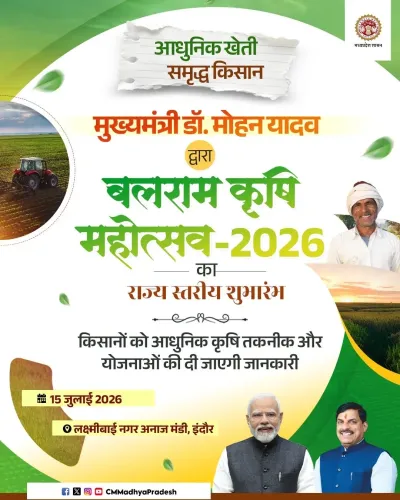
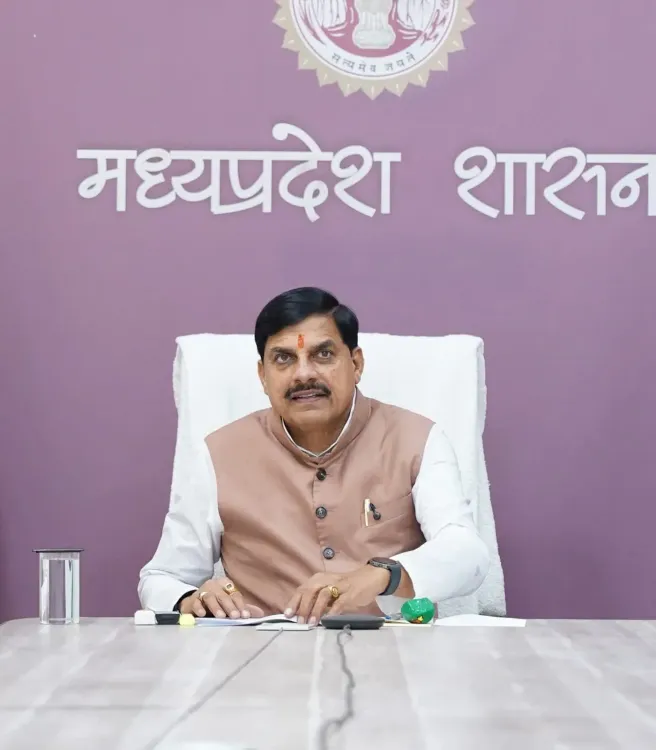
A coal district is betting on its fields. Madhya Pradesh Chief Minister Dr. Mohan Yadav virtually joined the Balram Krishi Mahotsav in Singrauli on Friday, September 25, 2026, engaging directly with farmers under the state's year-long 'Krishak Kalyan Varsh-2026' programme — and the numbers he cited told the story of a quiet agricultural shift in a region better known for coal mines and power plants.
Singrauli's Natural Farming Footprint
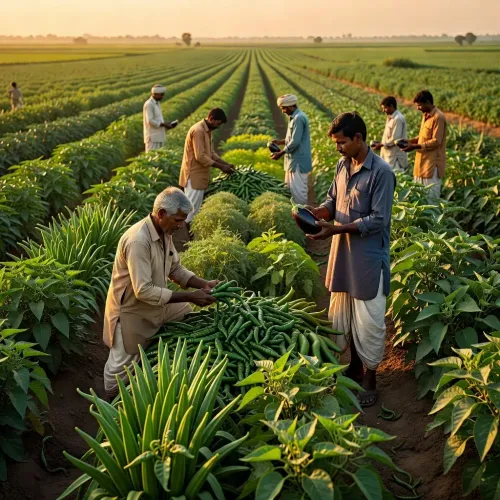
Dr. Yadav shared that more than 3,000 farmers in Singrauli district are now practising natural farming, covering over 12,000 hectares of land. That figure, drawn from the CM's own address at the festival, signals a meaningful penetration of chemical-free agriculture in a district whose identity has long been shaped by the Vindhya coalfields and thermal power infrastructure. The Balram Krishi Mahotsav itself served as the stage — a district-level agricultural festival designed to spotlight these gains and galvanise further participation.
The broader policy thread runs back to national frameworks: the Paramparagat Krishi Vikas Yojana, launched in 2015, seeded organic and natural farming clusters across states including Madhya Pradesh. The Bharatiya Prakritik Krishi Padhati, introduced in 2020-21, deepened that push. Singrauli's current scale is the downstream result of nearly a decade of layered central and state intervention.
Processing Units and the Jobs Argument
Dr. Yadav did not stop at cultivation numbers. He pointed to agro-processing units already established in the district, framing local-level value addition as the mechanism that converts a yield into a livelihood. 'Hamara prayas hai ki sthaniya star par upaj ka prasanskaran ho' ('Our effort is for produce to be processed at the local level') — a direct appeal linking agricultural transformation to employment creation for both farmers and rural youth.
The logic is straightforward: raw produce that travels far for processing leaves income on the table. Keep the processing close, and the multiplier effect stays within the district. The Madhya Pradesh government's push for agro-processing infrastructure in energy districts follows this playbook — diversifying economic activity in communities historically vulnerable to the boom-and-bust cycles of extractive industries.
Rebranding Singrauli: Energy, Farming, Culture, Tourism
Perhaps the most ambitious line in the CM's address was the aspiration to add new layers to Singrauli's identity. Dr. Yadav stated explicitly that his government's goal is for Singrauli to be recognised not only for energy but also for farming, culture, and tourism. It is a deliberate repositioning — one that mirrors strategies adopted elsewhere in India where single-sector districts have tried to build economic resilience through diversification.
Whether agro-processing units, natural farming clusters, and a revived cultural identity can genuinely broaden Singrauli's economic base will depend on sustained investment and market linkages well beyond a single festival. The framework is in place; the execution is what 2026 will test.
Singrauli has long powered the nation's grid. Now its Chief Minister wants it to feed the nation's tables — and draw its visitors, too.
Point of View
Singrauli could become a template that other resource-dependent MP districts are asked to replicate.
NationPress
25 Sept 2026
Frequently Asked Questions
What is Balram Krishi Mahotsav?
Balram Krishi Mahotsav is a district-level agricultural festival organised in Singrauli, Madhya Pradesh, to promote natural farming practices and facilitate direct interaction between government and farming communities.
What is Krishak Kalyan Varsh-2026?
'Krishak Kalyan Varsh-2026' is a year-long farmer welfare programme launched by the Madhya Pradesh government emphasising natural farming, agro-processing, and local employment generation for farmers and rural youth.
How many farmers in Singrauli are doing natural farming?
According to Chief Minister Dr. Mohan Yadav's address at the Balram Krishi Mahotsav, more than 3,000 farmers in Singrauli are engaged in natural farming across over 12,000 hectares.
What is the government's plan for agro-processing in Singrauli?
The Madhya Pradesh government has established multiple agro-processing units in Singrauli district with the goal of enabling local-level value addition of farm produce, generating employment and income for farmers and youth.
Why is Singrauli significant for Madhya Pradesh agriculture?
Singrauli is traditionally known as an energy district due to its coal mines and thermal power plants. The state government is now working to diversify its identity by expanding natural farming, agro-processing, culture, and tourism alongside the energy sector.