CM Mohan Yadav Reviews MP Wheat Procurement, Orders MSME-SHG Model
Synopsis
Madhya Pradesh CM Dr. Mohan Yadav reviewed the state's wheat procurement drive on 22 May 2026 and ordered officials to build a model integrating MSME units and self-help groups into grain processing and grading, while stressing consumer protection and inter-departmental coordination.
Key Takeaways
Mohan Yadav reviewed the Food, Civil Supplies and Consumer Protection Department on 22 May 2026 to assess ongoing wheat procurement.
He directed officials to develop a model for wheat processing and grading in collaboration with the MSME Department .
Self-help groups (SHGs) are to be made active participants in the proposed processing and grading model.
The CM called for stronger inter-departmental coordination with consumer interests as the central priority.
Officials were instructed to promote innovation in departmental functioning.
Implementation of the MSME-SHG model is expected to be tracked during the next rabi marketing season.
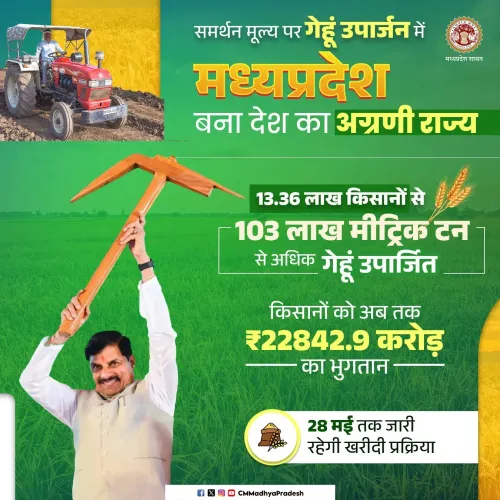
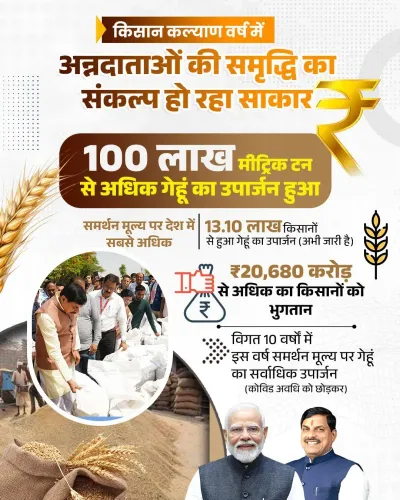
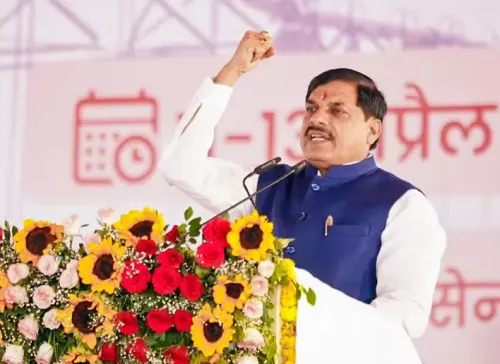
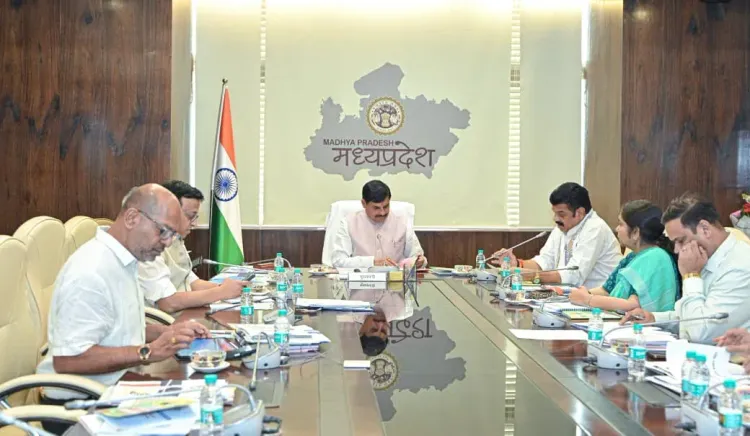
Madhya Pradesh Chief Minister Dr. Mohan Yadav on Friday, 22 May 2026, chaired a review of the state's Food, Civil Supplies and Consumer Protection Department, seeking an update on the ongoing wheat procurement operations across the state and directing officials to develop a new model that integrates the Micro, Small and Medium Enterprises (MSME) Department and self-help groups into grain processing and grading activities.
Context
Posting on X, Chief Minister Yadav wrote — 'आज खाद्य, नागरिक आपूर्ति और उपभोक्ता संरक्षण विभाग की समीक्षा कर प्रदेश में चल रहे गेहूं उपार्जन के कार्य की जानकारी प्राप्त की' — ('Today I reviewed the Food, Civil Supplies and Consumer Protection Department and received information on the ongoing wheat procurement work in the state'). He further directed officials to develop a model under which the processing and grading of wheat could be carried out with the cooperation of the MSME Department, and instructed that self-help groups be made active participants in the process.
The Chief Minister also called for stronger coordination with other departments, keeping consumer interests at the centre, and urged officials to promote innovation in the department's functioning.
Policy Backdrop
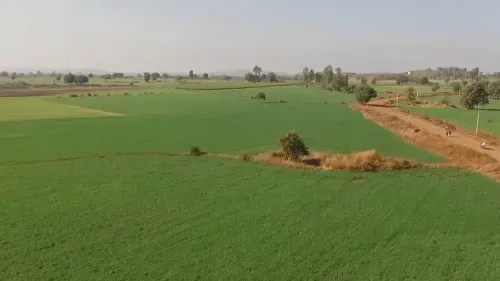
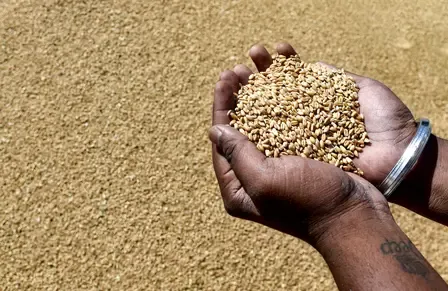
Madhya Pradesh is one of India's major wheat-producing states and participates in the Decentralised Procurement Scheme of the Government of India, under which the state agency procures grain for the central pool — an arrangement that has been in place since the early 2000s. The annual rabi marketing season procurement drive is a critical operation that directly affects both farmer incomes and the public distribution system.
The push to involve MSME units in post-harvest grain handling aligns with the Pradhan Mantri Formalisation of Micro Food Processing Enterprises (PMFME) scheme, launched in 2020, which supports micro-level grading, processing and packaging units in the food sector. Self-help groups (SHGs), primarily women-led collectives operating under the Deendayal Antyodaya Yojana–National Rural Livelihoods Mission (DAY-NRLM) framework, have been integrated into agro-processing and value-chain activities in Madhya Pradesh since 2011.
Stakeholders and Impact
The proposed model, if implemented, would directly benefit wheat farmers, MSME units, and self-help group members by creating additional rural employment at the processing and grading stage — a segment that currently sees significant post-harvest losses across Indian states. For PDS consumers, improved grading and processing standards could translate into better quality grain reaching fair-price shops.
Indian states have progressively sought to link primary grain procurement with local processing capacity, and Madhya Pradesh's emphasis on SHG participation reflects the established national pattern of deploying women's collectives for last-mile economic activities in agriculture and allied sectors. The directive to increase inter-departmental coordination signals an intent to reduce siloed functioning between food supply, MSME, and consumer protection wings of the state government.
What's Next
Officials of the Food, Civil Supplies and Consumer Protection Department have been tasked with developing the MSME-SHG integration model. Implementation is likely to be tracked during the next rabi marketing season, with the possibility of pilot projects being announced by the state government in the coming months.
The outcome of enhanced inter-departmental coordination may also result in revised quality norms or new operational guidelines for consumer protection, as the Chief Minister's directive explicitly placed consumer interests at the centre of the department's mandate going forward.
Point of View
The CM is signalling an intent to generate rural non-farm employment at the post-harvest stage, a persistent policy gap in India's food economy. The consumer protection emphasis also suggests the administration is sensitive to public perception around PDS grain quality ahead of future electoral cycles. Whether the model moves beyond a review-room directive to a functional pilot will be the real test of its policy intent.
NationPress
7 Oct 2026
Frequently Asked Questions
What did MP CM Mohan Yadav announce about wheat procurement?
CM Dr. Mohan Yadav directed officials on 22 May 2026 to develop a model that integrates MSME units and self-help groups into wheat processing and grading activities in Madhya Pradesh.
What is the role of self-help groups in MP wheat procurement?
Self-help groups, primarily women-led collectives under the DAY-NRLM framework, are to be made active participants in the processing and grading of procured wheat under the new model ordered by CM Yadav.
What is the Decentralised Procurement Scheme in Madhya Pradesh?
The Decentralised Procurement Scheme is a Government of India arrangement under which Madhya Pradesh procures wheat for the central pool through its state agency, a practice in place since the early 2000s.
How does the PMFME scheme relate to wheat processing in MP?
The Pradhan Mantri Formalisation of Micro Food Processing Enterprises scheme, launched in 2020, supports micro-level grading, processing and packaging units in the food sector and provides a policy framework for the MSME integration model CM Yadav has directed officials to develop.
Why is Madhya Pradesh important for wheat procurement in India?
Madhya Pradesh is one of India's major wheat-producing states and contributes substantially to national foodgrain stocks through its annual rabi marketing season procurement operations.