CM Mohan Yadav Highlights MP's PDS and Grain Storage Reforms
Synopsis
Madhya Pradesh CM Dr. Mohan Yadav announced that the state has become the third in India to implement CC-limit payments for jute bag procurement, while also highlighting IIM Mumbai storage training, Jan Poshan Marts, GPS-monitored grain delivery, and Rs 42 lakh monthly savings under route optimisation.
Key Takeaways
Madhya Pradesh has become the third state in India to implement a CC-limit payment system for purchasing empty gunny bags from the Jute Commissioner for MSP procurement.
The state has arranged specialised grain storage training at IIM Mumbai to reduce post-harvest losses of wheat and other grains.
Fair price shops have been upgraded into Jan Poshan Marts and beneficiaries receive mobile alerts about ration distribution under the Mukhyamantri Anna Seva Jagrukta Karyakram .
Route optimisation under Mukhyamantri Yuva Annadut Yojana is saving the government Rs 42 lakh per month in transportation costs.
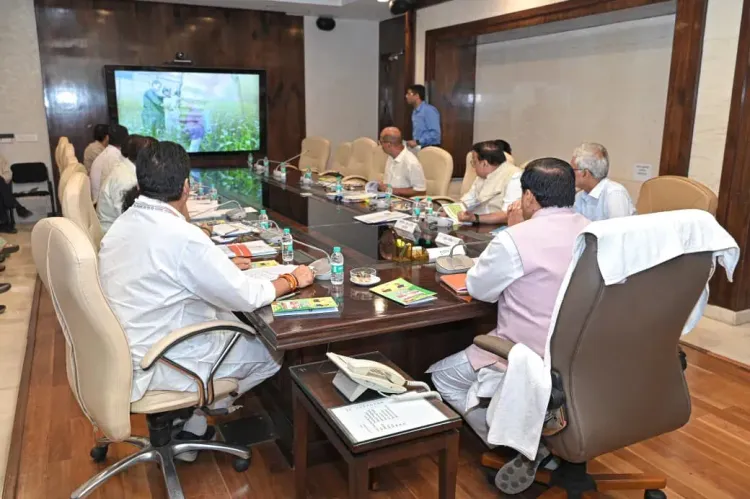
A State Level Command Control Centre provides GPS-based monitoring of all Annadut scheme vehicles.
The Madhya Pradesh Civil Supplies Corporation has implemented online payment systems across all operational levels.
Madhya Pradesh Chief Minister Dr. Mohan Yadav on Friday, 22 May 2026, outlined a series of reforms to the state's public distribution and food grain procurement systems, stating that Madhya Pradesh has become the third state in the country to implement a CC-limit-based payment mechanism for purchasing empty gunny bags from the Jute Commissioner.
Context
In his post, Dr. Yadav stated — 'समर्थन मूल्य पर खाद्यान्न उपार्जन के लिए जूट कमिश्नर से खाली बारदाना खरीद के लिए सीसी लिमिट से भुगतान व्यवस्था लागू है' — ['A CC-limit payment arrangement has been implemented for purchasing empty gunny bags from the Jute Commissioner for food grain procurement at support prices.'] He also noted that Madhya Pradesh has arranged training at the Indian Institute of Management (IIM) Mumbai to reduce storage losses in wheat and other grains.
The post further highlighted that fair price shops across the state have been upgraded into Jan Poshan Marts, and that beneficiaries are being notified of ration distribution via mobile messages under the Mukhyamantri Anna Seva Jagrukta Karyakram.
Policy Backdrop
These reforms build on the framework of the National Food Security Act, 2013, which mandated states to strengthen procurement and storage infrastructure for subsidised food grain delivery. Madhya Pradesh has been an active participant in the Decentralised Procurement Scheme, which allows states to directly procure wheat and paddy from farmers at minimum support price (MSP).
The CC-limit payment mechanism addresses a longstanding logistical bottleneck — timely payment for jute bags used in grain procurement — and positions MP among a small group of early-adopter states integrating financial instruments into supply-chain operations.
Stakeholders and Impact
Under the Mukhyamantri Yuva Annadut Yojana, route optimisation has reportedly resulted in a monthly saving of Rs 42 lakh in transportation costs for the state government. Vehicles under the scheme are monitored through a State Level Command Control Centre using GPS-based tracking.
The Madhya Pradesh Civil Supplies Corporation has also rolled out online payment systems across all levels of its operations, aiming to reduce cash-handling risks and improve financial accountability. Ration beneficiaries, wheat and paddy farmers, and fair price shop dealers are among the primary stakeholders who stand to benefit from these integrated reforms.
The IIM Mumbai training programme is designed to equip grain storage managers with scientific methods to minimise post-harvest losses — a persistent challenge during peak procurement seasons.
What's Next
The reforms announced by Dr. Yadav will face their first major test during the upcoming procurement season, when the effectiveness of the IIM-trained storage management and the CC-limit payment system will be assessed against actual loss and leakage data. Whether other states replicate the CC-limit arrangement for jute bag procurement is also being watched closely by policy observers.
With Madhya Pradesh positioning itself as an early adopter of logistics and IT solutions in welfare supply chains, the state's model could influence how other governments approach last-mile delivery and grain storage under the national food security framework.
Point of View
Not just a political one. By anchoring reforms to institutions like IIM Mumbai and measurable metrics like monthly savings, the administration signals a shift toward accountability-driven governance in the public distribution space. The CC-limit payment mechanism and GPS monitoring place MP among a small group of states actively integrating financial and logistics tools into food security operations — a model that carries both electoral and administrative significance ahead of future procurement seasons. The broader implication is that states which digitise and optimise their PDS supply chains may gain a fiscal and reputational edge in the competitive landscape of welfare delivery.
NationPress
7 Oct 2026
Frequently Asked Questions
What is the CC-limit payment system for jute bags in Madhya Pradesh?
The CC-limit (cash credit limit) payment system allows Madhya Pradesh to purchase empty gunny bags from the Jute Commissioner using a pre-approved credit line, streamlining procurement payments. MP is the third state in India to implement this arrangement for food grain procurement at support prices.
What is Mukhyamantri Yuva Annadut Yojana?
Mukhyamantri Yuva Annadut Yojana is a Madhya Pradesh scheme that engages youth for last-mile delivery of rations. It features GPS-based vehicle monitoring through a State Level Command Control Centre and has achieved monthly transportation cost savings of Rs 42 lakh through route optimisation.
What is a Jan Poshan Mart?
A Jan Poshan Mart is an upgraded version of a fair price shop under Madhya Pradesh's public distribution network, developed to offer a wider range of nutrition-oriented products and improved services to beneficiaries.
Why is IIM Mumbai involved in grain storage training in MP?
The Indian Institute of Management Mumbai has been engaged by the Madhya Pradesh government to provide specialised training on scientific grain storage practices, aimed at reducing post-harvest losses of wheat and other food grains during procurement and storage.
How are ration beneficiaries notified in Madhya Pradesh?
Under the Mukhyamantri Anna Seva Jagrukta Karyakram, ration beneficiaries in Madhya Pradesh receive mobile SMS alerts informing them about the timing and details of ration distribution at their designated fair price shops.