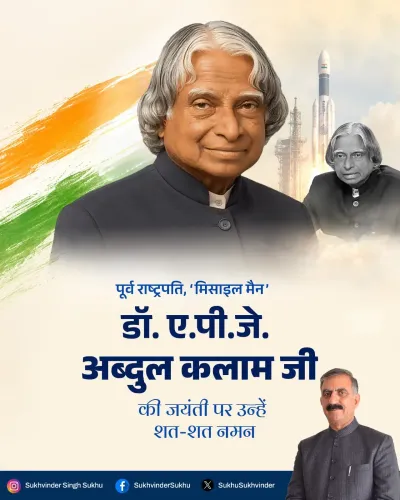
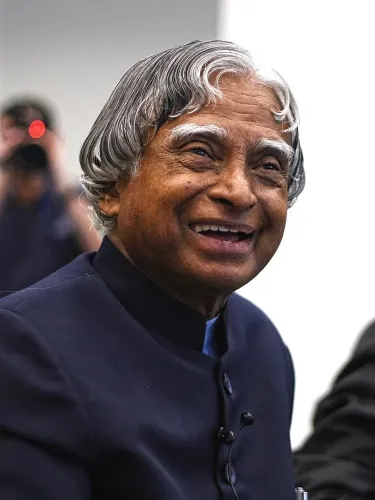
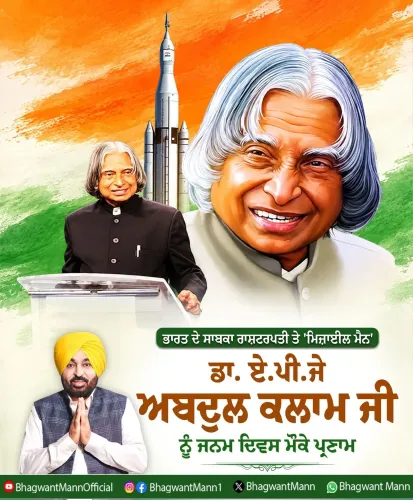
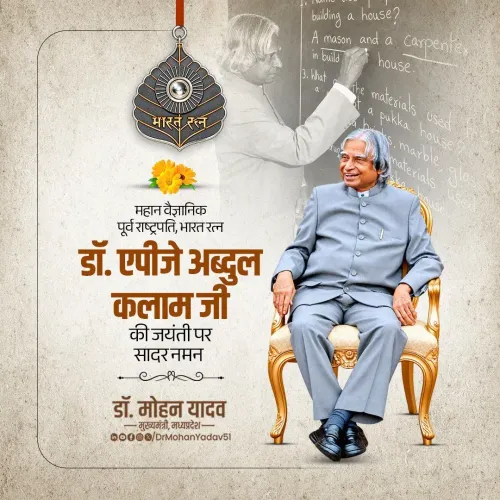
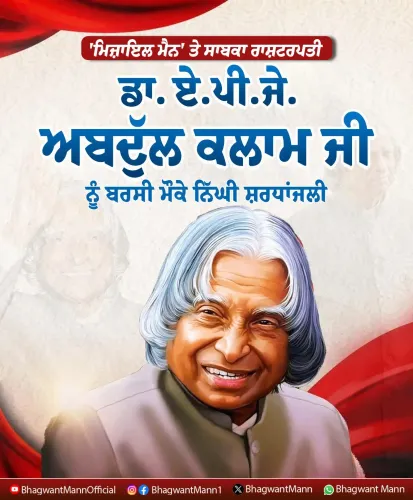
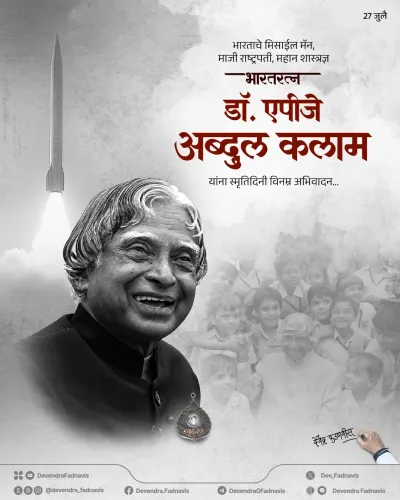
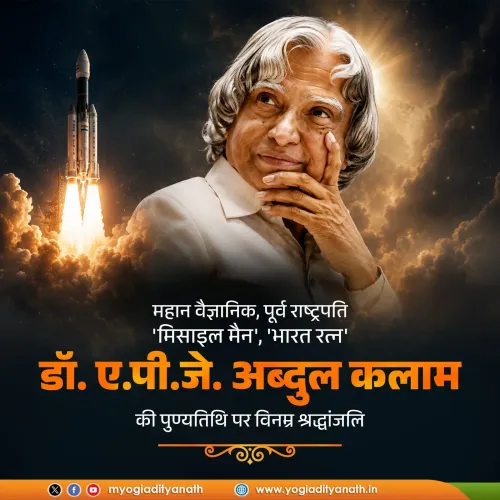
CM Mohan Yadav Pays Tribute to Dr. APJ Abdul Kalam on Death Anniversary
Synopsis
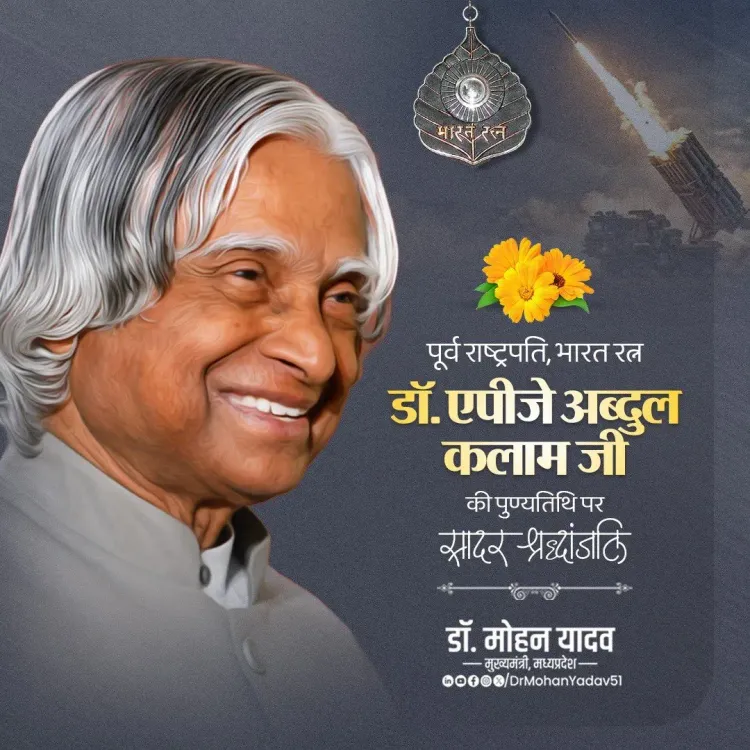
Madhya Pradesh Chief Minister Dr. Mohan Yadav on 27 July 2026 paid tribute to former President and Bharat Ratna Dr. APJ Abdul Kalam on his death anniversary, honouring Kalam's legacy in nuclear science, education, and inspiring India's youth.
Key Takeaways
Mohan Yadav , Chief Minister of Madhya Pradesh, posted a tribute to Dr.
APJ Abdul Kalam on 27 July 2026 , the anniversary of Kalam's death.
Kalam served as India's 11th President (2002–2007) and was a key scientific adviser during India's 1998 nuclear tests .
Kalam received the Bharat Ratna for his contributions to nuclear and space technology through his work at DRDO .
The Chief Minister highlighted Kalam's contributions to science, education, and nation-building as unforgettable.
Kalam's legacy of inspiring youth to dream big and achieve those dreams was specifically cited by Dr.
Political leaders across India mark 27 July annually with tributes connecting Kalam's life to national self-reliance in technology.
Madhya Pradesh Chief Minister Dr. Mohan Yadav on Monday, 27 July 2026 paid tribute to former President and Bharat Ratna Dr. APJ Abdul Kalam on his death anniversary, honouring the scientist's contributions to India's nuclear capability, science, and education.
Context
Posting on X, Dr. Mohan Yadav offered what he described as a humble tribute — 'विनम्र श्रद्धांजलि' ['humble homage'] — to Dr. Kalam, calling him a great scientist who played a significant role in giving India a powerful identity as a nuclear state. He added that Kalam's unparalleled contributions to science, education, and nation-building would remain unforgettable.
The Chief Minister also noted that Kalam's inspiration to dream big and turn those dreams into reality would continue to guide the youth of India. The post carried the hashtags #DrAPJAbdulKalam and the Hindi equivalent, reflecting the nationwide observance of the anniversary.
Policy Backdrop
Dr. APJ Abdul Kalam served as India's 11th President from 2002 to 2007 and was a leading aerospace scientist who headed missile development programmes at the Defence Research and Development Organisation. He was a key scientific adviser during India's 1998 nuclear tests, which established the country's status as a nuclear-weapon state.
Kalam was awarded the Bharat Ratna, India's highest civilian honour, for his contributions to nuclear and space technology. He passed away on 27 July 2015, and his death anniversary is observed annually across the country with tributes that consistently highlight his role in science, education, and strategic self-reliance.
Stakeholders and Impact
Indian political leaders across party lines routinely mark Kalam's death anniversary with messages connecting his legacy to national self-reliance in technology and inspiration for young people. Such commemorations form part of a broader pattern of public tribute to scientists who advanced India's strategic and civilian programmes since the 1980s.
The scientific community, students, and youth organisations are the primary audiences for such tributes. Kalam's identity as a self-made scientist from a modest background in Rameswaram, Tamil Nadu, makes him a particularly resonant figure for messaging around education and aspiration.
What's Next
Annual commemorations around 27 July frequently prompt state governments and educational institutions to organise science outreach events, essay competitions, and lectures drawing on Kalam's vision for a technologically advanced India. Whether Madhya Pradesh will announce specific state-level initiatives in connection with this anniversary remains to be seen.
Kalam's legacy continues to inform policy discourse around science education and youth development, and tributes such as this one from senior political figures keep that conversation active in the public sphere.
Point of View
The reference to Kalam's role in India's nuclear identity carries particular resonance, aligning with the party's long-standing emphasis on strategic autonomy and technological capability. Such commemorations also serve a soft-power function — positioning the ruling establishment as custodian of a universally admired national figure who transcends partisan lines. The annual nature of these tributes means their political utility lies less in breaking news and more in consistent brand association with Kalam's aspirational imagery.
NationPress
25 Oct 2026
Frequently Asked Questions
When did Dr. APJ Abdul Kalam die?
Dr. APJ Abdul Kalam passed away on 27 July 2015 , while delivering a lecture at the Indian Institute of Management Shillong. His death anniversary is observed nationally each year.
Why is Dr. APJ Abdul Kalam called the 'Missile Man of India'?
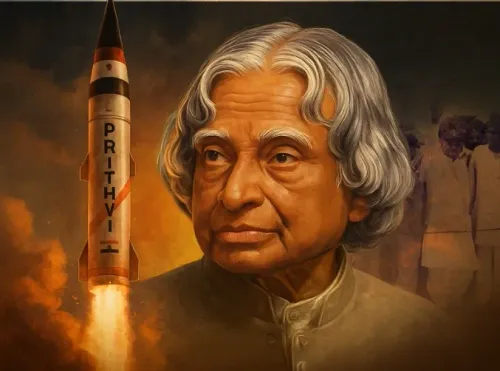
Dr. Kalam earned the title 'Missile Man of India' for leading India's missile development programmes at DRDO, including the Agni and Prithvi ballistic missiles, which significantly strengthened the country's defence capability.
What was Dr. Kalam's role in India's nuclear programme?
Dr. Kalam served as a key scientific adviser during India's 1998 Pokhran-II nuclear tests , which established India as a nuclear-weapon state. His contributions to nuclear and space technology earned him the Bharat Ratna.
Who is Madhya Pradesh Chief Minister Dr. Mohan Yadav?
Dr. Mohan Yadav is the Chief Minister of Madhya Pradesh and a senior BJP leader. He frequently issues public statements on national figures, governance, and state policy matters.
What awards did Dr. APJ Abdul Kalam receive?
Dr. APJ Abdul Kalam received the Bharat Ratna , India's highest civilian honour, along with the Padma Vibhushan and Padma Bhushan, in recognition of his outstanding contributions to science and public service.