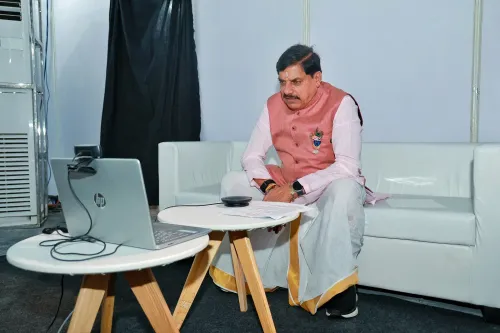
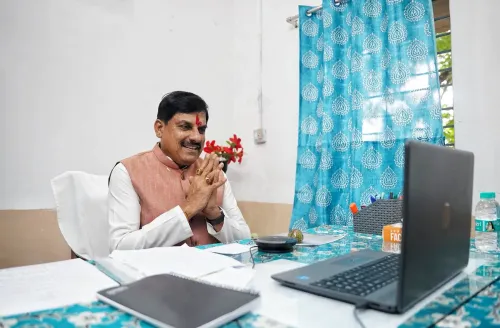
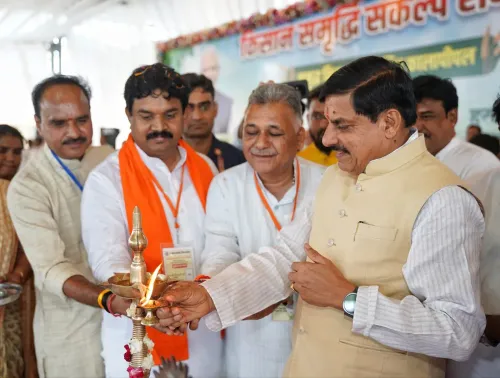
CM Mohan Yadav Announces Sugar Factory for Kolaras on World Environment Day

Synopsis
Madhya Pradesh Chief Minister Dr. Mohan Yadav announced on World Environment Day 2026 that a sugar factory will be established in Kolaras, Shivpuri district — a move aimed at boosting farmer incomes and aligning agro-industrial growth with national biofuel and renewable energy goals.
Key Takeaways
Mohan Yadav announced a sugar factory for Kolaras , Shivpuri district , Madhya Pradesh on 5 June 2026 .
The announcement was made on World Environment Day , linking agro-industrial expansion to biofuel and renewable energy objectives.
Kolaras is an established sugarcane-growing tehsil, making it a natural candidate for downstream processing infrastructure.
Primary beneficiaries will be sugarcane farmers in Shivpuri and surrounding districts, who stand to gain from assured local procurement.
By-product utilisation — bagasse-based power and ethanol — could support India's national petrol-blending targets.
Land acquisition, environmental clearances, and formal project tenders are the key milestones to watch before ground-level work begins.
Madhya Pradesh Chief Minister Dr. Mohan Yadav announced on Friday, 5 June 2026 that a sugar factory will be established in Kolaras, a sugarcane-growing tehsil in Shivpuri district, coinciding with the observance of World Environment Day.
Context
Posting on X, Dr. Mohan Yadav stated, 'Kolaras mein sugar factory lagaenge' ('We will set up a sugar factory in Kolaras'), tying the infrastructure pledge to the global occasion of World Environment Day. The pairing of an agro-industrial announcement with an environmental observance reflects the national policy framing that links sugar-sector expansion to biofuel and renewable energy goals.
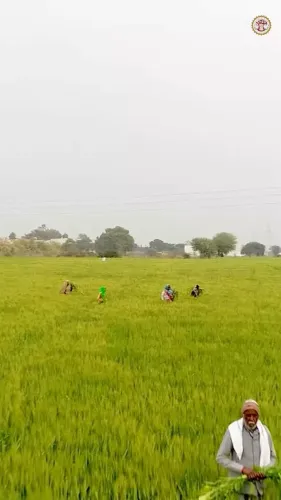
Kolaras is a town and tehsil headquarters in Shivpuri district, situated in an agrarian belt where sugarcane cultivation is an established livelihood for local farming communities. The announcement signals the state government's intent to bring downstream processing capacity closer to the farm gate in this region.
Policy Backdrop
Madhya Pradesh governments have periodically promoted agro-processing units to reduce post-harvest losses and increase value addition in sugarcane belts. Sugar mills in such regions are typically positioned as instruments of farmer income support, offering assured purchase arrangements alongside by-product utilisation — most notably bagasse-based power generation and ethanol production.
India's national biofuel blending programme has given renewed momentum to sugar-sector investments across states. Ethanol derived from sugarcane molasses and juice contributes directly to the government's petrol-blending targets, making new sugar mill projects eligible for central-level incentives and policy support. Dr. Yadav, who assumed office in December 2023, has positioned agro-industrial growth as a pillar of the state's rural economy strategy.
Stakeholders and Impact
The primary beneficiaries of a new sugar factory in Kolaras would be sugarcane farmers in Shivpuri district and surrounding areas, who currently face logistical and price risks when transporting cane to distant mills. A local facility would reduce transportation costs, improve cane recovery rates, and provide a more reliable procurement channel.
Beyond farmers, the project would generate direct and ancillary employment in the region — from mill operations to transport and supply-chain services. If bagasse-based co-generation or ethanol production is incorporated, the environmental dividend could align with both state renewable energy targets and the broader World Environment Day theme under which the announcement was made.
What's Next
The announcement is at the declaration stage; formal steps including land acquisition notifications, environmental clearance processes, and state budget allocations or public-private partnership tenders for the proposed unit are yet to be initiated or made public. Observers will watch for a detailed project report, an identified developer or operator, and any state cabinet approval that converts the Chief Minister's statement into a sanctioned project.
The timing of the announcement on World Environment Day 2026 is likely to be followed by further elaboration as the state government moves to translate the pledge into ground-level action ahead of the next agricultural season.
Point of View
Rural employment, and biofuel blending targets. For Dr. Mohan Yadav, who has been consolidating his rural outreach since taking office in December 2023, such announcements in agrarian constituencies serve a dual purpose: signalling economic intent to farming communities while staying aligned with central government priorities on ethanol and green energy. The choice of World Environment Day as the occasion is deliberate, framing a conventional industrial project within a sustainability narrative that attracts broader political and policy support. The real test will come when the project moves from declaration to land acquisition and clearance — the stages where agro-industrial pledges in Madhya Pradesh have historically faced delays.
NationPress
19 Sept 2026
Frequently Asked Questions
Where will the new sugar factory in Madhya Pradesh be set up?
The proposed sugar factory will be set up in Kolaras, a tehsil headquarters in Shivpuri district, Madhya Pradesh, as announced by Chief Minister Dr. Mohan Yadav on 5 June 2026.
Who announced the Kolaras sugar factory?
Madhya Pradesh Chief Minister Dr. Mohan Yadav announced the sugar factory for Kolaras on World Environment Day, 5 June 2026, through a post on X.
How will the Kolaras sugar factory benefit farmers?
Sugarcane farmers in Shivpuri district and surrounding areas stand to benefit from reduced transportation costs, improved cane recovery, and a reliable local procurement channel once the factory is operational.
What is the connection between the sugar factory and World Environment Day?
Sugar mills can produce ethanol from molasses and bagasse-based power, both of which support India's biofuel blending and renewable energy targets — allowing the project to be framed within an environmental sustainability context.
What are the next steps for the Kolaras sugar factory project?
The announcement is at a declaration stage; land acquisition notifications, environmental clearances, and formal public-private partnership tenders are the key milestones that will determine when the project moves to implementation.