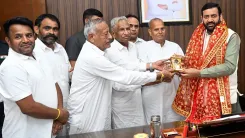
CM Mohan Yadav Reviews Drought Preparedness in MP

Synopsis
Chief Minister Dr. Mohan Yadav chaired a review meeting at the Madhya Pradesh Mantralaya on 2 July 2026, issuing directions to officials on preparedness measures in anticipation of possible below-normal rainfall across the state, with farmers and rural households the primary stakeholders.
Key Takeaways
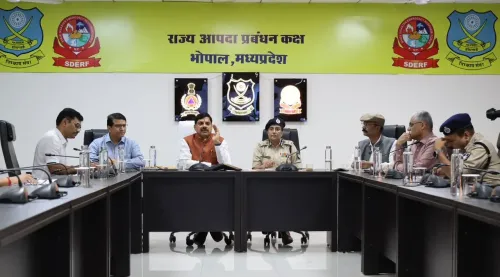
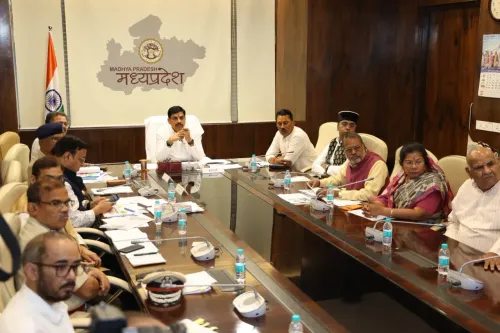
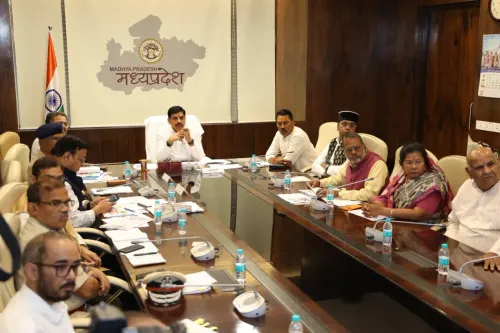
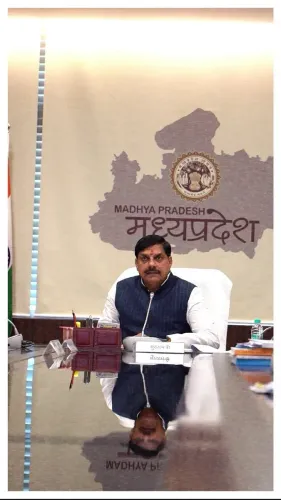
Mohan Yadav held a review meeting at the Mantralaya, Bhopal on 2 July 2026 focused on deficient-rainfall preparedness.
The meeting was convened specifically in view of the possibility of below-normal rainfall in Madhya Pradesh during the 2026 monsoon season.
The Chief Minister issued necessary directions and guidelines to officials during the review.
Madhya Pradesh 's agrarian economy, reliant on rain-fed kharif crops such as soybean, paddy, and pulses, faces significant risk from monsoon deficiency.
Such reviews are conducted under the framework of the State Disaster Management Authority (SDMA) , established in 2007 , linking state preparedness with IMD forecasts.
Subsequent steps may include district-level contingency activation, crop-insurance coordination, and potential drought-relief announcements.
The Chief Minister's Office of Madhya Pradesh announced on 2 July 2026 that Chief Minister Dr. Mohan Yadav chaired a review meeting at the Mantralaya (state secretariat) in Bhopal to assess preparations in view of the possibility of deficient rainfall across the state. The Chief Minister issued necessary directions to concerned officials during the meeting.
Context
The official post from the Chief Minister's Office stated that Dr. Yadav held the review meeting 'alp varsha ki sambhavana ko drishtigat rakhte hue' — keeping in view the possibility of below-normal rainfall — and issued necessary guidelines (disha-nirdesh). The meeting was convened at the Mantralaya, the seat of the state government in Bhopal.
Madhya Pradesh is one of India's largest states by area and is home to a predominantly agrarian economy. A significant share of its cultivated land depends on the southwest monsoon, making any forecast of deficient rainfall a matter of urgent administrative concern.
Policy Backdrop
Pre-monsoon contingency review meetings have been a standard feature of Madhya Pradesh's administrative calendar since at least the early 2000s. The framework was formalised after the establishment of the State Disaster Management Authority (SDMA) in 2007, which mandates periodic reviews linking state preparedness with forecasts from the India Meteorological Department (IMD).
Such exercises sit within India's federal disaster-management architecture, under which state governments are expected to activate contingency plans — covering relief distribution, crop-insurance disbursements, and water-conservation measures — when monsoon deficiency is anticipated. Dr. Mohan Yadav, who has served as Chief Minister since December 2023, has continued this practice as part of the state's annual agricultural risk-management cycle.
Stakeholders and Impact
The primary stakeholders in any rainfall-deficiency scenario in Madhya Pradesh are its farmers and rural households, who depend on timely and adequate monsoon rains for kharif crop sowing. Crops such as soybean, paddy, maize, and pulses — all major kharif crops in the state — are highly sensitive to rainfall distribution in July and August.
Beyond agriculture, deficient rainfall affects rural drinking-water availability, livestock, and the broader rural economy. Early administrative reviews allow departments to pre-position relief material, coordinate with district collectors, and align with central government schemes for drought mitigation.
What's Next
Attention will now turn to updated IMD forecasts on the progress of the 2026 southwest monsoon over Madhya Pradesh and any subsequent state announcements on drought-declaration criteria, crop-input subsidies, or relief packages for affected farmers. District-level contingency plans activated following such review meetings typically include guidelines on seed replacement, fodder reserves, and drinking-water supply augmentation.
If the monsoon remains deficient through the critical sowing window, the state government may be expected to announce formal relief measures and engage with central agencies for additional support under the National Disaster Response Fund (NDRF) framework.
Point of View
Not merely a routine weather event. For a Chief Minister who took charge in December 2023, managing an agrarian distress situation — should the monsoon falter — would be an early and significant political test. The move also reflects a broader pattern among BJP-governed states of proactive optics around disaster preparedness, particularly ahead of any kharif crop stress that could translate into rural discontent. How the state follows through — with concrete relief measures versus ceremonial reviews — will determine whether this signals genuine administrative urgency or precautionary positioning.
NationPress
1 Oct 2026
Frequently Asked Questions
Why did CM Mohan Yadav hold a rainfall review meeting in Madhya Pradesh?
CM Dr. Mohan Yadav held the review meeting on 2 July 2026 at the Mantralaya in Bhopal to assess state preparedness in anticipation of the possibility of below-normal or deficient rainfall during the 2026 monsoon season, and to issue necessary directions to officials.
What is the Mantralaya in Madhya Pradesh?
The Mantralaya is the state secretariat of Madhya Pradesh, located in Bhopal, and serves as the primary administrative headquarters where the Chief Minister and state cabinet conduct official business.
How does Madhya Pradesh prepare for drought or deficient monsoon?
Madhya Pradesh prepares for deficient monsoon through the State Disaster Management Authority (SDMA) framework, which involves review meetings, coordination with the India Meteorological Department, district-level contingency plans, crop-insurance coordination, and pre-positioning of relief material.
Which crops in Madhya Pradesh are at risk from deficient monsoon?
Key kharif crops at risk include soybean, paddy, maize, and pulses, all of which depend heavily on adequate and timely rainfall during the July-August monsoon period.
What happens after a drought review meeting in Madhya Pradesh?
Following such review meetings, the state government typically activates district-level contingency plans, issues guidelines on seed replacement and fodder reserves, and may announce formal drought-relief measures or engage with central agencies under the National Disaster Response Fund framework if conditions worsen.