CM Mohan Yadav: River linking projects transforming MP's irrigation
Synopsis
Chief Minister Dr. Mohan Yadav says river interlinking projects are reshaping Madhya Pradesh, with irrigated farmland seeing a notable expansion. The Ken-Betwa Link Project, approved in 2021, is the flagship initiative targeting water-scarce Bundelkhand farmers and anchoring the state's agricultural growth strategy.
Key Takeaways
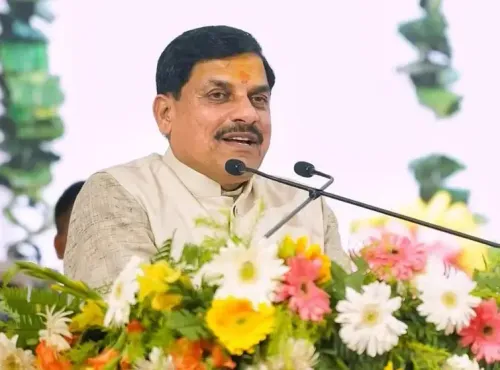
Mohan Yadav stated on 11 July 2026 that river interlinking projects are transforming Madhya Pradesh and have led to a notable increase in irrigated area.
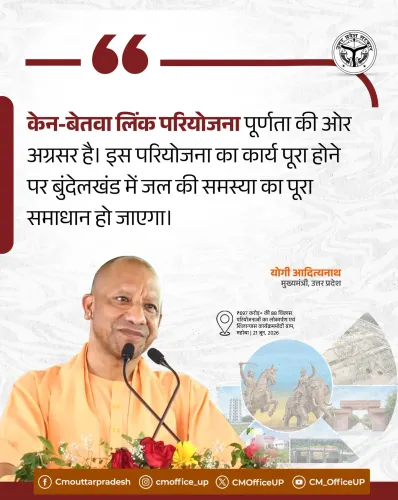
The Ken-Betwa River Linking Project , approved by the Union Cabinet in December 2021 , is the first major component of India's national river interlinking programme and a key initiative in MP .
The project aims to transfer water from the Ken river to the Betwa river , primarily benefiting drought-prone Bundelkhand farmers.
Madhya Pradesh has pursued both intra-state and inter-state river linking components under the National Perspective Plan coordinated with the Union Ministry of Jal Shakti .
Progress on Phase 1 of Ken-Betwa, including dam construction and actual irrigated area additions, will be the key metric to watch over the next two agricultural seasons.
The Chief Minister's Office of Madhya Pradesh, on behalf of Chief Minister Dr. Mohan Yadav, declared on Saturday, 11 July 2026 that river interlinking projects are transforming the state's landscape and have led to a notable increase in irrigated farmland across Madhya Pradesh.
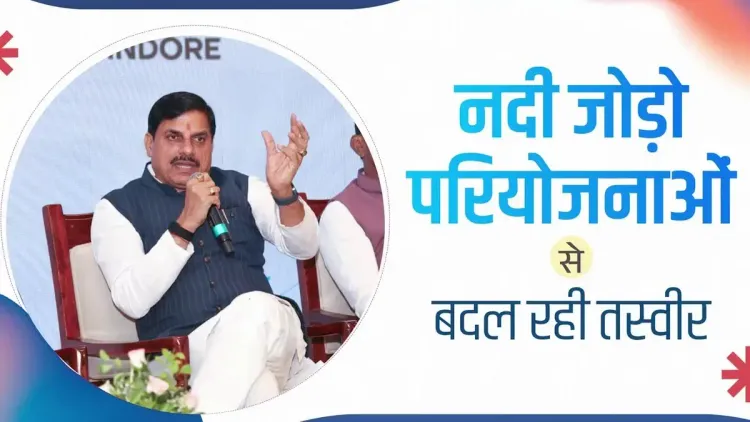
The post, shared under the hashtags #CMMadhyaPradesh and #MyYouthPride, quoted CM Dr. Mohan Yadav directly: 'नदी जोड़ो परियोजनाओं के माध्यम से मध्यप्रदेश की तस्वीर बदल रही है। प्रदेश में सिंचाई के रकबे में भी उल्लेखनीय वृद्धि हुई है' — 'Through river interlinking projects, the face of Madhya Pradesh is changing. There has also been a remarkable increase in the irrigated area of the state.'
Context
Madhya Pradesh is one of India's most agriculturally dependent states, where the extent of irrigated farmland directly determines crop yields and rural incomes. The state government under Dr. Mohan Yadav, who took charge as Chief Minister in December 2023, has placed water infrastructure at the centre of its development agenda. River interlinking is presented as the primary lever to expand the area brought under assured irrigation.
The hashtag #MyYouthPride suggests the statement was made in a public address or event oriented towards youth engagement, framing water infrastructure as a legacy investment for the next generation.
Policy Backdrop
India's river interlinking ambitions trace back to the National Perspective Plan formulated in the 1980s and administered by the National Water Development Agency under the Union Ministry of Jal Shakti. The most significant recent milestone is the Ken-Betwa River Linking Project, approved by the Union Cabinet in December 2021 as the first major component of the national river interlinking programme.
The Ken-Betwa Link Project is designed to transfer surplus water from the Ken river to the Betwa river, expanding irrigation coverage across the drought-prone Bundelkhand region that straddles Madhya Pradesh and Uttar Pradesh. Farmers in Bundelkhand — historically among the most water-stressed communities in central India — are the primary intended beneficiaries. Implementation requires coordinated action between the state's water resources department and the Union government.
Beyond Ken-Betwa, Madhya Pradesh has pursued intra-state river linking components aligned with the broader national framework, positioning these projects as central to agricultural growth and rural economic transformation across successive planning cycles.
Stakeholders and Impact
Farmers across irrigation-dependent districts of Madhya Pradesh stand to gain the most from an expanded irrigated area, as access to assured water supply enables double-cropping and reduces vulnerability to erratic monsoons. Bundelkhand districts in particular have long suffered from water scarcity that drives agrarian distress and outmigration.
The state government's emphasis on river interlinking also carries economic implications for rural communities: expanded irrigation supports higher agricultural output, which in turn bolsters rural incomes and reduces dependence on rain-fed farming. The coordination between state agencies and the Union Ministry of Jal Shakti makes this a shared federal priority with significant political visibility for both levels of government.
What's Next
The immediate focus for observers and policymakers will be Phase 1 of the Ken-Betwa Link Project, including dam construction timelines and the actual addition to irrigated area across the next two agricultural seasons. Progress on these milestones will determine whether the 'notable increase' cited by CM Dr. Mohan Yadav translates into measurable, ground-level gains for farmers. Sustained coordination between Madhya Pradesh and the Union government will be critical to keeping implementation on track and delivering the scale of transformation the Chief Minister has signalled.
Point of View
The first live test of India's long-deferred river interlinking vision, gives Madhya Pradesh a concrete flagship to point to, even as actual Phase-1 delivery timelines remain under scrutiny. Tagging the statement with #MyYouthPride signals a deliberate effort to reframe irrigation infrastructure as aspirational rather than merely utilitarian — a shift in political communication aimed at younger rural voters. How quickly measurable gains in irrigated area materialise will determine whether this narrative holds through the next electoral cycle.
NationPress
10 Oct 2026
Frequently Asked Questions
What are the river interlinking projects in Madhya Pradesh?
Madhya Pradesh is implementing several river interlinking initiatives under India's National Perspective Plan, the most prominent being the Ken-Betwa River Linking Project, which connects the Ken and Betwa rivers to expand irrigation in the Bundelkhand region.
What is the Ken-Betwa River Linking Project?
The Ken-Betwa Link Project is India's first major river interlinking scheme, approved by the Union Cabinet in December 2021. It transfers surplus water from the Ken river to the Betwa river to provide assured irrigation to drought-prone Bundelkhand districts in Madhya Pradesh and Uttar Pradesh.
How has irrigated area changed in Madhya Pradesh?
Chief Minister Dr. Mohan Yadav stated on 11 July 2026 that irrigated farmland in Madhya Pradesh has seen a notable increase, attributing this to river interlinking projects, though specific figures were not cited in the official post.
Who benefits from river interlinking in Madhya Pradesh?
Farmers in irrigation-dependent districts, particularly in the Bundelkhand region, are the primary beneficiaries, gaining access to assured water supply that enables double-cropping and reduces dependence on erratic monsoon rains.
What is the National River Linking Project in India?
The National River Linking Project is a Government of India initiative administered by the National Water Development Agency under the Ministry of Jal Shakti, aimed at transferring water from surplus river basins to deficit ones to support irrigation and drought mitigation across the country.