CM Mohan Yadav Pays Tribute to Raja Ram Mohan Roy on Birth Anniversary
Synopsis
Madhya Pradesh Chief Minister Dr. Mohan Yadav marked the birth anniversary of Raja Ram Mohan Roy on 22 May 2026, saluting the Brahmo Samaj founder's campaigns against sati, child marriage and for modern education as an enduring inspiration for equality.
Key Takeaways
Mohan Yadav , Chief Minister of Madhya Pradesh , paid tribute to Raja Ram Mohan Roy on his birth anniversary on 22 May 2026 .
Raja Ram Mohan Roy ( 1772–1833 ) founded the Brahmo Samaj in 1828 , a pivotal monotheistic reform movement of the Indian Renaissance.
Roy's advocacy against sati led directly to the British colonial ban on the practice in 1829 .
He also championed women's inheritance rights, opposed child marriage, and promoted modern English education.
BJP leaders have consistently issued public tributes to 19th-century social reformers, framing them as early proponents of equality and progress.
Commemorative school programmes and state-level events in Madhya Pradesh may mark the anniversary, with potential curriculum implications.
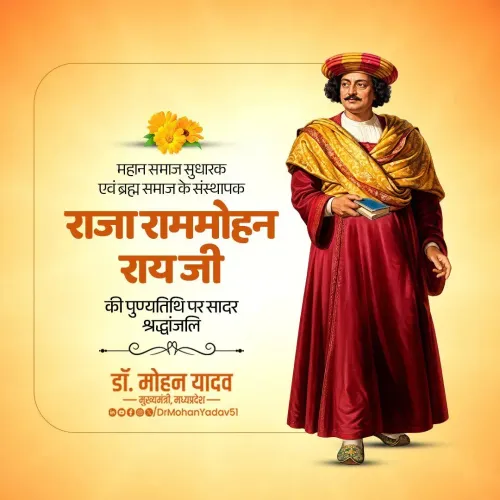
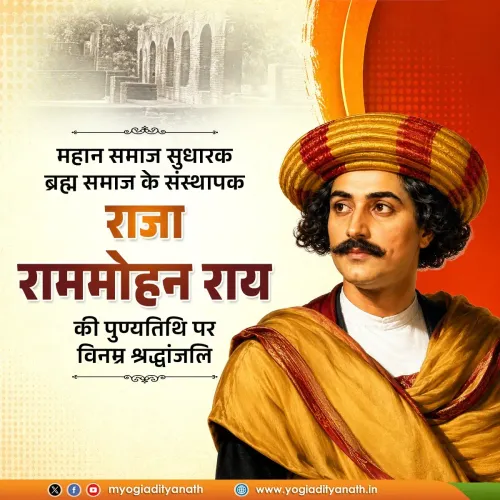
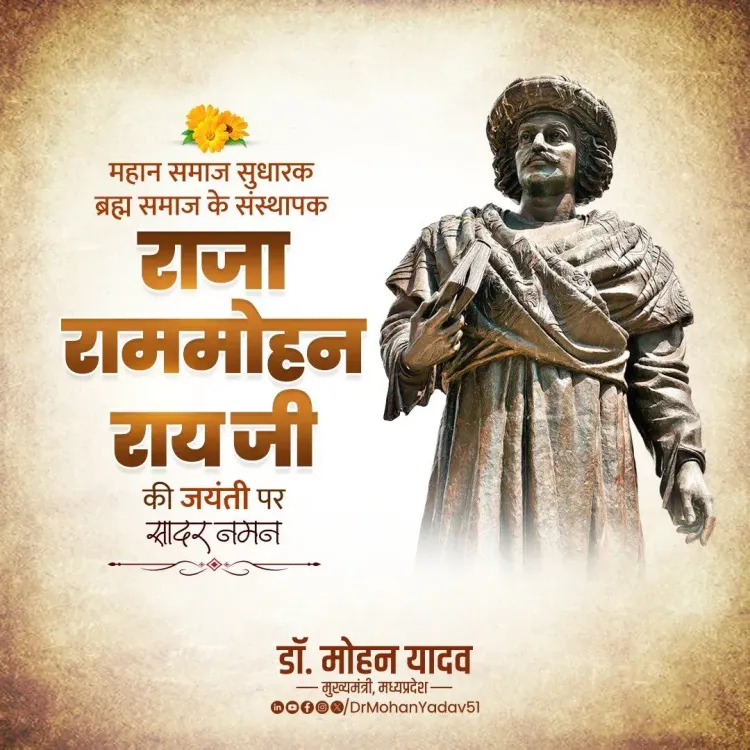
Madhya Pradesh Chief Minister Dr. Mohan Yadav on Friday, 22 May 2026, paid tribute to Raja Ram Mohan Roy on the social reformer's birth anniversary, honouring his lifelong contributions to abolishing social evils, protecting women's rights, and promoting modern education.
Context
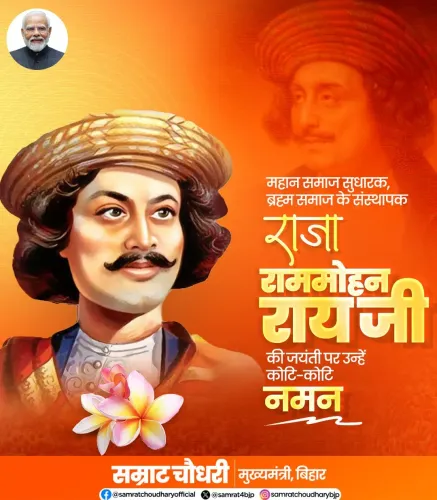
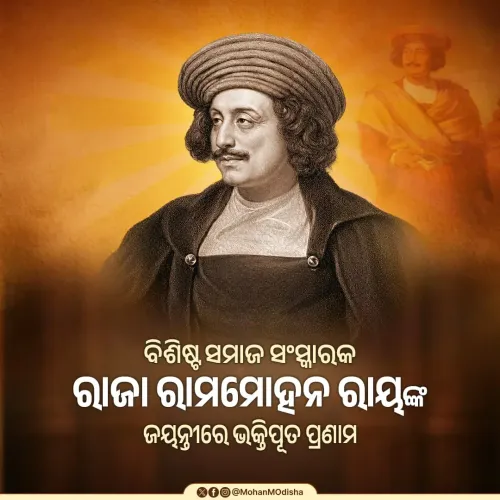
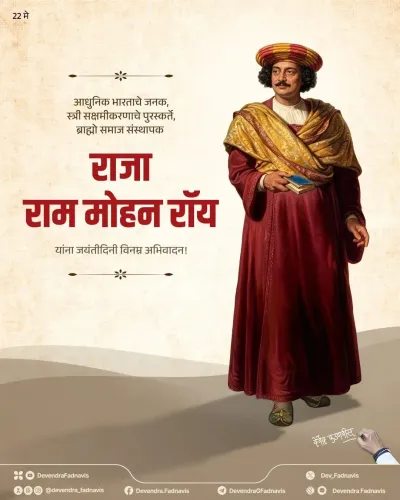
In his post on X, Dr. Mohan Yadav wrote: 'Brahm Samaj ke sansthapak, mahan samaj sudharak Raja Ram Mohan Rai ji ki jayanti par sadar naman' — 'Respectful salutations on the birth anniversary of the founder of Brahmo Samaj, the great social reformer Raja Ram Mohan Roy.' He added that Roy's entire life serves as an 'inexhaustible inspiration' for building an equal and progressive society.
The tribute comes as leaders across India mark the anniversary of one of the country's most consequential 19th-century reformers. Dr. Mohan Yadav has been Chief Minister of Madhya Pradesh since December 2023 and has regularly issued public commemorations for national reformers on their birth and death anniversaries.
Policy Backdrop
Raja Ram Mohan Roy (1772–1833) founded the Brahmo Samaj in 1828, a monotheistic reform movement that became a cornerstone of the Indian Renaissance. His sustained advocacy against the practice of sati (widow immolation) directly contributed to the British colonial administration banning the practice in 1829 — one of the earliest legislative victories for social reform on the subcontinent.
Roy also campaigned vigorously against child marriage, advocated for women's rights to inheritance, and championed the spread of English-medium modern education at a time when such positions were deeply contested. The Brahmo Samaj he founded went on to influence subsequent reform movements and shaped the intellectual climate that produced later leaders of the independence movement.
Stakeholders and Impact
Roy's legacy is particularly significant for women's rights advocates and education reformers, whose contemporary causes trace a direct lineage to his 19th-century campaigns. His work laid the groundwork for legal and social protections that are now embedded in Indian constitutional frameworks.
BJP-led state and central governments have consistently framed 19th-century reformers such as Roy, Jyotirao Phule, and Savitribai Phule as early champions of social equality — a messaging strategy that aligns cultural heritage with the party's stated commitment to progressive social change. Tributes of this nature are now a routine feature of the political calendar across party lines.
What's Next
State-level commemorative events and school programmes in Madhya Pradesh may be held on 22 May to mark the anniversary, consistent with past practice in several states. Education departments in reform-conscious states have periodically introduced or updated curricula modules on social reform history, and Roy's anniversary offers a natural occasion for such initiatives.
As India's political leadership continues to invoke 19th-century reformers in public discourse, the manner in which their legacies are translated into concrete policy — particularly on women's education and social welfare — will remain the measure by which such tributes are ultimately assessed.
Point of View
The Chief Minister gestures toward policy priorities — women's welfare and educational reform — that remain central to the BJP's state-level messaging in Madhya Pradesh. Such commemorations carry limited immediate policy weight on their own, but they function as cultural signalling that shapes the framing of welfare and education initiatives throughout the year. The broader arc suggests that the real test of these tributes lies in whether they translate into measurable advances in women's education and social protection in the state.
NationPress
6 Oct 2026
Frequently Asked Questions
Who was Raja Ram Mohan Roy?
Raja Ram Mohan Roy (1772–1833) was a Bengali social reformer who founded the Brahmo Samaj in 1828 and led successful campaigns to abolish sati, oppose child marriage, and promote women's rights and modern education in India.
When is Raja Ram Mohan Roy's birth anniversary?
Raja Ram Mohan Roy's birth anniversary falls on 22 May, and it is observed across India with tributes from political leaders, educational institutions, and civil society organisations.
What is the Brahmo Samaj?
The Brahmo Samaj is a monotheistic Hindu reform movement founded by Raja Ram Mohan Roy in 1828 in Calcutta. It rejected idol worship and caste discrimination and played a major role in the Indian Renaissance and the social reform movement of the 19th century.
Why did Madhya Pradesh CM Mohan Yadav pay tribute to Raja Ram Mohan Roy?
Chief Minister Dr. Mohan Yadav paid tribute to mark the birth anniversary of Raja Ram Mohan Roy on 22 May 2026, honouring the reformer's contributions to abolishing social evils, protecting women's rights, and spreading modern education.
What did Raja Ram Mohan Roy do for women's rights?
Raja Ram Mohan Roy campaigned against the practice of sati (widow immolation), which led to its ban by British colonial authorities in 1829. He also advocated for women's right to inheritance and opposed child marriage, laying the groundwork for later legal reforms in India.